Followers

Saturday, April 19, 2014

Terry Reid - Selftitled (Great Rock Album UK 1969)


Size: 141 MB
Bitrate: 256
mp3
Ripped by: ChrisGoesRock
Artwork Included
Source: Japan SHM-CD

Terry Reid (born 13 November 1949, Huntingdon, England) is an English rock vocalist and guitarist. He has performed with high profile musicians, as a supporting act, a session musician, and sideman.

After leaving school at the age of 12, Reid joined Peter Jay's Jaywalkers after being spotted by the band's drummer, Peter Jay. At the time Reid was playing for a local band, The Redbeats. His public profile was enhanced in 1966 when The Jaywalkers were named as a support act for The Rolling Stones for their concert at the Royal Albert Hall. Graham Nash of The Hollies became friends with Reid at that concert and suggested The Jaywalkers sign up with Columbia Records to record with producer John Burgess. Their first single, the Soul-inspired "The Hand Don't Fit the Glove" was a minor hit in 1967, but by then The Jaywalkers had decided to disband.

Reid came to the attention of hits producer Mickie Most, who became his manager. His first single with Most, "Better By Far," became a radio favourite, but the album, Bang Bang, You're Terry Reid, was not a commercial success. With accompanying musicians Peter Solley on organ and Keith Webb on drums, a 1968 tour of the United States with Cream did much to gain Reid a loyal following. His final performance of the tour at the Miami Pop Festival garnered positive reviews from the music press.

The song "Without Expression" by Reid and Graham Nash, from Bang Bang, You're Terry Reid, was recorded by The Hollies in 1968 as "A Man With No Expression" and by Crosby, Stills, Nash and Young in 1969 as "Horses Through a Rainstorm", with Nash singing lead on both. Both versions were not released until years later.

Yardbirds guitarist Jimmy Page became interested in Reid's work, and when The Yardbirds disbanded, Page wanted Reid to fill the vocalist spot for his proposed new group, the New Yardbirds, which was to become Led Zeppelin. Reid had already committed to go on the road with Cream (as an opening act on the 1968 US Tour). So he suggested to Page that he consider a young Birmingham based singer, Robert Plant, instead, having previously seen Plant's Band of Joy as a support act at one of his concerts. Reid later was offered a position as a member of Deep Purple when they decided to replace singer Rod Evans; Ian Gillan was given the position instead.

In 1969, Reid supported British tours, notably Jethro Tull and Fleetwood Mac. Reid, Solley and Webb toured the United States again when he opened for The Rolling Stones on their 1969 American Tour. He did not appear at the infamous Rolling Stones concert at Altamont Music Festival.

In December 1969 Reid had a falling out with producer Mickie Most, who wanted Reid to become a balladeer, and to strictly follow his own formula. Reid left England and settled in California to sit out the remainder of his contract with Most, making only sporadic live performances during that period. In 1970, he returned briefly to England to perform at the Isle of Wight Festival, supported by David Lindley and Tim Davis. During this period he also performed at the Atlanta II Pop Festival.[3] Reid was filmed performing in Glastonbury Fayre, the 1971 film by David Puttnam and Nicolas Roeg. In 1973, Reid returned with a new contract with Atlantic Records and a new album entitled River. Produced by Yes' Eddie Offord, the album received favourable reviews, but failed commercially.

Over the next decade, Reid switched to different labels in search of a winning formula; Seed of Memory released by ABC Records in 1976 (produced by Graham Nash), and Rogue Waves released by Capitol Records in 1979. He retired his solo career in 1981 to concentrate on session work, appearing on albums by Don Henley, Jackson Browne, UFO, High Stakes & Dangerous Men and Bonnie Raitt. In 1991, Reid returned with former Yes producer Trevor Horn, on the album The Driver. The album featured a cover version of the Spencer Davis Group classic written by Steve Winwood: "Gimme Some Lovin'", which had earlier appeared on the Days of Thunder soundtrack. "The Whole of the Moon", written by Mike Scott, was released as a single and received considerable airplay, with backing vocals performed by Enya. Reid has since been playing occasional live gigs with a band which has included Brian Auger. In the 1990s he also toured in the US and Hong Kong with ex-Rolling Stones guitarist Mick Taylor. In 1998, Rich Kid Blues was the eponymous song on an album released by Marianne Faithfull, produced by Mike Leander in 1984 but unreleased for 14 years. Touring in support of her 2002 album Kissin Time, Faithfull included a performance of Rich Kid Blues in her playlist.

In late 2005, Reid returned to the UK for his first tour in years. One venue billed him as 'The Man With A Hell Of A Story To Tell'. That same year, three of his songs, "Seed of Memory", (the title track to Seed of Memory), "To Be Treated Rite", and "Brave Awakening", appeared in the movie The Devil's Rejects (2005), directed by Rob Zombie. Also, his song "Faith To Arise" was in the 2003 film Wonderland. In July/August 2007 Reid returned for another six week UK tour being backed by The Cosmic American Derelicts, a band out of northern New Jersey and Southern New York.

On 26 June 2009, Reid appeared with Cosmic American Derelicts guitarist Eddie to perform at ex-band mate Peter Jay's Great Yarmouth club The Residence. At this gig Terry appeared on stage with the local support band Second Hand Blues to perform a cover of the Donovan song "Season of the Witch", this song has become one of the most watched videos of Terry Reid on YouTube, Terry also performed with Peter Jay for the first time in over 15 years on a cover of The Beach Boys song "Don't Worry Baby". On 28 June 2009, Reid and his band performed on The Park stage at the Glastonbury Festival.

The American rock group Cheap Trick recorded Reid's "Speak Now" for their debut album. Also, in 1973, the American rock group REO Speedwagon recorded Reid's "Without Expressions (Don't Be The Man)" for their Ridin' The Storm Out album. Without Expression (Don't be the man) was also recorded by John Mellencamp on his greatest hits album, The Best That I Could Do: 1978-1988.

The Raconteurs with Jack White recorded a version of Reid's "Rich Kid Blues" for their second album Consolers of the Lonely in 2008.

The pairing of Shine and Reid debuted at the Pigalle Club in London on 26 August 2009. A studio collaboration, Shine featuring Terry Reid, was released as an MP3 EP in November 2009.

01. Superlungs My Supergirl 2:42  
02. Silver White Light 2:54  
03. July 3:32  
04. Marking Time 3:46  
05. Stay With Me Baby 4:11  
06. Highway 61 Revisited/Friends/ 8:00  
07. May Fly 3:41  
08. Speak Now Or Forever Hold Your Peace 4:25
09. Rich Kids Blues 4:15

Bonus Tracks:
10. Zodiac Blues 2:57
11. Penny 6:03
12. Funny How Time Slips Away (First 'Demo' Version) 3:57
13. I'll Take Good Care Of You (First 'Demo' Version) 2:07
14. It's Gonna Be Morning (w. Jaywalkers) 2:58
15. I'll Take Good Care Of You (w. Jaywalkers) 2:07
16. Funny How Time Slips Away (w. Jaywalkers) 3:40
17. Just Walk in My Shoes (w. Jaywalkers) 2:21
18. The Hand Don't Fit the Glowe (w. Jaywalkers) 2:56
19. This Time (w. Jaywalkers) 1:51
20. Highway 61 Revisited [Demo] 4:26

1. Link
or
2. Link
or
3. Link
.

Thursday, April 17, 2014

Barry McGurie - Eve of Destruction (Great Album US 1965)


Size: 76.2 MB
Bitrate: 256
mp3
Ripped y: ChrisGoesRock
Artwork Included
Source: Japan SHM-CD Remaster

"Eve of Destruction" is a protest song written by P. F. Sloan in 1965. Several artists have recorded it, but the best-known recording was by Barry McGuire. This recording was made between July 12 and July 15, 1965 and released by Dunhill Records. The accompanying musicians were top-tier LA session players: P. F. Sloan on guitar, Hal Blaine (of Phil Spector's "Wrecking Crew") on drums, and Larry Knechtel on bass. The vocal track was thrown on as a rough mix and was not intended to be the final version, but a copy of the recording "leaked" out to a DJ, who began playing it. The song was an instant hit and as a result the more polished vocal track that was at first envisioned was never recorded.


The song had initially been presented to The Byrds as a Dylanesque potential single, but they rejected it. The Turtles, another LA group who often recorded The Byrds' discarded or rejected material, recorded a version instead. Their version was issued as a track on their debut album It Ain't Me Babe, shortly before McGuire's version was cut; it was eventually released as a single and hit number 100 on the Billboard Hot 100 in 1970. The song was also recorded by Jan and Dean on their album Folk 'n Roll in 1965, using the same backing track as the McGuire version, and by The Grass Roots on their first album Where Were You When I Needed You in 1966.

McGuire also mentioned that "Eve of Destruction" was recorded in one take on a Thursday morning (from words scrawled on a crumpled piece of paper), and he got a call from the record company at 7:00 the following Monday morning, telling him to turn on the radio—his song was playing.


Barry McGuire became a born-again Christian, and as a result renounced the song for many years, refusing to perform it. Though he is now known primarily as a singer of contemporary Christian songs, McGuire has resumed singing "Eve of Destruction" in recent years, often updating the lyrics to refer to such events as the Columbine High School massacre.


In the first week of its release, the single was at number 103 on the Billboard charts. By August 12, Dunhill released the LP, Nick Featuring Eve of Destruction. The LP reached its peak of number thirty-seven on the Billboard album chart during the week ending September 25. That same day the single went to number one on the chart, and repeated the feat on the Cashbox chart, where it had debuted at number thirty. McGuire would never again break into the top forty of the Billboard Hot 100. It went to number one in Norway for two weeks.

The American media helped popularize the song by using it as an example of everything that was wrong with the youth of that time. The song also drew flak from conservatives. A group called The Spokesmen released an answer record entitled "The Dawn of Correction". A few months later, Green Beret medic Sgt. Barry Sadler released the patriotic "Ballad of the Green Berets". Johnny Sea's spoken word recording, "Day For Decision", was also a response to the song.


The song was banned by some radio stations in the USA ("claiming it was an aid to the enemy in Vietnam") and by Radio Scotland. It was placed on a "restricted list" by the BBC, and could not be played on "general entertainment programmes".

Barry McGuire Early Biography from http://barrymcguire.com/:

After Barry left the Christys, work was hard to find. He spent the Winter and part of Spring, 1965 contacting producers, to no avail. But in April, Barry went to Ciro’s in L. A. to see his old friends Roger McGuinn and Gene Clark, whose band, the Byrds, was celebrating the release of their single, “Mr. Tambourine Man.” 
Bob Dylan was there, and so was producer Lou Adler. During the show, Barry saw a guy on the dance floor just bopping up and down while looking up at the ceiling. So he decided to try it out himself, and was bouncing around on the dance floor. Lou Adler spotted him and said, “Aren’t you McGuire?”
“Yeah.”
“Well, are you doing any singing?”
“Well, not recently.”
“Would you like to?”
“Well, yeah.”
Then Lou said, “Come over to my office next week. I’ve got some tunes I think you might like.”

Lou Adler was a man who knew the music business inside and out. He had written songs for people like Sam Cooke, had been one of Jan and Dean’s managers, had worked in music publishing and for various record companies. By 1965, Adler, along with Jay Lasker and Bobby Roberts, had started a publishing company called Trousdale and a production company called Dunhill. P. F. (Phil) Sloan and Steve Barri, who had written some surf songs that became hits and had a band called the Fantastic Baggys, worked for Adler as songwriters and musicians. 


Lou introduced Barry to Phil Sloan, who was now writing songs that contained serious social messages born from an overwhelming sense of frustration, disgust, and outrage at the system and the way things were going in the world. Barry was ready to start singing songs that reflected these ideas and feelings. “When I left the Christys,” Barry says, “ I left looking for answers. I was in a kind of a spiritual, philosophical search at that time. We were going through the whole social question, turmoil of the day within ourselves. Why not do this? Why shouldn't we do that? How come we have to do this? Who says we gotta do that?

 And then we started to get down to, well, what is the basic ultimate truth, and what is life? What is the universe? Where did it come from? Where is it going? What's on the other side of death? What was on the backside of birth? ‘Eve Of Destruction’ was just a continuation down that road. At least I felt I could compile all the problems, and I thought that's what Phil did in the song. All the problems, but no answers." Unlike the cheery tunes of the Christys, "Eve of Destruction" was a grave, prophetic warning of imminent apocalypse. It was a song that expressed the frustrations and fears of young people in the age of the Cold War, Vietnam, and the arms race.


Barry signed with Dunhill in May, 1965, and started recording with Phil Sloan (guitar, harmonica and co-production with Adler), Larry Knetchel (bass), Tommy Tedesco (guitar). Barry played guitar and percussion. Sometime between July 12th and the 15th, they recorded “Eve of Destruction.” Barry recalls that the song was recorded in one take. There were only thirty minutes left in the recording session. Barry remembers, “I got my lyrics that I’d had in my pocket for about a week. I smoothed all the wrinkles out of them, and we wrote the chords down on a piece of brown paper that somebody got some chicken in or something, and we folded little creases and hung them on the music stands and went through it twice. They were playing and I’m reading the words off this wrinkly paper. I’m singing, ‘Well, my blood’s so mad feels like coagulatin’, that part that goes, ‘Ahhhhhh, you can’t twist the truth,’ and the reason I’m singing ‘Ahhhhhh’ is because I lost my place on the page. People said, ‘Man, you really sounded frustrated when you were singing.’ Well, I was. I couldn't see the words. I wanted to re-record the vocal track, and Lou said, ‘We're out of time. We'll come back next week and do the vocal track.’ Well, by the next weekend, the tune was released. The following Monday, it was being played on the #1 rock music station in Los Angeles, and it was incredible what happened. It all just exploded.”

It turns out that a photographer and record promoter by the name of Ernie Farrell visited Lou Adler’s office on July 16th to see if Lou had any records to promote, and he picked up a couple of 45s off of Adler’s desk without Lou’s knowledge. That afternoon, Farrell was scheduled to take photos at a birthday party at the home of the program director at KFWB. Farrell was taking pictures, went to get some flashbulbs out of the trunk of his car, and he saw the 45s there. He played the 45s for the kids at the party, and they really didn’t respond to any of them until Farrell played “Eve of Destruction.” They demanded that he play it repeatedly. The kids took it into their father and asked him to listen to it. He phoned KFWB and said, “I’ve got next week’s pick to hit.” The folks at Dunhill rushed the one take of “Eve” back into the studio to get it ready for immediate release, but Barry wasn’t around that weekend, so they mixed it, pressed it and shipped it out by that following Monday, July 19th (although the official release date is July 21st). So Barry never got a chance to re-record the vocals.


In the first week of its release, “Eve” was at #30 in the Cash Box charts, and #103 in the Billboard charts. By August 12th, Dunhill released the LP, Barry McGuire Featuring Eve of Destruction. The LP reached it’s high of #37 on Billboard the week ending September 25th, the same day that the single “Eve of Destruction” soared to #1 in both the Cash Box and Billboard charts. One would think that any musician whose single had such quick and huge success would be propelled into ever-increasing stardom and opportunities in the music industry. But “Eve of Destruction” actually had the opposite effect, because its success came in sales before success in airplay. It was a song that captured the ear of the public before it caught the attention of most radio stations. A lot of radio station managers, DJs, and playlist controllers were upset that “Eve” made it big without going through them. Barry says, “I don’t know if it’s true or not, but I heard that the word was that no matter what I came out with next, nobody was gonna play it because I was a loose cannon in the music business. They didn’t have control of the last one, and they weren’t gonna let the next one get away from them.”

Then there was the reaction of the media. Phil Sloan remembers, “The media frenzy over the song tore me up and seemed to tear the country apart. I was an enemy of the people to some and a hero to others, but I was still only 20 years old and nobody really was looking. I have felt it was a love song and written as a prayer because, to cure an ill you need to know what is sick. In my youthful zeal I hadn't realized that this would be taken as an attack on The System!


The media headlined the song as everything that is wrong with the youth culture. First, show the song is just a hack song to make money and therefore no reason to deal with its questions. Prove the 19-year old writer is a communist dupe. The media claimed that the song would frighten little children. The United States felt under threat. So any positive press on me or Barry was considered un-patriotic. A great deal of madness, as I remember it! I told the press it was a love song. A love song to and for humanity, that's all. It ruined Barry's career as an artist and in a year I would be driven out of the music business too.”

On top of all this, there was flack from both conservatives and liberals. On the right wing, a group called The Spokesmen released an “answer” record called “The Dawn of Correction,” and a few months later, Barry Sadler released “Ballad of the Green Berets.” On the left, musicians who had been writing and singing protest songs for years were not happy that a kid who wrote surf songs and a former member of the Christys had found success with a protest song of their own. Phil Ochs, for example, said that the quality of “Eve of Destruction” was terrible, and called its philosophy “juvenile.” He cautioned that protest songs by their very nature could never maintain a popular status, adding, “The Top Forty revenge is one of the fastest revenges in the country. When people get turned off, that’s it: instant death. I think the protest thing will die out pretty fast.”


There were some exceptions to the ill treatment "Eve" received. For example, on September 20th, 1965, Barry sang "Eve of Destruction" on NBC's Hullabaloo. But Barry looks back now and thanks God that the reaction to “Eve of Destruction” kept him from further fame and fortune. He believes it would have killed him. “It’s just as well I didn’t get another hit tune,” he says. “I would have gone the way of Jim Morrison, Hendrix, or Joplin. I say ‘Thank God,’ and I do thank God for that, too, because I wouldn’t have survived. I think God did ‘Eve of Destruction.’ It was supernatural. I was just dumbing my way through the day, and it all happened. I came up with some great tunes after ‘Eve of Destruction,’ and none of them happened, and I couldn’t figure out what was going on. But I’m sure glad nothing did, because I would have been history by now.”


Partial discography:

♦ Barry Here and Now (1962)
♦ The Barry McGuire Album (1963)
♦ Eve of Destruction (1965)
♦ This Precious Time (1965)
♦ The World's Last Private Citizen (1967)
♦ McGuire and the Doctor (1971)
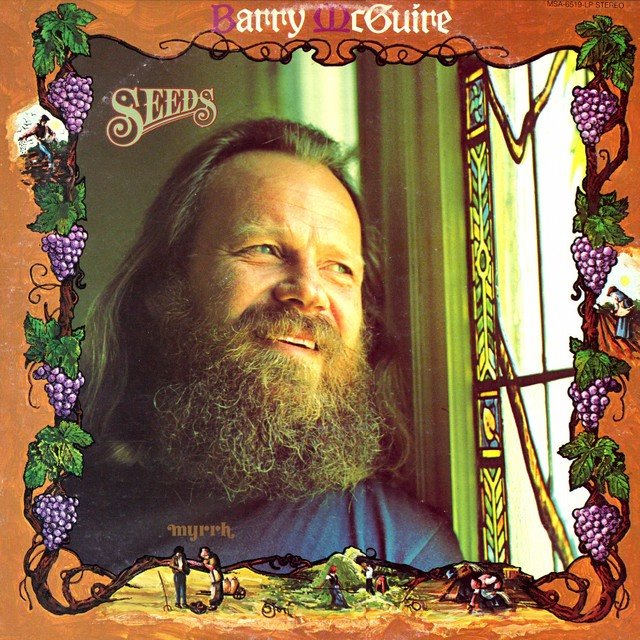
♦ Seeds (1972)
♦ Lighten Up (1974)
♦ Narnia (1974)

01. Eve of Destruction 3:38

02. She Belongs to Me 2:47
03. You Never Had It So Good 3:06
04. Sloop John B. 3:04
05. Baby Blue 3:16
06. The Sins of a Family 3:01
07. Try to Remember 3:23
08. Mr. Man on the Street 6:05
09. You Were on My Mind 2:32
10. Ain't No Way I'm Gonna Change My Mind 2:30
11. What Exactly's the Matter With Me 2:32
12. Why Not Stop and Dig It While You Can 2:15

1. Vietnam
or
2. Vietnam
or
3. Vietnam
.

Sunday, April 13, 2014

Marc Benno & The Nightcrawlers - Crawlin (Great Bluesrock US 1973)


Size: 99.3 MB
Bitrate: 256
mp3
Ripped by: ChrisGoesRock
Artwork Included
Source: Japan 24-Bit Remaster

The album recorded in 1973 @ sunset sound Studio Hollywood for A&M

Marc Benno brought a treasure for his Japanese fans!

The recordings which never released for last 32 years....
Marc Benno recorded 7 songs with his band The Nightcrawlers featuring Stevie Ray Vaughan, Doyal Bramhall etc. at Sunset Sound Studio inHollywood for A&M Records in 1973. But A&M decided not to release the record.

This is the special album with the 7 songs and plus another 5 songs of the studio sessions tracks with SRV (G),RussKrunker(Dr.) Mike Utley(key.) Lee Skiar(B.) etc.

This historic document seems to have escaped the attention of all but the most hardcore and curious Stevie Ray Vaughan fan. The story goes like this...by 1973, Texas singer, songwriter, guitarist, and piano player Marc Benno had spent better than a decade as an all-star studio pro, lending his talents to recordings by folks like Rita Coolidge and the Doors. Benno recorded a pair of albums with friend and fellow session-player Leon Russell as the Asylum Choir, Benno subsequently launching his solo career with a self-titled album in 1970, Russell hooking up with singer Joe Cocker before discovering mid-decade stardom.


Benno had put together a Texas-styled blues-rock band that included bassist Tommy McClure (who had played with Coolidge and Jim Dickinson, among others), drummer Doyle Bramhall, keyboardist Billy Etheridge, and a hot-shot young guitarist by the name of Stevie Vaughan (the "Ray" would be added later). Benno and the Nightcrawlers were managed by rock 'n' roll heavyweight Dee Anthony, and put on tour opening for the J. Geils Band and Humble Pie (which featured its own hot-shot fretburner in Peter Frampton). Benno and the band recorded what was to become their debut album for A&M Records, but when the label soured on blues-rock, Crawlin – which included Vaughan's first recordings – was put on the shelf and remained unreleased until 2009 when Blue Skunk Music resurrected the album.

As shown by the funky album-opening "Last Train," Benno had his finger firmly on the pulse of the soul-and-blues-infused rock sound of the early 1970s, the song's foot-shufflin' beat paired with twangy, chicken-scratched guitar solos and a chaotic mix that works in spite of the mess of instruments. By turns, the New Orleans-flavored "Coffee Cup" sounds like Dr. John, Benno's growling vocals and spry piano-pounding displaying the undeniable musical link between Texas blues and Louisiana's more jazz-influenced style.


The lively "Take Me Down Easy" mines turf similar to what Delaney and Bonnie and Friends were exploring at the time, cleverly mixing blues, rock, gospel and country into an inspired whole, some hot guitar licks sizzling in the background beneath Benno's energetic honky-tonk piano and an overall spirited instrumental jangle. Running in the other direction, "Hot Shoe Blues" blends a 1940s-styled jump-blues aesthetic with rollicking keyboards, red-hot guitar runs, and mile-a-minute echoed vocals to create an exhausting and entertaining musical romp. The title song is virtually an instrumental, barely-audible gang-vocals rising and falling beneath an innovative soundtrack that displays some of Stevie Vaughan's early talents.

Benno considered Stevie Ray Vaughan (or "Little Stevie" as he was often known at the time) to be the Nightcrawlers' secret weapon, a young guitarist of unusual skill and vision that could liven up any performance with his instrument. Crawlin includes four "bonus tracks," songs cut by Benno in anticipation of a solo release that would feature Vaughan's maturing guitarplay at its center. Using a variety of L.A. session pros and friends like bassist Lee Sklar, drummer Russ Kunkel, and keyboardists Gordon DeWitty and Mike Utley, these songs add more of a pop sheen to Benno's writing while not forsaking the artist's blues foundation.

"Friends" is a gospel-tinged soft-rocker that features some beautifully emotional Stevie Ray slide-guitar licks alongside Benno's testifying vocals and gentle piano play. By contrast, "Whole Thang" is a short, sharp shocker with scorching guitar solos riding low in the mix, Benno's bouncy electric piano creating an irresistible melody on top of which Vaughan weaves his magic; given a proper release in the mid-1970s, the song could have been a big hit and brought SRV to stardom that much quicker. "World Keeps Spinnin" is another Dr. John soundalike, with bits of sharp guitar and an underlying funky heartbeat while "Long Ride Home" is a dark, rich instrumental track and the stand-out on Crawlin, Vaughan and Benno swapping guitar licks while the band choogles along in the background with a rock-solid rhythm.


Jim Morrison & Marc Benno
Marc Benno's Crawlin is a mixed bag, derived as it is from disparate sources and circumstances. The four bonus tracks are better-written and better-produced than the seven songs from a previous recording, and they feature Stevie Ray Vaughan in a much more prominent role. What the earlier songs lack in sonic quality and overall construction they more than make up for in energy and enthusiasm, Benno finally afforded the opportunity to chase stardom on his own terms.

While the earlier material on Crawlin, quite honestly, wasn't ready for primetime...I'll blame it on sub-par production that seemingly robs the performances of their edge and vitality...there's no doubt that Benno and the Nightcrawlers were on to something, and listening to these songs today one can't help but wonder what might have been. 


You'll find the material to be representative of the era of its creation, entertaining but not particularly innovative, and of interest mostly to hear Benno's underrated piano playing and Stevie Ray's first tentative steps towards blues-rock stardom.

After suffering the indignities of the record biz – Benno was subsequently dropped by his high-profile manager (who hitched his star exclusively to Frampton's fortunes) – and seeing his recordings buried in a vault somewhere in Hollywood, Marc Benno regrouped and re-dedicated himself to the blues. He spent years touring as second guitarist for the legendary Lightnin' Hopkins, honing his skills and learning the blues from a master. Benno continues to make music, fusing blues, rock, jazz, and pop music into his own original creation in spite of the industry, and Crawlin is a perfect example of his unique vision and talent.

The Nightcrawlers: 
♣ Marc Benno - Guitar and Vocal
♣ Stevie Ray Vaughan - Lead Guitar
♣ Doyal Bramhall - Drum and Vocals
♣ Billy Ethridge- Keyboards
♣ Tommy McClure - Bass

*Session Recording with:
♣ Marc Benno - Guitar, Piano and Vocal
♣ Stevie Ray Vaughan- Lead Guitar / Russ Krunkel- Drums
♣ Johnny Perez - Drums / Mike Utley-Keyboards
♣ Gordon Dewitty-Hammond B3 Organ / Lee Skiar- Bass

01. Last Train  02:04
02. Coffee Cup  03:19
03. 8 Ball  06:22
04. Take Me Down Easy  03:23
05. Love is Turnin Green  05:36
06. Hot Shoe Blues  02:09
07. Crawlin  03:22
08. Friends*  04:33
09. Whole Thang*  01:57
10. Slammer Jammer*  04:35
11. World Keep Spinnin*  02:51
12. Long Ride Home*  04:48

*Bonus Tracks Please note and understand there are some noise on Track 10 due to the old recording material.

1. Link
or
2. Link
or
3. Link
.

Friday, April 11, 2014

The Jimi Hendrix Experienced - August 27, 1967


The Jimi Hendrix Experienced - August 27, 1967
(open picture on picture in a new window
for 100% size.)

Monday, April 07, 2014

OK, because you will have more, here is some more Pop-Spots...

Bob Dylan - Highway 61 Revisited (Gramercy Park West New York)

Bob Dylan - Subterranean Homesick Blues (Behind London's Savoy Hotel)

Bob Dylan - The Freewheelin' (Jones Street and West 4th Street, New York)

Bob Dylan (Jacob Street West 2nd, New York City)

Crosby, Stills & Nash (815 Palm Avenue, West Hollywood, California 1969)

David Bowie - Ziggy Stardust (23 Heddon Street, West of Carnaby street, London)

Foghat - Fool For The City - Back (Outside of 232 East 11th Street between second and Third Avenues,, New York.)

Neil Young - After the Gold Rush (Corner of Sullivan Street and West 3rd Street)

Ramones - Selftitled 1976 (Albert's Garden, East 2nd Street, Bowery Avenue)

Simon & Garfunkel - Wednesday Morning (New York Subway Fifth Avenue and 53rd Street)

The Doors - Morrison Hotel  (1246 South Hope Street, Los Angeles)

The Doors - Strange Days (Sniffen Court (150-158 East 36th Street, between Lexington Ave and Third Ave, New York)

The Who - The Kids Are Alright (Carl Schurz Monument 116th Street Morningside Heights New York)

The Who - The Who Sings My Generation 1965 (Across the street from Big Ben in London)

Velvet Underground - Live at Max's Kansas City (Park Avenue South between 17th and 18th Street.)

Velvet Underground - Live at Max's Kansas City (Park Avenue South between 17th and 18th Street.) '


Thats all i have, search for "pop-Spots at "google" for more.
ChrisGoesRock


Sunday, April 06, 2014

Some Pop-Spots...

Bo Diddley - Have a Guitar, Will Travel (Brooklyn, 368 Livingston Street 1960)

Crosby, Stills, Nash & Young - Déjà Vu (backyard of David Crosby's rental house Novato, California 1970)

Foghat - Fool For The City 1975 (Outside of 232 East 11th Street between second and Third Avenues,, New York.)

Grateful Dead - Workingmans Dead (1199 Evans Avenue - Hunter's Point - San Francisco)

Corner of 8th Avenue and West 23rd Street in Manhattan, looking uptown
(Thank you Joe Non Papa)

Ramones - Rocket to Russia (Outside the back door of CBGB'S)

The Doors - Morrison Hotel (1246 South Hope Street, Los Angeles)

Saturday, April 05, 2014

Mike Bloomfield - Record Plant, Sausalito, 1973-04-22 (Bootleg)


Size: 115 MB
Bitrate: 320
Found in...
Some Artwork

Mark Naftalin (born August 2, 1944) is an American blues keyboardist, composer, and record producer.

Born in Minneapolis, Minnesota, United States, Naftalin is the son of former Minneapolis mayor Arthur Naftalin; he is married to third wife Ellen Naftalin. His son is the San Francisco Bay Area artist, David Normal.

He moved to Chicago in 1961, and graduated from the University of Chicago in 1964, where he performed on piano at campus "twist parties," popular at the time. It was at these parties that Naftalin first played with blues harmonica player Paul Butterfield and guitarist Elvin Bishop, the nucleus of what was to become the Paul Butterfield Blues Band.

He is known for his role, from 1965-1968, in the Paul Butterfield Blues Band. On certain albums by this group he is credited as "Naffy Markham". In the late 1960s, after the first four Butterfield albums, Naftalin went out on his own, settling in the San Francisco Bay Area. There he put together the Mark Naftalin "Rhythm & Blues Revue" and has been active in blues and rock recording sessions, solo gigs and revue shows, and as a producer of concerts, festivals and radio shows. He also played with Mike Bloomfield as a duo and in a band (most often called Mike Bloomfield & Friends) from the late 1960s through the mid-1970s, and hosted Mark Naftalin's Blue Monday Party, a weekly blues show (1979-1983) that featured over 60 blues artists and groups and was the scene of 86 live radio broadcasts and three TV specials.

Naftalin has produced the Marin County Blues Festival (1981-2000), and has been the associate producer of the Monterey Jazz Festival's "Blues Afternoon" (1982-1991). His weekly radio show, Mark Naftalin's Blues Power Hour has been on the air almost continuously since 1979 on San Francisco's radio KALW-FM.

Naftalin co-founded the Blue Monday Foundation and, in 1988, started his own label, Winner Records, which has issued recordings by artists including Paul Butterfield and Percy Mayfield. He continued to perform, both solo and in an ensemble, in the Bay area and elsewhere, often with longtime associate slide guitarist, Ron Thompson.

Naftalin has also recorded with many blues players including John Lee Hooker, Otis Rush, Percy Mayfield, Lowell Fulson, Big Joe Turner, James Cotton, Mike Bloomfield, Jake Walker and Van Morrison, and as a sideman on over 100 albums.

Mike Bloomfield: 
1973 BEGAN WITH Michael Bloomfield getting involved with one of several ill-fated projects. For the first time in four years, he agreed to participate as a leader on a recording session. His longtime friend, guitarist and singer John Hammond, asked him to collaborate on an album of blues and funk. Hammond had also gotten Dr. John to sign on, and had scheduled studio sessions for January. Michael, intrigued by the opportunity to work with the New Orleans pianist, agreed to play though he was leery of getting involved in another “supergroup.”

The sessions didn't go smoothly, however, and Hammond eventually replaced some of the sidemen. Dr. John wasn't happy either, and though he and Mike had good times together at Reed St., he eventually went home to New Orleans. The remainder of the album was completed by the principals overdubbing their various parts. Columbia issued the result as "Triumvirate" in June of 1973, just as the company's president, Clive Davis, was being investigated by the FBI for embezzling funds.

Hammond arranged for the trio to tour in support of the album, and he had high hopes for a commercial breakthrough. But after he, Bloomfield and Dr. John had completed just one appearance – a Los Angeles performance that was that was also carried on TV's "In Concert" – Davis was fired and all of Columbia's projects were put on hold.

The "Triumvirate" tour was cancelled and the record received almost no promotion. Critics had panned the album anyway, faulting it for its flat, overproduced sound and undistinguished performances. Many reviewers were particularly disappointed that Bloomfield seemed not to find his solo voice. For Michael, it was another unpleasant instance of hype and its ensuing expectations – a circumstance he was now more determined than ever not to repeat.

In the spring of 1973, Bloomfield took a group to New York City for an appearance at the newly-opened Bottom Line. At the same time, he was working on a second solo album for Columbia, as was specified in his original contract with the label. Working with Nick Gravenites, Mark Naftalin and other members of his Friends aggregation, Michael concentrated on his writing skills and labored to produce a recording of high quality and broad appeal. Joining the band for the first time was a bass player and singer named Roger Troy. Nicknamed "Jellyroll," Troy had come west from Cincinnati where he had worked for the Bihari Brothers as a session man at Crown Records. Not only was a he a talented bass player, but he was a remarkable singer with near-perfect pitch, an extraordinary range and a thorough understanding of blues and soul styles. His talents added a new versatility to the Friends, allowing Michael to do soul and country-style tunes with a real authority.

Michael worked on his second Columbia album throughout the year, composing a slew of new tunes, including six of the eleven that would eventually be selected for the record. One, called "Midnight on the Radio," happily recalled Michael's early days listening to blues on his transistor radio. Another – "When It All Comes Down" – recounted a troubled relationship, but did so from a place of strength and resolve. Gone were the intensely personal and pained confessions of his first Columbia solo effort. Mike featured his vocals on a number of the performances, but Nick and Jelly Roll also were given prominent vocal spots. Bloomfield's guitar playing, though still largely in the background, again reflected the broad range of his musical interests by evoking the styles of Pop Staples, Eric Gale, Tampa Red and B.B. King. On the blues "Your Friends," the Bloomfield of the Butterfield Band and the Electric Flag was turned loose and his trademark Les Paul sound was given free reign. The album was to have a healthy mix of pop, rock, blues, soul and gospel selections, and would have likely been a commercial success.

Despite the time and effort Mike put into the sessions, however, Columbia was hesitant to take another chance on a Bloomfield production and decided against going ahead with the release. "Try It Before You Buy It," as the album was to be titled, was shelved. Though it would later be issued in a limited edition on Columbia Special Products imprint, most Bloomfield fans only heard its tunes when Michael performed them live.

And there was much opportunity to catch Bloomfield live in 1973. It during was that year that he finally began to perform in public with more regularity. There were several extensive tours that took his quartet to places as distant as Miami, Boulder, Chicago, Bangor, Boston, Toronto, Buffalo and Woodland, Alabama. Michael's working band now included his close friend and musical partner Mark Naftalin, bassist Roger Troy and drummer George Rains. Rains, a native of Fort Worth, had been a member of Mother Earth and had met Michael through Mark. The group worked together frequently enough that they developed a tight, cohesive sound, often inspiring Michael to new heights as a soloist.

In August, Bloomfield had an unexpected visitor, someone he hadn't seen in years. His old friend, Bob Dylan, dropped by Reed St. for what amounted to an audition. Over the course of several hours, Dylan ran through a series of new tunes without pause while Michael tried to play along. Bob was soon to go into the studio to record "Blood on the Tracks," and he felt that the quality of the tunes merited the playing of his old "Highway 61 Revisited" collaborator. But Michael was thrown by Dylan's D–tuning and odd fingerings, and he had trouble following the singer's changes. He suggested that Dylan give him a chance to learn the songs and work out parts, but Bob was only interested in a quick run–through. The superstar left the get together without comment, but he later decided against using Michael on what would be an historic session. Michael was nonplussed by the whole experience.

Mike Bloomfield & Mark Naftalin – 1973-04-22 
The Record Plant, Sausalito, California
SOURCE: FM radio broadcast (KSAN) 

01. KSAN introduction
02. Sonny Boy
03. Love Me Woman
04. Winter Time Blues In B-Flat
05. talking / announcements
06. I'm Blue, Really Blue
07. The TV Hymn
08. I Wonder Why [instrumental]
09. I Will Always Love You
10. At The Cross [instrumental]

1. Link
or
2. Link
or
3. Link
.