Followers

Thursday, March 03, 2016

The Boys - The BBC Sessions 1977-80 (Classic Punk)


Size: 106 MB
Bitrate: 256
mp3
Ripped by: ChrisGoesRock
Artwork Included
Source: Japan 24-Bit Remaster

The Boys were born in September 1975 when singer/guitarist Matt Dangerfield left Mick Jones and Tony James’s fledgling punk band London SS to form a new band with ex-Hollywood Brats songwriter/keyboard player Casino Steel. Dangerfield’s art college friend, guitarist Honest John Plain, was soon recruited. The following year they held auditions for the bass and drum roles with Kid Reid and Jack Black completing the line-up.


Along with the Sex Pistols, Clash and The Damned, The Boys were part of the first wave of the mid-1970’s UK punk explosion. Armed with an arsenal of killer Steel/Dangerfield songs The Boys became the first UK punk band to sign an album deal in January 1977. Highly regarded by the music press and their contemporaries, their well-crafted songs, together with Steel and Dangerfield’s love of harmonies, led to them being described as ‘The Beatles of Punk’ but they could (and should) just as deservedly have been compared to the Ramones ­– fast, alternately brattish and tongue-in-cheek, and gloriously anthemic.

As Last FM puts it: “The Boys made arguably one of the best LPs of the 70s with their self-titled first album and provided the template for superior Pop Punk before even the Buzzcocks had got out of first gear”.

The Boys were born in September 1975 when singer/guitarist Matt Dangerfield left Mick Jones and Tony James’s fledgling punk band London SS to form a new band with ex-Hollywood Brats songwriter/keyboard player Casino Steel. Dangerfield’s art college pal, guitarist Honest John Plain, was quickly recruited. The following year they held auditions for the bass and drum roles with Kid Reid and Jack Black completing the line-up.

Matt Dangerfield had converted the tiny disused coal cellar of his rented basement flat in Maida Vale into a home recording studio/rehearsal room and as a consequence, 47A Warrington Crescent became extremely important in the development of the UK punk scene in the mid seventies. Mick Jones, Glen Matlock, Tony James, Rat Scabies, Brian James, Gene October, Sid Vicious and Billy Idol were regular visitors. Amongst others, The Sex Pistols, The Damned, London SS, Clash, Chelsea, Generation X and of course, The Boys, made their first recordings there. In this hotbed of creativity Steel and Dangerfield quickly forged a prolific songwriting partnership.

The Boys made their live debut at London’s Hope and Anchor in October 1976. Mick Jones, Billy Idol, Joe Strummer, Tony James and Gene October were in attendance for The Boys first performance. A mere handful of gigs later, they became the first UK punk band to sign an album deal when NEMS Records snapped them up in January 1977.

Having released two albums and three singles with NEMS, they moved to Safari Records in 1979 where two further albums and five more singles followed.

The Boys’ critically acclaimed "Punk Rock Menopause", the band's first new studio album since 1981 was released on 20 June 2014 by Wolverine Records. Featuring the original founder members and creative core of Matt Dangerfield, Casino Steel and Honest John Plain, the new album is packed with 13 iconic new songs bearing the band’s classic trademark blistering guitars, hard-edged melodies, killer hooks and layered harmonies.

Over the years countless bands have covered The Boys’ back catalogue – from Argentina to Germany and Japan to the USA – and even more artists have cited The Boys as a major influence.

Peel Session 1977-08-08
01. Sick On You
02. First Time
03. Cop Cars
04. Box Number
05. Livin' In The City
06. Rock Relic

Peel Session 1978-05-15
07. TCP
08. Brickfield Nights
09. Classified Suzie
10. Boys

In Concert 1980-02-13
11. First Time
12. Rue Morgue
13. You'd Better Move On
14. Kamikaze
15. Cop Cars
16. New Guitar In Town
17. Brickfield Nights
18. Worm Song
19. Terminal Love
20. Livin' In The City

1. The Boys
or
2. The Boys
or
3. The Boys


Saturday, February 20, 2016

John Buck Wilkin - In Search of Food, Clothin, Shelter and Sex (Psychedelic Folk US 1970)


Size: 80.8 MB
Bitrate: 256
mp3
Ripped by: ChrisGoesRock
Artwork Included
Source: 24-Bit Remaster

John "Bucky" Wilkin, the son of Marijohn Wilkin (author of the country classic "Long Black Veil"), is most noted as a session guitarist on numerous country and rock records of the 1970s, particularly outlaw country releases by Waylon Jennings, Kris Kristofferson, Kinky Friedman, and Jessi Colter. 


He was also a songwriter and put out a little-known solo LP, In Search of Food, Clothing, Shelter & Sex, on Liberty. The record was easygoing, though sometimes moodily eccentric, country-folk-rock with frequent orchestration. Prior to his solo album, Wilkin had been in Ronny & the Daytonas, famous for their 1964 hot rod hit "Little GTO." Wilkin was also in the American Eagles (not to be confused with the much more famous Eagles), who also included keyboardist Chuck Leavell, and put out a single in 1969.

Wilkin's obscure solo album is a rather strange, and not always comfortable, interface of singer/songwriter, MOR pop, folk-rock, and country influences. At times he sounds like early James Taylor with Glen Campbell-ish orchestration; "My God and I" doesn't sound far from early Elton John. 

Although his songs are a little odder and moodier than those of the young Taylor, they're not as good or memorable either. Sometimes there are suite-like structures reflecting the ambitions of much late-'60s music, as in "Mary Jackson," "Nashville Sun," and "Apocalypse 1969." "Boy of the Country," for its dark edginess, is a standout, though even so the orchestration somewhat dilutes the overall effect. 

Kris Kristofferson fans might find this an interesting collector's item due to the presence of an early, pre-Janis Joplin version of "Me and Bobby McGee" as well as "Apocalypse 1969" (one of the better and harder-rocking cuts, though not as interesting as its title indicates), which is co-written by Wilkin and Kristofferson.

01. Apartment Twenty-One
02. Faces And Places
03. My God And I
04. Boy Of The Country
05. Apocalypse 1969
06. Me And Bobby McGee
07. The Daydream
08 Mary Jackson
Medley
09.1 Long Black Veil
09.2 The Nashville Sun
Medley
10.1 About Time
10.2 Nashville Sun Reprise

1. John Buck Wilkin
or
2. John Buck Wilkin
or
3. John Buck Wilkin
.

Tuesday, February 16, 2016

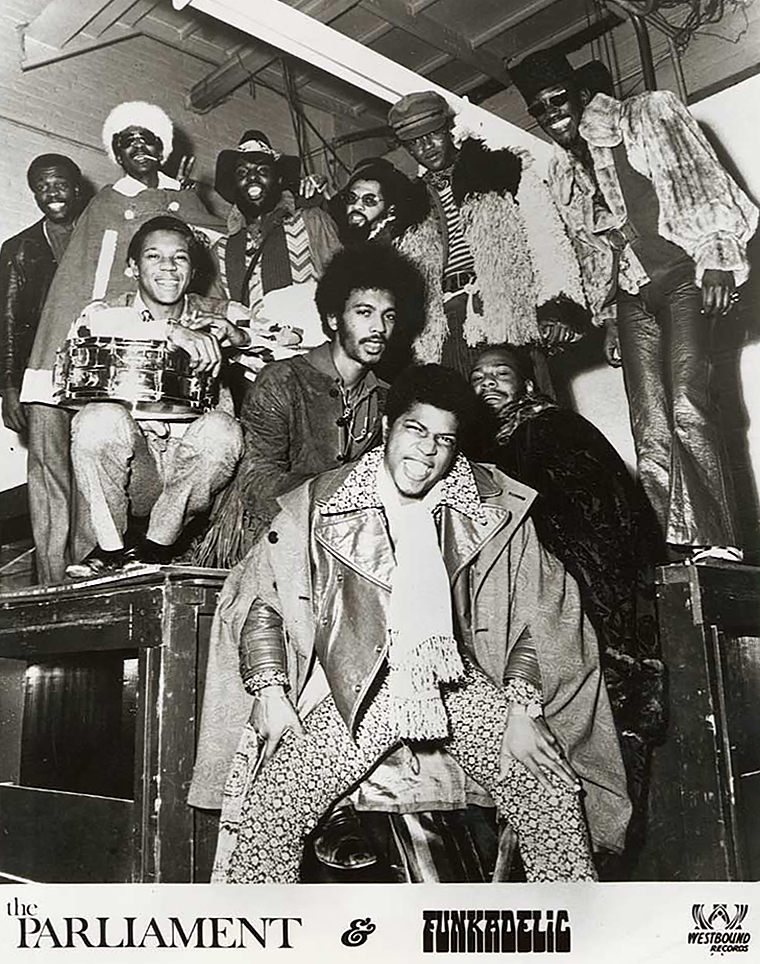
Funkadelic - Live at Michigan 1971 (Superb Psychedelic Funk Concert)


Size: 206 MB
Bitrate: 320
mp3
Found at DC++ Site
Artwork Included

Funkadelic Live: Meadowbrook, Rochester, Michigan 12th September 1971 is a 1996 live release featuring the only official in-concert recording from early in the career of Funkadelic. Westbound Records owner Armen Boladian had decided to record the show without the band's prior notice, for a possible official live album release. Boladian then decided not to go forward with the project. The soundboard recording resided with engineer Ed Wolfram until being unearthed in 1996. The album contains the entire live performance of September 12, 1971 minus approximately three minutes of between-song chatter.


In late 1971, George Clinton was still structuring Funkadelic as the live band supporting his concurrent doo wop vocal group Parliament, even though by that point multiple albums had been released under both names. As was common for concerts during the period, the Funkadelic musicians would warm up the crowd with instrumentals, after which the Parliament singers would take to the stage for the vocal numbers. The concert would end in a similar fashion, with the Parliament singers exiting slightly before the end of the show, with the Funkadelic musicians closing with another instrumental.

At the show recorded for this album, the band opened with two extended instrumentals totaling about 20 minutes: the then-untitled "Alice in My Fantasies" (to be later recorded with vocals on the 1974 Funkadelic album Standing on the Verge of Getting It On) and "Maggot Brain." The closing instrumental consisted of a short portion of "Free Your Mind and Your Ass Will Follow." The vocal tracks were taken from the albums Funkadelic and Maggot Brain with the exception of two tracks that had been recorded originally as singles by Parliament: "I Call My Baby Pussycat" (later retooled for the 1972 Funkadelic album America Eats Its Young) and "All Your Goodies Are Gone (The Loser's Seat)" (later retooled for the 1974 Parliament album Up for the Down Stroke). There was no encore.


This concert was beset by personnel issues. Guitarist Tawl Ross had recently dropped out of the band due to a damaging experience with LSD and was replaced right before the show by former Isaac Hayes sideman Harold Beane. Original drummer Tiki Fulwood had also departed right before this show to explore other musical opportunities, and was replaced by former Apollo Theater house drummer Tyrone Lampkin. 

Sources indicate that Beane and Lampkin had rehearsed either very little or not at all before this performance. This resulted in many musical difficulties, particularly because of the differences in drumming styles between Lampkin and Fulwood, which in turn created many difficulties for bassist Billy Bass Nelson. These problems resulted in an inadvertent breakdown during the performance of "I Call My Baby Pussycat," while Nelson stormed off the stage in frustration before the conclusion of "Free Your Mind and Your Ass Will Follow." Nelson and lead guitarist Eddie Hazel left the group about a month after this concert.


This is a truly amazing, amazing look at Funkadelic in the early part of their career. The disc includes extensive, exhaustive liner notes from Rob Bowman, who also did the fantastic liner notes to the 2CD Music For Your Mother set. In addition to going over each track in detail, he also includes quotes from Bernie, Billy Bass and the engineer who recorded the session. He also goes into extensive detail into how and why the session was recorded.

The show was taped when Armen Boladian, the Westbound owner, wanted a live recording of the band, possibly for release. So he sent an engineer over one night, unbeknownst to the band until the time of the show. Boladian wasn't that impressed with the results and shelved the project, where it sat with the engineer for 20+ years.

Basically, this was probably the worst night possible to record the band. Drummer Tiki Fulwood had just quit the week before, and rhythm guitarist Tawl Ross had also departed around that time. So Harold Beane and Ty Lampkin were brought in to play, **with no rehearsal**, for this gig! Both ended up staying with the group, with Lampkin playing a major role for years to come. (He dominates the Cosmic Slop album, to name just one) However, on this particular night, he had severe problems fitting in. 


Tiki's drumming style emphasized groove and pocket. Ty, who had been the house drummer for the Apollo Theater, was flashier and jazzier. As a result, he sounded completely out of synch with the rest of the band, annoying and frustrating everyone. Even George came flat out and said, "Bear with us, we have a new drummer, Tyrone." Towards the end, Billy Bass was so frustrated trying to keep him under control, he walked off!

Keeping all this in mind, it's still one of the most astounding live performances I've ever heard, a testament to the improvisational abilities of everyone. The sound quality is CRYSTAL CLEAR, putting the remarkable Sugar Shack '72 show to shame. Harold Beane does a good job at rhythm, really doing some nice chicken-scratch style guitarwork. Bernie does some incredible things, moving around the edges of some songs, adding flavor, and then moving right into the middle of other, laying down a mind-blowing solo. 


Not to mention all the crazy cartoon blips he plays in the middle of songs, often in the middle of solos! He had the most musical discipline of any of them, yet at the same time he was the craziest and most adventurous. The singing is also amazing, with George screaming and singing, Fuzzy shoutin' and preachin', and Calvin really laying on the gospel/soul thang. But the real attraction is the amazing chemistry between Billy Bass and Eddie. They're in their prime here, with Billy the captain of the Funkadelic rhythm section, and Eddie searing the air with his raw power.


The show is virtually complete, with only a few minutes shaved off. The only really bad track is the fast version of "Pussy" where Ty is completely out of control. George just stops it in mid-flight, where they go into the slow version. The slow version is a nas-tay highlight. The (at that time untitled) vesion of "Alice In My Fantasies" is a thunderbolt of hardcore, screaming funk-rock. 

The epic version of "All Your Goodies Are Gone" is the Parlia funkadelic ment Thang at its best, with gospel-tinged vocals being swept up into nasty breakdowns, then back to the singing. Calvin truly stands out here, but the interplay between the vocalists is almost as remarkable as the interplay between the musicians. The last few songs blend together, going straight from one to the next with no break.

Personnel:
♦ Parliament (George Clinton, Fuzzy Haskins, Calvin Simon, Grady Thomas, Ray Davis): Vocals
♦ Eddie Hazel: Lead Guitar, Vocals
♦ Billy Bass Nelson: Bass, Vocals
♦ Bernie Worrell: Keyboards, Vocals
♦ Harold Beane: Guitar
♦ Tyrone Lampkin: Drums

01. Alice in My Fantasies - (George Clinton
, Eddie Hazel) - 6:37
02. Maggot Brain - (Eddie Hazel, George Clinton) - 14:02
03. I Call My Baby Pussycat [fast version] - (Billy "Bass" Nelson, George Clinton, Eddie Hazel) - 5:38
04. I Call My Baby Pussycat - (Billy "Bass" Nelson, George Clinton, Eddie Hazel) - 8:08
05. Good Old Music - (George Clinton) - 4:31
06. I Got a Thing, You Got a Thing, Everybody Got a Thing - (Clarence "Fuzzy" Haskins) - 8:38
07. All Your Goodies Are Gone (The Loser's Seat) - (George Clinton, Clarence "Fuzzy" Haskins, Billy "Bass" Nelson) - 15:08
08. I'll Bet You - (George Clinton, Sidney Barnes, Pat Lindsey) - 5:25
09. You and Your Folks, Me and My Folks - (George Clinton, Bernie Worrell, Billy "Bass" Nelson, Clarence "Fuzzy" Haskins) - 5:28
10. Free Your Mind and Your Ass Will Follow [instrumental] - (George Clinton, Eddie Hazel, Tawl Ross) - 3:41

Part 1: Live 1971
Part 2: Live 1971
or
Part 1: Live 1971
Part 2: Live 1971
or
Part 1: Live 1971
Part 2: Live 1971
.

Friday, February 12, 2016

Thomas F. Browne - Wednesday's Child (Rare Folkrock UK 1971)


Size: 84.5 MB
Bitrate: 256
mp3
Artwork Included
Source: 24-Bit Remaster

On CD, this is the 1971 debut album from British singer-songwriter Thomas F. Browne, drawing on folkrock as well as jazzrock. The LP was originally released by Vertigo. In the '60s Browne was the drummer of Nero & The Gladiators, a band that also featured future Spooky Tooth/Foreigner guitarist Mick Jones.


It's one of the unwritten laws of record collecting that some labels guaranteed quality simply by existing -- and, if a record bears that sainted logo, then it's worth any investment you care to make. Of course, it doesn't always work that way, as collectors of the legendary U.K. prog label Vertigo will ruefully inform you. 

But anybody taking a chance on one of the final albums to be released beneath the label's spiral logo, the one-and-only album by singer/songwriter Thomas F. Browne, might well find themselves wondering why the company wasted so much wax on half-hearted jazz-rock, and so little exploring the further reaches of the folk-rock hybrid. Browne himself was drummer with the '60s beat band Nero & the Gladiators, a heavily classics-influenced band that also featured future Spooky Tooth/Foreigner guitarist Mick Jones for a time. 

Indeed, Jones and Browne alone later worked together as the State of Mickey & Tommy, and Wednesday's Child continued the partnership, with additional (and supremely characteristic) help from fellow Spooky Gary Wright, and the Sandy Denny-less Fotheringay. Such heavyweight backing, of course, dictates much of the ensuing mood, a gently rolling collection of ballads that fall into much the same bag as the period Strawbs and Mike Heron. 

Browne's voice is not always at its best, lacking the depth of expression that his lyrics generally demand. But the power of the arrangements and some wonderfully atmospheric backing vocals from Doris Troy and Sue & Sunny readily salvage things, and songs like "Carry My Load" (with a breathtaking Jones guitar solo) and "Dark Eyed Lady"'s cheeky approximation of "Pinball Wizard"'s acoustic guitar hook are both supremely contagious, while "The Alamo" is as epic as the land it immortalizes.

01. Gentle Sarah
02. Carry My Lord
03. Bown Bown Bomm
04. Dark Eyed Lady
05. It's Coming
06. Hold On
07. Tomorrow Is Another Day
08. Poor Man Smile
09. The Alamo

1. Thomas F. Browne
or
2. Thomas F. Browne
or
3. Thomas F. Browne
.

Thursday, February 04, 2016

Hideki Ishima - One Day (Psychedelic Folkrock/Hardrock Japan 1973, ex Flower Travelling band)


Size: 67.5 MB
Bitrate:
mp3
Rippd by ChrisGoesRock
Artwork Included
Source: Japan 24-Bit Remaster

Hideki Ishima (石間 秀機 Ishima Hideki?, born 21 March 1944 in Sapporo, Hokkaido, Japan) is a Japanese musician, known primarily for his work with Flower Travellin' Band. A guitarist and sitar player for nearly forty years, he now exclusively plays the sitarla, an instrument he invented in 2000 that combines aspects of a sitar with an electric guitar.

Ishima started playing guitar at 19, at the behest of a friend who wanted to be in a band. His first group was Jarōzu (ジャローズ) in his native Sapporo shortly after graduating high school. He moved to Tokyo and formed the group sounds band The Beavers in 1966, who had released four albums and one single but had not had major success.

Ishima began playing sitar at 24, after researching Gábor Szabó at the suggestion of a woman and learning that the jazz guitarist also played this instrument he had never heard of. He taught himself from Ravi Shankar's 1968 book My Music, My Life, looking up the Japanese translations for the English words.

In 1969, while in the blues band Mystic Morning with Joe Yamanaka, the two of them were scouted by Yuya Uchida for Flower Travellin' Band. When they went on hiatus in 1973, Ishima recorded the solo album One Day and joined a group called Trans Am. After a few years off, he followed this with the Donjuan R&R Band with Kenichi Hagiwara. During the 1980s he was in Co-Colo alongside Kenji Sawada and Nobuhiko Shinohara, before being fired.

Ishima quit guitar in 1990, citing money problems. After a 40-minute sitar lesson from Manilal Nag during a trip to Japan in 1998, Ishima became a student of Nag's Japanese apprentice.

He made a comeback in 2000 exclusively playing the sitarla. That year, he recorded the album More-ish with the multinational group Pythagoras Party. The improvi sational instrumental group View was formed in 2007.

Any Japanese rock fan worth their salt knows The Flower Travellin' Band. As guitarist for that unit, Hideki Ishima helped create one of the most distinctive guitar albums in rock history, 1971's "Satori." His buzzing, limber lines gave the record its shape and made an impact that is still being felt today. Especially in the West, where "Satori" has justly been branded as not just a lost classic, but perhaps the lost classic, acting as the de facto entry point to anyone serious about educating themselves on Japanese rock music. Imagining Japanese rock without "Satori" is like imagining western rock without Jimi Hendrix's "Are You Experienced."

But when the Flower Travellin' Band went on hiatus in 1973 (they did not break up, as Ishima-san will be quick to point out,) the endlessly inventive guitarist dropped off western radar. 

During that period, he continued to make exceptional work with bands like Co-Colo, Trans Am, Pythagoras Party, and the Donjuan R&B Band, as well as backing up vocalists like Flower Travellin' Band's Joe Yamanaka, and occasional Akira Kurosawa actor Jinpachi Nezu ("Ran," "Kagemusha.")

Now, with the Flower Travellin' Band off hiatus, Ishima is back in the spotlight. 

He's also got a new improv unit called View, and exclusively plays the Sitarla, a sitar/guitar hybrid of his own invention. In February, Ishima-san sat down with Jrawk to discuss gifts from God, the state of Japanese rock, and resurrecting his old band.

01. We're Just Tryin' My Way 6:35
02. Artificial Flowers 3:46
03. Lady Bird 3:32
04. Night Mare 3:37
05. Unbalance 3:47
06. Depending by the Time 6:52
07. Trash Blues 3:06

1. Hideki Ishima
or
2. Hideki Ishima
or
3. Hideki Ishima
.

Friday, January 29, 2016

Strange tool, i think it's for wood work, someone who knows?


Hi. Is it someone out there who know what this tool is for?, myself i guess the tool is for some wood work (?). Looking forward to hear from some of you soon...

//ChrisGoesRock

PS. Open picture in a NEW window for 100% size.


Saturday, January 23, 2016

Parrish & Gurvitz Band - Selftitled (Great and Classic Rock UK 1971)


Size: 87.2 MB
Bitrate: 256
mp3
Ripped by: ChrisGoesRock
Artwork Included
Source: 24-Bit Remaster

Somewhere betweem The Moody Blues, Marmalade and Crosby Stills and Nash, for a moment Parrish and Gurvitz may have been something, if perhaps with the involvement of George Martin as producer, they had not been unreasonably hailed as the new Beatles. Still, this classic song is completely forgotten, off every list, it’s not cool, hip, Prog, Psych, Psychedelic, Garage, sixties Pop, seventies underground and has no recognised virtuosos.


Having said that the line-up of the band is impressive. Paul Gurvitz was in The Gun with his brother Adrian, remember their 1968 hit Race With The Devil. The Gurvitz brothers went on to form Three Man Army and then teamed up with Ginger Baker for Baker Gurvitz Army in the seventies. Brian Parrish played with various small sixties bands (with Gurvitz), later joining Badger. Mike Kellie was with Spooky Tooth and other seventies luminaries before joining one of my favourite bands of the new wave era, The Only Ones, Rick Wills played with countless groups including Cochise, Roxy Music, Foreigner, latter Day Small Faces and Dave Gilmour. Micky Gallagher had played with Skip Bifferty and would eventually join Ian Dury as one of the Blockheads.

With George Martin choosing, producing and arranging Parrish And Gurvitz’s material, it’s not surprising that this opening track(s) from their one and only album is so good. Unfortunately The Beatles connection hindered their progress with that overpowering legend producing mild hysteria from the press. 

They were never able to live up to their producer’s previous affiliations but you might ask why were they called Parrish and Gurvitz instead of Gasoline Toothbrush or Camouflaged Meadow or Sadness In The Trees – anything but Parrish and Gurvitz – they sounded like they were solicitors. I imagine it’s because this wasn’t their first band – they’d played together before in various incarnations and as the two main members had got the support to make a record and then hired the band to play it live. 

Unfortunately the band was much heavier than the record and the US label lost interest as the band they signed was not the band they saw live. Brian Parrish then quit on the eve of a US tour due to personal problems and shortly thereafter they were gone.

So many records out there, hailed as genius, so many worthy records out there that are forgotten – this is one of them.

In 1971 The Gun broke up Paul Gurvitz started this act simply called Parrish & Gurvitz,(Brian Parrish, formerly of Badger), which was produced by George Martin.This was a one-off project on the Regal Zonophone label featuring the additional talents of Mike Kellie (ex-Spooky Tooth,Art), Micky Gallagher (pre-Ian Dury) and Rick Wills (pre-Foreigner).Lush production over beautiful crafted songs fully infused with the US west-coast sound.

The band was co-founded by keyboardist Tony Kaye after he left Yes, with David Foster. Foster had been in The Warriors with Jon Anderson before Anderson co-founded Yes. Foster later worked with the band on Time and a Word. Kaye had worked on a solo project by Foster that was never released.

The pair found drummer Roy Dyke, formerly of Ashton, Gardner & Dyke, and Dyke suggested Brian Parrish formerly of Parrish & Gurvitz which later became Frampton's Camel (after Parrish left P&G) on guitar. The new band began rehearsing in September 1972 and signed to Atlantic Records.

The group was formed by Adrian Gurvitz and Paul Gurvitz, formerly of The Gun. Following the band's dissolution, Adrian played with Buddy Miles and Paul played with Parrish & Gurvitz, then reunited as Three Man Army. Their debut album, A Third of a Lifetime, featured several drummers, including Miles, Carmine Appice (of Vanilla Fudge) and Mike Kellie (from Spooky Tooth). Tony Newman, who had previously played with Sounds Incorporated and Rod Stewart, joined for the group's next two albums, and a fourth album was planned but never recorded. Newman then left to play with David Bowie, and the Gurvitzes united with Ginger Baker as the Baker Gurvitz Army.

Rick Wills took his own form of music degree in Cambridge during the 1960s and has since gone on to become one of the most respected bass guitarists in the business. However, it was not one of the grand colleges of the famous university City which saw his graduation; instead, it was the local bars and village halls that provided the perfect place for him to take his first steps in the industry. 

The decision has proved to be a good one and during the years that have followed he has enjoyed success on both sides of the Atlantic, including 13 years as part of one of the world’s supergroups. 

After forming his first band called The Sundowners with a group of friends in the 1960s, Wills gained experience playing the local scene before being asked by another young Cambridge musician to form a new group. “His name was Dave Gilmour and even at that early stage you could see he had star potential,” claims Wills. “We called ourselves ‘Joker’s Wild’ and we had a great time for a few years playing in places like Spain and living in Paris, before Dave got the call to join Pink Floyd.” After moving to London Wills became part of Cochise and the group made three well thought of albums before they split and Wills, along with Mickey Gallagher and Mike Kellie, became part of the Parrish and Gurvitz band. 

01. Another Time, Another Day/Take What You Want — 4:40
02. It’s A Shame — 3:21
03. Libra — 4:00
04. I’ve Got Time — 3:48
05. Janine — 3:42
06. Dozy Gwen — 2:11
07. Why — 4:24
08. As If I Were Blind — 3:50
09. More Than Life — 3:43
10. Loving You — 7:14

1. Parrish and Gurvits
or
2. Parrish and Gurvitz
or
3. Parrish and Gurvitz
.

Thursday, January 21, 2016

David Bowie - Tower Theatre 1974-07-12 (Bootleg)


Size: 134 MB
Bitrate 256
mp3
Found in DC++ World

David Bowie was an English rock star known for dramatic musical transformations, including his character Ziggy Stardust. He was inducted into the Rock and Roll Hall of Fame in 1996.

David Bowie was born in South London's Brixton neighborhood on January 8, 1947. His first hit was the song "Space Oddity" in 1969. The original pop chameleon, Bowie became a fantastical sci-fi character for his breakout Ziggy Stardust album. He later co-wrote "Fame" with John Lennon which became his first American No. 1 single in 1975. An accomplished actor, Bowie starred in The Man Who Fell to Earth in 1976. He was inducted into the Rock and Roll Hall of Fame in 1996. Bowie died on January 10, 2016, from cancer at the age of 69.


David Bowie and Mick Ronson Ziggy Stardust tour, December 1972
Known as a musical chameleon for his ever-changing appearance and sound, David Bowie was born David Robert Jones in Brixton, South London, England, on January 8, 1947.

David showed an interest in music from an early age and began playing the saxophone at age 13. He was greatly influenced by his half-brother Terry, who was nine years older and exposed young David to the worlds of rock music and beat literature.

But Terry had his demons, and his mental illness, which forced the family to commit him to an institution, haunted David for a good deal of his life. Terry committed suicide in 1985, a tragedy that became the focal point of Bowie's later song, "Jump They Say."

After graduating from Bromley Technical High School at 16, David started working as a commercial artist. He also continued to play music, hooking up with a number of bands and leading a group himself called Davy Jones and the Lower Third. Several singles came out of this period, but nothing that gave the young performer the kind of commercial traction he needed.

Out of fear of being confused with Davy Jones of The Monkees, David changed his last name to Bowie, a name that was inspired by the knife developed by the 19th century American pioneer Jim Bowie.


David Bowie as Ziggy Stardust Aladdin Sane tour.
Eventually, Bowie went out on his own. But after recording an unsuccessful solo album, Bowie exited the music world for a temporary period. Like so much of his later life, these few years proved to be incredibly experimental for the young artist. For several weeks in 1967 he lived at a Buddhist monastery in Scotland. Bowie later started his own mime troupe called Feathers.

Around this time he also met the American-born Angela Barnett. The two married on March 20, 1970, and had one son together, whom they nicknamed "Zowie," in 1971, before divorcing in 1980. He is now known by his birth name Duncan Jones.

By early 1969, Bowie had returned full time to music. He signed a deal with Mercury Records and that summer released the single "Space Oddity." Bowie later said the song came to him after seeing Stanley Kubrick's 2001: A Space Odyssey. "I went stoned out of my mind to see the movie and it really freaked me out, especially the trip passage."

The song quickly resonated with the public, sparked in large part by the BBC's use of the single during its coverage of the Apollo 11 moon landing. The song enjoyed later success in the United States, when it was released in 1972 and climbed to number 15 on the charts.


David Bowie on Tour 1972
Bowie's next album, The Man Who Sold the World (1970), further catapulted him to stardom. The record offered up a heavier rock sound than anything Bowie had done before and included the song "All the Madmen," about his institutionalized brother, Terry. His next work, 1971's Hunky Dory, featured two hits: the title track that was a tribute to Andy Warhol, the Velvet Underground and Bob Dylan; and "Changes," which came to embody Bowie himself.

As Bowie's celebrity profile increased, so did his desire to keep fans and critics guessing. He claimed he was gay and then introduced the pop world to Ziggy Stardust, Bowie's imagining of a doomed rock star, and his backing group, The Spiders from Mars.

His 1972 album, The Rise and Fall of Ziggy Stardust and the Spiders from Mars, made him a superstar. Dressed in wild costumes that spoke of some kind of wild future, Bowie, portraying Stardust himself, signaled a new age in rock music, one that seemed to officially announce the end of the 1960s and the Woodstock era.


Lou Reed, Mick Jagger and David Bowie, Café Royale, 4th of July. 1973

But just as quickly as Bowie transformed himself into Stardust, he changed again. He leveraged his celebrity and produced albums for Lou Reed and Iggy Pop. In 1973, he disbanded the Spiders and shelved his Stardust persona. Bowie continued on in a similar glam rock style with the album Aladdin Sane (1973), which featured "The Jean Genie" and "Let's Spend the Night Together," his collaboration with Mick Jagger and Keith Richards.

Around this time he showed his affection for his early days in the English mod scene and released Pin Ups, an album filled with cover songs originally recorded by a host of popular bands, including Pretty Things and Pink Floyd.


David Bowie Advertise in US 1967
By the mid 1970s Bowie had undergone a full-scale makeover. Gone were the outrageous costumes and garish sets. In two short years he released the albums David Live (1974) and Young Americans (1975). The latter album featured backing vocals by a young Luther Vandross and included the song "Fame," co-written with John Lennon, which became Bowie’s first American number one single.

In 1980 Bowie, now living in New York, released Scary Monsters, a much-lauded album that featured the single "Ashes to Ashes," a sort of updated version of his earlier "Space Oddity."

Three years later Bowie recorded Let's Dance (1983), an album that contained a bevy of hits such as the title track, "Modern Love" and "China Girl," and featured the guitar work of Stevie Ray Vaughan.

Of course, Bowie's interests didn't just reside with music. His love of film helped land him the title role in The Man Who Fell to Earth (1976). In 1980, Bowie performed on Broadway in The Elephant Man.

Over the next decade, Bowie bounced back and forth between acting and music, with the latter especially suffering. Outside of a couple of modest hits, Bowie's musical career languished. His side project with musicians Reeve Gabrels and Tony and Hunt Sales known as Tin Machine released two albums Tin Machine (1989) and Tin Machine II (1991), which both proved to be flops. His much-hyped album Black Tie White Noise (1993), which Bowie described as a wedding gift to his new wife, supermodel Iman, also struggled to resonate with record buyers.


David Bowie as Ziggy Stardust for the Pin Ups album 1973
Oddly enough, the most popular Bowie creation of late has been Bowie Bonds, financial securities the artist himself backed with royalties from his pre-1990 work. Bowie issued the bonds in 1997 and earned $55 million from the sale. The rights to his back catalog were returned to him when the bonds matured in 2007.

In 2004 Bowie received a major health scare when he suffered a heart attack while onstage in Germany. He made a full recovery and went on to work with bands such as Arcade Fire and with the actress Scarlett Johansson on her album Anywhere I Lay My Head (2008), a collection of Tom Waits covers.

Bowie, who was inducted into the Rock and Roll Hall of Fame in 1996, was a 2006 recipient of the Grammy Lifetime Achievement Award. He kept a low profile for several years until the release of his 2013 album The Next Day, which skyrocketed to number 2 on the Billboard charts. The following year, Bowie released a greatest hits collection Nothing Has Changed, which featured a new song "Sue (Or in a Season of Crime)."

In 2015, he collaborated on Lazarus, an Off-Broadway rock musical starring Michael C. Hall, which revisited his character from The Man Who Fell to Earth. 

He released Blackstar, his final album on January 8, 2016, his birthday. New York Times critic Jon Pareles noted that it was a "strange, daring and ultimately rewarding" work "with a mood darkened by bitter awareness of mortality." Only a few days later, the world would learn that the record had been made under difficult circumstances. 

The music icon died on January 10, 2016, two days after his 69th birthday. A post on his Facebook page read: “David Bowie died peacefully today surrounded by his family after a courageous 18 month battle with cancer."

He was survived by his wife Iman, his son Duncan Jones and daughter Alexandria, and his step-daughter Zulekha Haywood. Bowie also left behind an impressive musical legacy, which included 26 albums. His producer and friend Tony Visconti wrote on Facebook that his last record, Blackstar, was "his parting gift."

David Bowie - Tower Theatre, 
Philadelphia, Pa, July 12, 1974
Bootleg in excellent Sound-Qualitiy.

01. Knock On Wood (3:00)
02. Jean Genie (5:16)
03. Rebel Rebel (2:41)
04. Changes (3:20)
05. All The Young Dudes (3:50)
06. Diamond Dogs (6:25)
07. Big Brother (4:03)
08. Rock 'N' Roll Suicide (4:25)
09. Aladdin Sane (4:56)
10. 1984 (3:17)
11. Moonage Daydream (5:07)
12. Suffragette City (3:44)

1. David Bowie 1974
or
2. David Bowie 1974
or
3. David Bowie 1974
.
David Bowie Advertise 1969