Followers

Sunday, July 10, 2016

Paul Brett - Selftitled (Very Rare Folkrock UK 1972)


Size: 80.5 MB
Bitrate: 256
mp3
Ripped by: ChrisGoesRock
Artwork Included
Source: Japan 24-Bit Remaster

Paul Brett (Sage)  began his career appearing (while still a teenager) as an uncredited backing guitarist on ROY HARPER's 1966 debut 'Sophisticated Beggar' which is generally acknowledged as contemporary British folk classic although not especially progressive when compared to some of Harper's later work into the mid-seventies and beyond. 


The same can be said of AL STEWART's 'Zero She Flies', recorded in 1969 with Brett again appearing as a nameless studio musician while other studio players such as Trevor Lucas and Gerry Conway of FOTHERINGAY do appear in the liner notes. 

Brett appeared (with credits) on the STRAWBS' 'Dragonfly' studio album which was also recorded in 1969, and cut a couple of singles with ARTHUR BROWN. 

That same year he played guitar on most of ELMER GANTRY'S VELVET OPERA second and final release 'Ride a Hustler's Dream', and closed out the decade as a member of the short-lived psych band FIRE, largely leading the studio effort for the now ultra-rare 'The Magic Shoemaker' LP.

After his work with the STRAWBS Brett formed his own band (PAUL BRETT SAGE) and released three studio albums between 1970-1972. That group consisted at various times of Nicky Higginbottom (flute, saxophone), Mike Piggot (later of the PENTANGLE), bassist Dick Dufall (STRAWBS, FIRE), Stuart Cowell (guitars) and percussionist Bob Voice (FIRE), among others. The band's sound ranged from contemporary to progressive folk and mildly heavy rock with occasional blues-rock and even a bit of jazz. 

Brett would go on to a lengthy solo career as a mostly 12-string guitarist, recording contemporary rock albums, along with a few progressive works including the complex guitar instrumentals 'Earth Birth' and 'Interlife'. 

In later years he would release a number of modern folk, instructional and mainstream albums including several K-Tel records. He also amassed a lengthy body of work as a session and touring musician, appearing with the likes of STEVE HILLAGE, JIMI HENDRIX, VAN DER GRAFF GENERATOR, MOTT THE HOOOPLE, STATUS QUO, FREE and many others.

Paul Brett (born 20 June 1947, Fulham, London) is an English classic rock guitarist. He played lead guitar with Strawbs (though he was never actually a member), The Overlanders, The Crazy World of Arthur Brown, Elmer Gantry’s Velvet Opera, The Velvet Opera, Tintern Abbey, Fire, Roy Harper, Al Stewart, Lonnie Donegan, and switched to twelve-string guitar in the 1970s.

His first twelve-string guitar suite, Earth Birth, was released on his own label, Phoenix Future, and was produced by artist Ralph Steadman of Fear and Loathing fame. Critical acclaim led to Brett being signed on a four-album deal with RCA Records. His K-tel Romantic Guitar album went platinum in the UK, but Brett stopped recording soon afterwards. He started recording again in 2000, with long-time friend and fellow twelve-string guitarist, John Joyce.

Brett wrote for music magazines Melody Maker, Sound International and International Musician and continued working in the music industry in the later part of his career. He now writes a regular column for Acoustic, a magazine specializing in acoustic guitars. He is also the Associate Editor and Features Writer for Music Maker and Live in London magazines.

01. The Ant (instrumental) (2.13)
02. Mr Custer (3:04)
03. Goodtimes, Hardtimes (3.23)
04. 18 Years (2.30)
05. Handful Of Rain (4.45) 
06. Antiques, Flowers And Music Box Dancers (instrumental) (2.46)
07. The Spanish Main (4.27)
08. Jim Crow (3.15)
09. Motherless Child On A Merry-Go-Round (3.29)
10. Here Comes The Sun (2.43)
11. Who Am I ? (3.57)
12. March Of The Hedgehogs (instrumental) (3.19)


or
or


Saturday, July 09, 2016

I'm Sorry...


Hi all. I'm sorry for that i don't add music downloads like i did before. Things have changed over the years and i have no time like i had before.

I will add new music downloads when i have some hours for free, promise.

But as you see,  i have alot of links to other Bloggers with music downloads so i hope that you visit my site anyway, or?

Michigan Boogie Ann Arbor Sun, April 27, 1972
(Open picture in a new window for 100%)
//ChrisGoesRock

Friday, July 01, 2016

Not to be missed: Black Nasty - Talking to The People (Heavy Funk'n Soul US 1973)


Size: 82.2 MB
Bitrate: 256
mp3
Ripped by: ChrisGoesRock
Artwork Included
Source: Japan 24-Bit Remaster

Excellent heavy funk from Stax! Black Nasty were one of the heaviest groups on the label – with a rock-solid guitar-based groove that went even farther than the Bar-Kays, who were no slouch in the guitar department themselves! The grooves are all slow to midtempo, with the band coming down hard on the downbeats, jamming away in a style that sounds more like heavy Detroit Westbound than sweetly soulful Memphis. Most all cuts have vocals – sung in a shouting style by the band that works well with the tripped-out hooks of the songs. This was the only album the band ever cut, but it's become a fast favorite among those who like their funk raw. Tracks include "We're Doin Our Thing", "Rushin Sea", "Booger The Hooker", "Black Nasty Boogie", "Nasty Soul", and "Getting Funky Round Here". 


Like Rare Earth and early Funkadelic, Black Nasty took a very rock-minded approach to Detroit soul and funk -- probably too rock-minded for many program directors at black radio. And at the same time, Black Nasty was too funky and soul-oriented for FM rock radio. So Black Nasty fell through the cracks in the early to mid-'70s, although it enjoyed some commercial success after evolving into the ADC Band and recording the major funk hit of 1978, "Long Stroke." The band's only album as Black Nasty, Talking to the People, was a commercial disappointment but a creative triumph. Those who savored the Motor City funk/rock experiments of Rare Earth and early Funkadelic will find a lot to admire about gritty, hard-edged smokers like "Nasty Soul," "Getting Funky Round Here," and the single "Black Nasty Boogie" (which brings to mind John Lee Hooker's work with Canned Heat). To its credit, Black Nasty has no problem turning around and providing silky, mellow slow jams such as "Rushin' Sea" and "I Must Be in Love," both of which feature singer Audrey Matthews. It is Nasty's other lead singer, Terrance Ellis, who handles the more up-tempo gems. 


Black Nasty were a little-known but decent group in the early-'70s Detroit funk scene, following the path of the Parliament/Funkadelic crowd in mixing rock, psychedelic, soul, and funk influences. They recorded a fair album for Stax that was released in 1973, but wasn't a heavy seller. After losing their contract with Stax (which would soon go out of business anyway) in 1975, they changed into different R&B acts that would have a little more commercial success.

Black Nasty's mentor was Johnnie Mae Matthews, a singer who owned several independent Detroit R&B labels, including Northern, Reel, Audrey, Jam, Art, Big Hit, and Tank. Matthews also recorded more than two dozen singles under her own name. 

Though none were notable successes, she continued her involvement in the artistic side of the music business by encouraging her drummer son, Artwell, when he formed a band in the mid-'60s with his cousin, bassist Mark Patterson, and friends. Originally called Raw Integrated Funk, there were prominent rock elements at the outset (Ted Nugent was an early member), but under the influence of Johnnie Mae Matthews, they broadened their style to include more R&B. After putting out a cover of the Supremes' "You Keep Me Hanging' On" on Tank, they were signed to Stax, for which they recorded three singles and an album between 1971 and 1974. 

The Stax sessions (all of the singles also appeared on the album) were produced by Johnnie Mae Matthews and Sir Mack Rice, the minor but noted Detroit soul singer. Rice had recommended Black Nasty to Stax after starting work at the label as a songwriter. While their records were more promise than payoff, the album did have an interesting mix of funk with hard rock guitar, soul ballads on which Johnnie Mae Matthews' teenage daughter Audrey took lead, and some socially conscious compositions that reflected black urban life of the early '70s. After the album made little impact, Stax dropped Black Nasty, which changed their name to Nazty and recorded a couple of singles for Excello. After some personnel changes, the group became ADC Band, getting an R&B Top Ten hit with "Long Stroke" in 1978 and recording as late as the mid-'80s.

01. Talking To The People  02:43
02. I Must Be In Love  03:42
03. Nasty Soul  03:38
04. Getting Funky Round Here  02:43
05. Black Nasty Boogie  05:46
06. Where Doin´ Our Thing  03:45
07. I Have No Choice  03:35
08. It´s Not The World  03:35
09. Rushin´ Sea  03:36
10. Booger The Hooker  03:25

1. Black Nasty
or
2. Black Nasty
or
3. Black Nasty

Sunday, June 26, 2016

Pictures For Today....


Back off a bit and the mood shifts with each other, scary...


There are several ways for steal a car...

Saturday, June 25, 2016

dBpoweramp Reference 16.0 Created for Audio Professionals


Audio conversion perfected, effortlessly convert to mp3, FLAC, Apple lossless and more. dBpoweramp Music Converter™ has become the standard tool for audio conversions, over 30 million users world trust their converting to dBpoweramp.

mp3 Converter
Convert mp3, m4a (iTune
s)

& iPod), WMA, WAV, AIFF, AAC, FLAC, Apple Lossless (ALAC) to name a few.

High Speed Conversions
Look for a mp3 converter which encodes using all CPU cores simultaneously, get the job done in double quick time.


No Malware
Free converters come with a little extra (a spying toolbar, Trojan, malware, or virus), dBpoweramp has never bundled in 15 years, those wanting an mp3 converter, get just that and only that. No Trojan, no malware, no viruses.

Batch Convert
Large numbers of files with 1 click, filter on mp3 or other file type.


DSP Effects

Process the audio with Volume Normalize, or Sample / Bit Rate Conversion. dBpoweramp is a fully featured mp3 Converter.

Simplicity
dBpoweramp integrates into Windows Explorer, an mp3 converter that is as simple as right clicking on the source file; Convert To. Popup info tips, Edit ID-Tags are all provided.

It is safe to say, no other audio program converts more multi-format audio files than dBpoweramp, we have spent 15 years perfecting format-compatibility and conversion stability. If converting FLAC to mp3, wma to mp3, or wav to mp3, dBpoweramp is the right choice.

Interface

  • New visual style, high DPI aware, 200% and 300% compatible 
  • Configure dBpoweramp repurposed as dBpoweramp Control Centre, only elevates on changes to shell settings Configuration, if proxy server is enabled but no proxy server is set, it is disabled. 
  • DSP Effects included as standard in all installs, DSP version number is now dBpoweramps version number 
  • dBpoweramp Shell Tag Editor - looks up art with PerfectTUNES 
  • Naming Section total rewrite Naming Added new values [track_unpad] [track_total_unpad] forunpadded track number and count 
  • Naming [IFEQUALS] check will match from multiple stored values, such as one match from 3 genres 
  • Naming added [REPLACE] function 
  • Naming added [WORD] function to limit word count
  •  
dBpowerAMP Music Converter:

  • Can add or remove CPU Cores from converting whilst converting Nearly instant when converting 1000's of files if the file naming does not require ID Tags reading for filenames 
  • Works with DSP effect 'conditional encoding' to allow programmable actions on files depending on their settings (such as copy 1:1 mp3, not encode) 
  • Option to precache read the source file, more for non-ssd systems, improves read performance by 100% 
  • New option (in configuration) 'Filename restricted characters' 
  • When finalizing DSP Effects (such as 100K RG album gains being written), the display is now responsive 
  • dBpoweramp Codec Central Link: Codec Central
  • "Spoon's" Setting Guide, Link: Spoon's Setting Guide

dBpoweramp Music Converter Reference 16.0

1, 16.0
or
2. 16.0
or
3. 16.0


Would be glad for some comment about this ripper. I have not found any better ripper than this one.

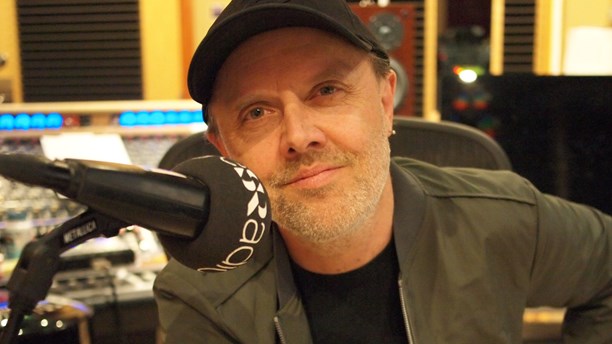
Lars Ulrich (Metallica) Talking & Play Songs by Swedish Broadcast Saturday June 25, 2016, 24.00-01.00


     Lars Ulrich in Swedish Radio 6 hours ago

MUSICIAN, SONGWRITER, DRUMMER - “Summer" is a Swedish radio show where a person is given free hands to speak about whatever they want and play their own choice of music.

- I am more comfortable speaking in English after my 35 years in the USA, but I can still speak Danish and some Swedish: Systembolaget, Sportspegeln and Kungliga Tennishallen, for example! I am going to talk about life, work, and the music that got me on the right track in life.

About Lars Ulrich:

Lars Ulrich has for the last 35 years been the drummer in the heavy metal band Metallica, which he also founded together with James Hetfield in 1981.


The band has sold over 110 million records and been awarded nine Grammys and numerous other awards. In 2013, Metallica played concerts on every single continent in the world, including Antarctica.

This spring, Metallica released a special live recording from 2003, recorded in the Bataclan concert hall in honor of the victims of the 2015 Paris terrorist attacks. All proceeds from the live album goes to charity.

He is son to the Danish tennis player and jazz musician Torben Ulrich and saxophone player Dexter Gordon was Ulrich’s godfather.

Lars Ulrich is also an avid collector of modern art.

1. Lars Ulrich
or
2. Lars Ulrich
or
3. Lars Ulrich

Enjoy!

//ChrisGoesRock

Monday, June 20, 2016

Bobby Williams - Anybody Can be a Nobody (Soul US 1976)


Size: 64.6 MB
Bitrate: 256
mp3
Ripped by: ChrisGoesRock
Artwork Invluded
Source: Japan 24-Bit Remaster

Soul/funk LP from 1976 with the incredible crossover soul tune "You need love like I do". 


The cliché says that imitation is the sincerest form of flattery, but few muster the sincerity of Bobby Williams -- a James Brown acolyte with a style and energy comparable to the Godfather himself, Williams transcends his faux-funk origins with grooves that are undeniably genuine. His second LP, 1976's Anybody Can Be a Nobody, moves past the low-budget grit of his debut Funky Superfly with a sound evoking the silky-smooth sensibilities of Miami funk. 


Williams is more of a singer than a shouter this time around, and while some listeners may miss the gutbucket grooves of his previous disc, the record's maturation and sophistication are convincing.

One of the all time indie funk classics of the 1970's, obscure vocalist Bobby Williams' gave James Brown a run for the money when he released "Funky Super Fly" in 1974. 

The style of the album recalls James Brown at his funkiest, but with a sound that's even grittier featuring a tight horn section and some heavy funk jamming that really gets in the groove and stays there. 

On his second LP, 1976's "Anybody Can Be a Nobody," Williams moves past the grit of "Funky Super Fly" to reveal a more sophisticated style evocative of Curtis Mayfield mixed with the smooth stylings of Miami funk to produce a more mature sound, showing that he can be more of a singer than a shouter. 

Copies of the original LP fetches big bucks on the rare groove collector's market and fans of the album will be delighted to see it make its long overdue debut in the digital realm. All selections newly remastered.

01. Anybody Can Be A Nobody   05:00
02. You Need Love Like I Do  05:09
03. Portrait Of My Stepfather   04:40
04. These Arms Of Mine   04:00
05. Think I'd Better Rest   02:45
06. I Will Sing For You   04:15
07. Drop It On Me   03:32
08. Everybody Needs Love Sometime  05:09

or
or


Monday, June 13, 2016

Guns 'N' Roses - (some songs from) Appetite For Democracy (US 2014)


Size: 143 MB
Bitrate: 320
mp3
Found in DC++ World
Artwork Included

The Chinese Democracy Tour was a worldwide concert tour by hard rock band Guns N' Roses to promote the group's long-delayed album Chinese Democracy.

The tour began in 2001. That year the band played three U.S. dates and a Brazilian one, while their 2002 tour included Asian, North American and a few European dates. The band did not tour again until May 2006, when it toured North America again and performed a major tour of Europe. The band's tour continued in 2007 with shows in Australia, New Zealand, Japan and Mexico.


Their first show after the 2008 release of Chinese Democracy was in Taiwan on December 11, 2009. In the same month the group played South Korea for the first time, as well as two dates in Japan. Since 2010 the tour has continued with concerts in North America, South/Central America, Europe and Australia. As of late 2010, the entire tour had attracted a total audience of about 4,000,000 people. The ten-year tour came to a close on the final day of 2011, with a New Year's Eve show in Las Vegas.

Rumors started in February that Guns N' Roses would perform Spain and Italy in June, and continued through the year with comments from Irving Azoff about a Summer Stadium Tour but nothing happened.


On November 10, 2009 after speculation about shows in Japan, the band announced on their MySpace four dates in Asia and thirteen in Canada. More dates were added later for South America and Europe.

On August 15, 2010, a cancellation notice for the remaining shows of the tour was posted on Rose's Twitter. The statement would later be refuted on the official Guns N' Roses Twitter and Facebook, with claims that the tweets were being looked into. Several hours later, the band confirmed that Axl's account had been hacked, and the band would in fact continue the tour.


Following the events that took place at the Reading Festival where the organizers pulled the plug on their set because they passed the curfew time, Axl Rose released the following message via his Twitter account:

“Our start times at the Reading and Leeds festivals factually had nothing to do with us as the previous bands (who were great by the way) came off stage when they did and we went on within' our contracted and documented changeover time period.
Whatever other nonsense anyone's choosing to write would appear intentionally false.  Having the fans or our show penalized for how the event was run or simply the natural flow of events those evenings and for such minimal amount of overtime along with distortions and falsehoods by media, the promoter and or event organizers regarding the events seems a bit draconian and more than unfair to the fans.

A simple question: If you are aware of our changeover time, the average length of our show and the general nature of how these types of festivals run all of which are no big secrets...why book us?


Is it simply because the lineup on our nights at both festivals sold well? So it's a cash grab with no respect for the fans or the band and somehow an unwanted inconvenience for the cities and law enforcement? If we're not wanted and just being used to line someone else's pockets or for fictitious tabloid fodder at the fans and our expense we're fine with going elsewhere. God forbid we would force ourselves on anyone. It's not that kinda party.


I didn't organize, arrange, authorize, have knowledge of or was even consulted about our being booked for these shows till after the fact nor did I choose to work with anyone I'm aware of other than our manager who was involved in arranging these dates. 

Yet it would appear we're amazingly often legally obligated to honor such arrangements whether against our will or better judgment. That's simply and unfortunately how this business often works with the artist and imo seems is legally supported to benefit managers, agents, promoters and ticket vendors.

With how the fans and we were treated in the past I had what I feel were legitimate and now proven justified apprehensions. Yet we gave 100% and from where we stood it seemed as if the both the fans (who rocked!) and our camp were having fun and making the most of things.

Why (and what would appear intentionally) risk having it go bad for everyone? Imo that's where true recklessness and negligence at both the fans and our expense would seem to be.

Anyway...thanks again to all the fans who made our nights!!

Peace!!

Axl-

01. Chinese Democracy  03.34
02. Welcome To The Jungle  05.20
03. It's So Easy  03.15
04. Mr. Brownstone  04.32
05. Rocket Queen  07.14
06. Better   05.08
07. Motivation  03.15]
08. You Could Be Mine  06.45
09. Sweet Child O' Mine   05.38
10. Nightrain   05.40
11. Used To Love Her  03.08
12. Paradise City   07.47

1. GNR 2014
or
2. GNR 2014
or
3. GNR 2014


Sweet - Strung Up (Live + Studio) Japan Edition 1975)


Size: 156 MB
Bitrate: 256
mp3
Ripped by: ChrisGoesRock
Artwork Included
Source: Japan SHM-CD Remaster

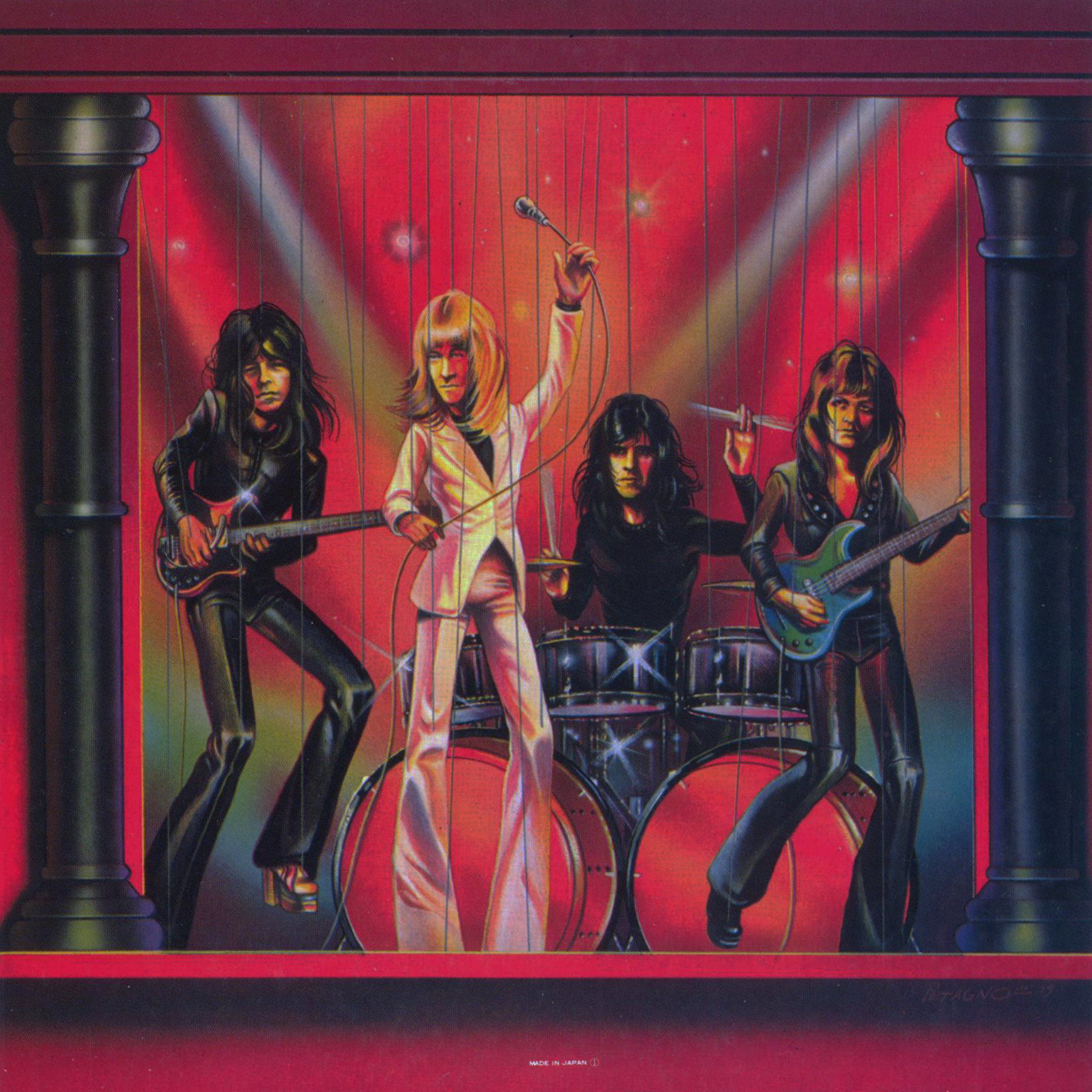
Strung Up is a 1975 double live/compilation album by Sweet released by RCA Records in 1975. The first disc contains seven songs recorded live during a concert at the Rainbow Theatre, London on 21 December 1973. The second one contains ten selections of their songs recorded since 1973, including three songs that have not been released previously on any album, ("Burn On The Flame" and "Miss Demeanour") but only one ("I Wanna Be Committed") is brand new. The album also includes a unique mix of "Action" that comes to an abrupt end, and does not include the final decaying echo of the shorter single and longer Give Us a Wink album versions.


Strung Up was not originally released in the United States. In Japan it was released by Capitol Records under the title Anthology. In Italy it was released as 2 separate albums - the studio set entitled Strung Up (released 1975) and the live set entitled Live In England (1976).

By late 1975, the Sweet were no more the power in pop land that they had once seemed to be. It was nine months since they broke away from songwriters Nicky Chinn and Mike Chapman, with whom they'd enjoyed almost unfettered success -- since that time, only "Fox on the Run" had suggested that the Sweet's own songwriting prowess was even vaguely capable of competing with the masters, and two further singles ("Action" and "The Lies in Your Eyes") had emerged as the band's worst performing efforts since their very earliest days. Time, then, to dig into the vault and see what could be done to salvage the situation -- time, then, for Strung Up, a double album comprised of three-year-old live material plus a mishmash of old and new studio work. 


The concert recordings are the revelation. For all their reputation as mere purveyors of whatever their puppet masters offered them, the Sweet had developed into one of the most exciting live bands on the mid-'70s U.K. circuit, as sonically dynamic as they were visually alluring. Not for nothing had the band's sexually charged stage show been banned from one of the country's leading ballroom chains; not for nothing did Ritchie Blackmore join them on-stage in California one night. No matter how far their crown slipped in chart terms, in concert the Sweet would never let you down and, though the Strung Up tapes dated back to 1973 and a phenomenal show at the London Rainbow, they had not dated in the slightest. 

The studio cuts are less alluring, concentrating in the main on the self-composed B-sides that the band had long insisted upon, a few recent singles ("The Six Teens," "Fox on the Run," and "Action"), and a couple of songs laid down during the sessions for the band's last studio LP, Desolation Boulevard. In modern terms, it's the kind of compilation that would form the basis for a tremendous box set; at the time, however, it spoke more of the uncertainty with which the band's record label, if not the bandmembers themselves, viewed the future. And, tellingly, it sank like a stone.

Live album:
01. "Hellraiser" Nicky Chinn, Mike Chapman  03:51
02. "Burning"/"Someone Else Will"  05:41
03. "Rock 'n' Roll Disgrace"  04:08
04. "Need a Lot of Lovin'"  02:52
05. "Done Me Wrong Alright"  08:06
06. "You're Not Wrong for Lovin' Me"  03:10
07. "The Man with the Golden Arm" Elmer Bernstein, Sylvia Fine  07:50

Compilation album: 
08. "Action"  03:43 
09. "Fox on the Run"  03:22
10. "Set Me Free" Scott  03:56
11. "Miss Demeanour"  03:26
12. "Ballroom Blitz"  Chinn, Chapman  04:00
13. "Burn on the Flame"  03:34
14. "Solid Gold Brass"  05:27
15. "The Six Teens"  Chinn, Chapman  03:58
16. "I Wanna Be Committed"  Chinn, Chapman  04:01
17. "Blockbuster"  Chinn, Chapman  03:12

Bonus Track:
18. "A.C.D.C."

1. Sweet 1975
or
2. Sweet 1975
or
3. Sweet 1975


Pink Floyd - Live At The BBC 1974 (Bootleg)


Size: 248 MB
Bitrate: 320
mp3
Found in OuterSpace
Artwork Included

By condensing the sonic explorations of Meddle to actual songs and adding a lush, immaculate production to their trippiest instrumental sections, Pink Floyd inadvertently designed their commercial breakthrough with Dark Side of the Moon. The primary revelation of Dark Side of the Moon is what a little focus does for the band. Roger Waters wrote a series of songs about mundane, everyday details which aren't that impressive by themselves, but when given the sonic backdrop of Floyd's slow, atmospheric soundscapes and carefully placed sound effects, they achieve an emotional resonance. 


But what gives the album true power is the subtly textured music, which evolves from ponderous, neo-psychedelic art rock to jazz fusion and blues-rock before turning back to psychedelia. It's dense with detail, but leisurely paced, creating its own dark, haunting world. Pink Floyd may have better albums than Dark Side of the Moon, but no other record defines them quite as well as this one.

Some bands turn into shorthand for a certain sound or style, and Pink Floyd belongs among that elite group. The very name connotes something specific: an elastic, echoing, mind-bending sound that evokes the chasms of space. Pink Floyd grounded that limitless sound with exacting explorations of mundane matters of ego, mind, memory, and heart, touching upon madness, alienation, narcissism, and society on their concept albums of the '70s. Of these concept albums, Dark Side of the Moon resonated strongest, earning new audiences year after year, decade after decade, and its longevity makes sense. 


That 1973 concept album distilled the wild psychedelia of their early years -- that brief, heady period when they were fronted by Syd Barrett -- into a slow, sculpted, widescreen epic masterminded by Roger Waters, the bassist who was the band's de facto leader in the '70s. Waters fueled the band's golden years, conceiving such epics as Wish You Were Here and The Wall, but the band survived his departure in the '80s, with guitarist David Gilmour stepping to the forefront on A Momentary Lapse of Reason and The Division Bell. 

Throughout the years, drummer Nick Mason and keyboardist Rick Wright appeared in some capacity, and the band's sonic signature was always evident: a wide, expansive sound that was instantly recognizable as their own, yet was adopted by all manner of bands, from guitar-worshipping metal-heads to freaky, hippie, ambient electronic duos. Unlike almost any of their peers, Pink Floyd played to both sides of the aisle: they were rooted in the blues but their heart belonged to the future, a dichotomy that made them a quintessentially modern 20th century band.


The Piper at the Gates of Dawn That blues influence, quickly sublimated and only surfacing on the occasional Gilmour guitar solo, was the foundation for the band's very name, as the group decided to splice the names of two old bluesmen -- Pink Anderson and Floyd Council -- as a tribute to the American music they loved so. These members of the early Floyd -- guitarist/singer Syd Barrett, bassist Roger Waters, keyboardist Rick Wright, and drummer Nick Mason -- were all architecture students at London Polytechnic, with the exception of Barrett, who was an art student and a friend of Waters since childhood. This version of the band started gigging regularly in 1965, with Barrett becoming the group's lead singer quite quickly. 

During this time, the group relied on blues and R&B covers, not unlike many of their British peers, but they wound up extending the time of their sets through extended instrumental jams, planting the seeds of space rock that would come to fruition not much later. During 1966, the group's increasingly adventurous sets became something of a sensation in the London underground, leading to a contract with EMI early in 1967. Their first single, "Arnold Layne," backed with "Candy and a Currant Bun," appeared in March of 1967, and it was banned from some radio stations due to its gender-bending lyrics, but the single wound up in the U.K. 


Top 20 and the group's second single, "See Emily Play" -- a menacing, mincing stomp with a profound, lasting influence -- went into the Top 10, paving the way for the release of The Piper at the Gates of Dawn. On their full-length LP, Pink Floyd veered toward the experimental and avant-garde, particularly on the elastic, largely instrumental vamps "Astronomy Domine" and "Interstellar Overdrive," resulting in an album that had a significant influence not only upon its release but well beyond. It was also a hit in the U.K., reaching number six on the British charts.

This was a sudden rush to stardom and complications arose nearly as quickly. Not long after the release of Piper, Barrett began showing clear signs of mental illness, to the point he would often freeze on-stage, not playing a note. At this point, David Gilmour -- a friend and associate of the band -- was brought in as a second guitarist, with the intention that he'd buttress the group's live performances while Barrett continued to write and record new material. This soon proved to be an impossible situation, and Barrett left the group, at which point the band's management also jumped ship, leaving the band without any kind of leader.


A Saucerful of Secrets In the wake of Barrett's departure, the remaining members of Pink Floyd developed a different musical identity, one that was expansive and eerie, characterized by the band's spacy, somber explorations and, eventually, Waters' cutting, sardonic lyrics. This transition took some time. In 1968, they released A Saucerful of Secrets, which contained Barrett's final composition for the group "Jugband Blues" and found the group moving forward, particularly on the instrumental sections. 

A Saucerful of Secrets also saw the group begin a long, fruitful collaboration with Storm Thorgerson's design team Hipgnosis; they'd wind up designing many iconic album covers for the band, including Dark Side of the Moon and Wish You Were Here. Hipgnosis emphasized album art, and albums are where Pink Floyd concentrated from this point forward. After the soundtrack to More, the group moved to EMI's progressive rock imprint Harvest and became the label's flagship artist beginning with the 1969 double-LP Ummagumma. Divided between live performances and experimental compositions from each member, the record wound up in the Top 10 in Britain and sowed the seeds of a cult following in the United States.

Atom Heart MotherPink Floyd's next album, Atom Heart Mother, featured extensive contributions from composer Ron Geesin and wound up as the band's first number one album in the U.K.. The band embarked on an extensive supporting tour for the album and when they returned they delved even further into studio experimentation, learning the contours of the studio. Their next studio album, 1971's Meddle, bore the fruit from this labor, as did 1972's Obscured by Clouds, which was effectively a soundtrack to Barbet Schroeder's film La Vallee. 

All the experiments of the early '70s were consolidated on their 1973 album Dark Side of the Moon, an album for which there simply was no precedent in their catalog. Deepening their music while sharpening their songwriting, Floyd created a complex, luxurious album with infinite space and depth. Partially helped by the single "Money," it was an immediate success, reaching number one on the U.S. Billboard charts and peaking at number two in the U.K., but what was striking was its longevity. Dark Side of the Moon found space on the Billboard charts and then it just stayed there, week after week for years -- a total of 741 weeks in all (once it finally dropped off the charts, Billboard began the Catalog charts, where Dark Side was a fixture as well). Dark Side of the Moon was a staple on classic rock radio but it also was a rite of passage, an album passed down to teenagers when they were turning to serious music, and it was an album that stayed with listeners as they aged.

Animals Now established superstars, Pink Floyd dug deep on Wish You Were Here, their 1975 sequel to Dark Side of the Moon which functioned as an album-long tribute to Syd Barrett. Compared to Dark Side, Wish You Were Here wasn't quite a blockbuster but it was certainly a hit, debuting at number one in the U.K. and reaching that peak in the U.S., as well. 


Floyd continued to tour steadily, often working out new material on the road. This is particularly true of 1977's Animals, which had its roots in several songs aired during the 1975 tour. During the Animals tour, Waters had a difficult experience with a Montreal crowd where he spit on a heckler, and he used this incident as the genesis for 1979's rock opera The Wall. Co-produced by Bob Ezrin, The Wall may be Floyd's most ambitious album, telling a semi-autobiographical story about a damaged rock star, and it's one of the band's most successful records, topping the charts throughout the '80s and turning into a pop music perennial along the lines of Dark Side. 

Part of its success in 1980 was due to "Another Brick in the Wall, Pt. 2," where an instrumental motif from the album was given a disco beat and an anti-authoritarian spin, leading to a genuine number one hit single from a band. Certainly, the single had more to do with the album's success than the live production of the album, as Pink Floyd only did a handful of dates in major cities. Nevertheless these shows, consisting of a wall being built across the stage during the first act and the band performing behind it during the second, were legendary (Waters would revive and update the production years later to great success).


The Final CutPink Floyd did attempt to film The Wall for a documentary film, but the footage was botched, so they decided to pursue a feature film directed by Alan Parker and featuring Boomtown Rat Bob Geldof in the lead role. The Wall arrived in theaters in 1982 and turned into a midnight movie staple. A year later, The Final Cut -- a further autobiographical work from Waters, its title a sly dig to his battles with Parker on the film -- arrived and it didn't come close to matching the chart success of any of its predecessors. 
Behind the scenes, things were tense. Rick Wright had been fired during the making of The Wall -- he was hired as a contract player during the recording and tour -- and Waters split after the release of The Final Cut, assuming that it was the end of the band. Waters released his debut solo album The Pros and Cons of Hitchhiking -- a piece that was pitched to Floyd in 1978, but the band chose The Wall instead -- in 1984 and not long afterward, Gilmour and Mason indicated they intended to carry on as Pink Floyd, so the bassist sued the duo for the rights to the Pink Floyd name. 


Waters lost and Pink Floyd released A Momentary Lapse of Reason in 1987, just months after Waters released his own Radio KAOS. Bad blood was evident -- T-shirts on Waters' tour bore the question, "Which One's Pink?," an old lyric that now had greater resonance -- but Pink Floyd emerged victorious, as A Momentary Lapse of Reason turned into an international hit, and along with it racked up some hit singles, including "Learning to Fly," which was supported by the band's first music video. Most importantly, the band racked up significant box office returns on tour, playing to sold-out stadiums across the globe. This tour was documented on the Delicate Sound of Thunder live album.

Pulse The success of A Momentary Lapse of Reason allowed Pink Floyd to dictate their own schedule and they took their time to return with a new album, eventually emerging in 1994 with The Division Bell. Greeted by warmer reviews than its predecessor, The Division Bell was another international success, and the accompanying tour -- which featured a performance of the entirety of The Dark Side of the Moon -- was a smash success. As before, the tour was documented with a live album -- this one was called Pulse, packaged in eye-catching artwork with a pulsing LED light -- and it performed respectably. After that, Pink Floyd went into effective retirement. The group was inducted into the Rock & Roll Hall of Fame in 1996, while Gilmour released some solo albums, including the acclaimed On an Island, but most of their efforts were devoted to managing their catalog. Long a beloved band of audiophiles, the group saw their catalog boxed and remastered several times, including 5.1 mixes on SACD in the early 2000s.

As the new millennium progressed, a détente arose between the Floyd and Waters camps, culminating in an unexpected reunion of the original lineup of Waters, Gilmour, Mason, and Wright at the 2005 charity concert Live 8. The reunion was a rousing success, sparking rumors of a more permanent arrangement, but Gilmour declined. Instead, Waters ramped up his touring -- he performed Dark Side in its entirety, then turned his attention to The Wall, touring that for years. 

Gilmour and Mason wound up appearing at a 2011 show in London, signaling that there was no ill will between the members. Barrett passed in 2006 from cancer and in 2008, Wright also died from the disease. In 2011, Pink Floyd launched an ambitious reissue project called Why Pink Floyd…? spearheaded by multi-disc, rarity-laden box set reissues of Dark Side of the Moon, Wish You Were Here, and The Wall; among the newly released exclusives was the original Alan Parsons mix of Dark Side, heavily bootlegged live tracks like "Raving and Drooling," and demos. 

Three years later, in 2014, The Division Bell was reissued to celebrate its 20th anniversary, but the bigger news was the announcement of a new album called The Endless River. Constructed using outtakes from the recording sessions for 1994's The Division Bell, the primarily instrumental album was co-produced by Gilmour, Roxy Music's Phil Manzanera, Youth and Andy Jackson, and featured heavy contributions from the late keyboardist Rick Wright, along with new work from Gilmour and Mason. The Endless River saw release in November of 2014.

Pink Floyd - Live at BBC November 18 1974 (The Dark Side of The Moon Concert)

01. "Speak to Me" Mason Instrumental  02:33
02. "Breathe"  Waters, Gilmour, Wright Gilmour  03:01
03. "On the Run" Gilmour, Wateers   Instrumental  04:56
04. "Time" (containing "Breathe (Reprise)")  Mason, Waters, Wright, Gilmour Gilmour, Wright  06:30
05. "The Great Gig in the Sky"  Wright, Clare Torry[nb 11] Clare Torry  06:44
06. "Money"  Waters  Gilmour  07:58
07. "Us and Them"  Waters, Wright Gilmour, Wright  07:53
08. "Any Colour You Like"  Gilmour, Mason, Wright  Instrumental  03:42
09. "Brain Damage"  Waters Waters  03:42
10. "Eclipse"  Waters Waters  05:12
11. "Echoes"  23:29

Part 1: Pink Floyd BBC
Part 2: Pink Floyd BBC
or
Part 1: Pink Floyd BBC
Part 2: Pink Floyd BBC
or
Part 1: Pink Floyd BBC
Part 2: Pink Floyd BBC