Followers

Thursday, January 26, 2017

Request: Gravedigger V - The Mirror Cracked (Superb Garagerock US 1984)


Size: 141 MB
Bitrate: 256
mp3
Ripped by: ChrisGoesRock
Artwork Included

Classic caveman garage rawk from San Diego. This CD combines their Voxx debut album with the live tracks, outtakes and demos from their later LP's "The Mirror Cracked", also on Voxx.

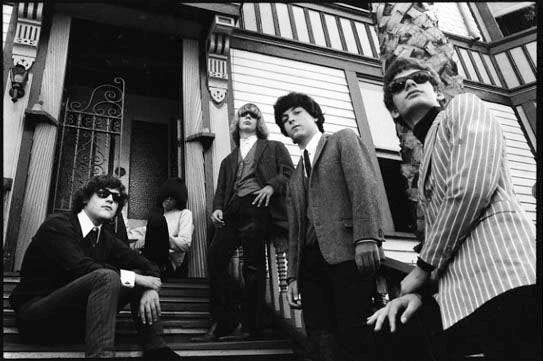
The Gravedigger Five was a garage rock revival band formed in 1984 in San Diego, California. The band was part of the Paisley Underground, a musical movement centered around Los Angeles, California, which referenced 1960s West Coast pop and garage rock. The band's lineup consisted of Leighton Koizumi on vocals and sound effects, Ted Friedman on lead guitar, John Hanrattie on rhythm guitar and backup vocals, Dave "The Animal" Anderson on drums and percussion, and originally Chris Gast, who was replaced on bass and backing vocals by Tom Ward. When the Gravedigger Five broke up, members of the band went on to form The Morlocks and Manual Scan.

The members of the Gravedigger Five began playing together around 1983, practicing under the name "The Shamen" in bassist Chris Gast's garage. The group began writing songs together while its members were still teenagers; lead singer Leighton Koizumi was only sixteen years old when the band began to perform. When the band eventually went on to play the Whiskey A Go Go, the band members had to wait outside between sets, as the members were too young to be in the club. The name "The Shamen" was abandoned after the group discovered that the name was already in use by another band, and so after a night of brainstorming, purportedly at a local Bob's Big Boy, the group renamed their band the Gravedigger Five, a take-off on the old "Monster Mash" backing group The Cryptkicker V. 

All Black and Hairy
After only a few performances the group caught the interest of Voxx Records owner Greg Shaw, who signed the band to his imprint in January, 1984. The band recorded their first LP the same year, sleeping together in a car in an alley adjacent to the studio while not recording. Their first LP, "All Black and Hairy," was released towards the end of 1984, but even before its release original bassist Chris Gast was ejected from the band as a result of his substance abuse problems. Shortly after Gast's dismissal the rest of the band fell apart and the group disbanded. The band released its entire catalogue posthumously. Following the breakup of the band, Voxx released the band's first LP, "All Black and Hairy," in 1984. 


The Mirror Cracked
In 1987, three years after the breakup of the band, Voxx Records released a second Gravedigger Five LP. Under the title "The Mirror Cracked," Voxx packaged a number of unreleased All Black and Hairy session tracks, backed with eight crudely-recorded live tracks recorded in 1984. The Gravedigger Five's second release contained a number of cover songs, including two Stoics songs, "Enough of What I Need" and "Be a Caveman." The LP also contained a version of "No Good Woman," with fellow Paisley Underground alum Paula Pierce of The Pandoras on backing vocals. Lead singer Koizumi took offense to the mediocre way the album was assembled. 

After the Gravedigger Five
After the Gravedigger Five disbanded, Koizumi and Friedman moved to the Bay Area where they founded The Morlocks, another Paisley Underground garage rock revival band which continued the Gravedigger Five sound. Dave Anderson and Tom Ward continued on together in the band Manual Scan, and afterwards Anderson went on to perform with The Trebles, The Answers, The Crawdaddies and Skid Roper. The band reunited for one final show in 1999, playing Cave Stomp at New York’s annual garage rockathon. This would be the last time a full reunion would be possible as bassist Chris Gast died in New York in 2000. 

01. All Black and Hairy  
02. Tomorrow Is Yesterday  
03. No Good Woman  
04. Do Like Me  
05. Hate  
06. She's a Cur  
07. Searching  
08. She's Gone  
09. Night of the Phantom  
10. Don't Tread on My  
11. One Ugly Child  
12. She Got  
13. Stoneage Stomp  
14. Mirror Cracked  
15. Enough of What I Need  
16. Be a Caveman  
17. No Good Woman - Gravedigger Five, Paula Pierce  
18. It's Spooky  
19. Drivin' Me Insane  
20. Stop It Baby  
21. Searchin' [Live]  
22. She's Gone [Live]  
23. Enough of What I Need [Live]  
24. Be a Caveman [Live]  
25. She's a Cur [Live]  
26. Mirror Cracked [Live]  
27. Night of the Phantom [Live]  
28. Tomorrow Is Yesterday [Live] 

+ Surprise Album (1984 Release)

Part 1. Gravedigger V
Part 2. Gravedigger V
or
Part 1. Gravedigger V
Part 2. Gravedigger V
or
Part 1. Gravedigger V
Part 2. Gravedigger V

Little Sonny - New King of Blues Harmonica (Rare STAX Album US 1969)


Size: 68.2MB
Bit Rate: 256
mp3
Ripped by: ChrisGoesRock
Artwork Included
Source: Japan 24-Bit Remaster

New King of Blues Harmonica, the first album recorded by Little Sonny, finds the harpist living up to his name, turning out a hard-driving collection of Chicago blues. At times, he's a little too hung up on sounding like Sonny Boy Williamson, but for the most part, this is thoroughly enjoyable, high-octane Chicago blues. However, the presence of an organ on most of the record may be a little distracting for purists.


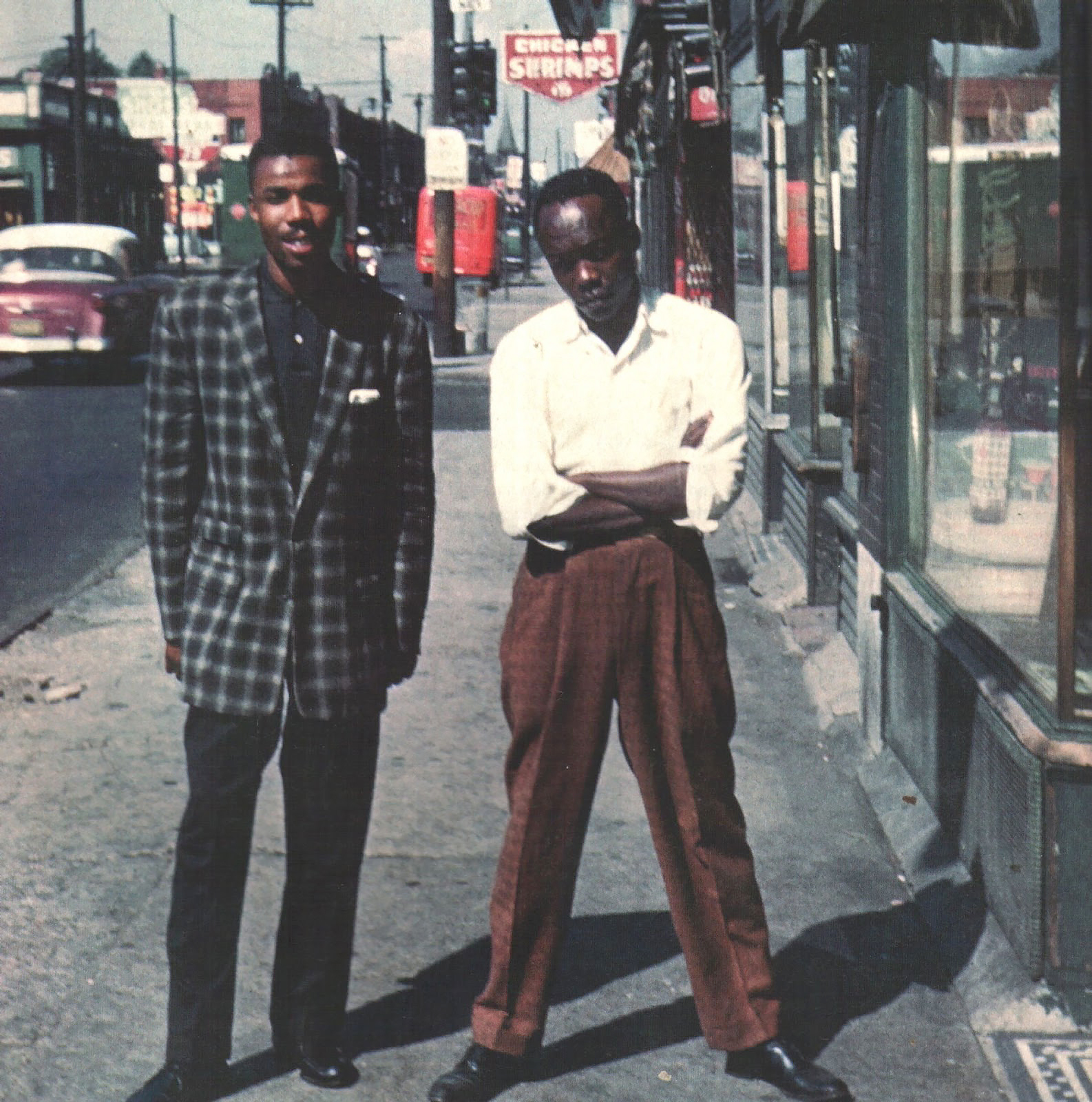
Little Sonny (aka Aaron Willis) grew up in Alabama, but came into his own as part of the fertile Detroit blues scene before finding a home with the famous Stax soul music label. On this album, he deftly mixes deep blues with soulful R&B with excellent results. It’s a pretty heavy burden to be called the "new king" of anything, let alone something as rich as the blues harmonica legacy, but he is up to the task. 


Little Sonny sings on a few tracks, and he has a fine voice, opening with the classic Jimmy Reed shuffle “Baby, What You Want Me to Do,” the band takes things at a nice easy gallop. “Don't Ask Me No Questions” has a Little Walter-ish feel, with Sonny making the strutting lyric his own. “Goin’ Down Slow” revisits some classic blues territory to good effect, with Sonny taking his time and delivering the vocal and harp with class and dignity. 

The Hohner 1896 Marine Band 10-hole diatonic harmonica
The remainder of the album consists of instrumentals featuring Little Sonny’s harmonica playing. While he never did quite ascend to the the level of king, he was quite a player as these performances demonstrate. Songs like “Eli’s Pork Chop” mix the down home blues with some soulful touches to good effect, with the organist in the band and occasional horn accompaniment move things along nicely. 

Blues fell on hard times for a while in the 1970‘s, with clubs closing and some of the legendary musicians falling ill and passing on. But Little Sonny was an example of the torch of the blues being passed on to a younger man, and on this album he held that torch high.

People who’ve heard Little Sonny’s albums, New King of the Blues Harmonica and Black and Blue on Enterprise Records (a division of the Stax Organization), are surprised to see him in person. From the funky music he plays, listeners expect an old, raggedy, hard-drinking stereotype of the typical down-and-out bluesman.

Harmonica-friendly Amplifiers Fender 59 Bassman Combo
"I suppose some of the things I’ve been through should have driven me to drink," admits the youthful, clean-cut Sonny, who doesn’t drink, smoke, or mess with dope. "I’ve seen too many bad examples of too much alcohol. Also, my mother was very religious, and I promised her I’d never drink. If I’ve got an audience, that’s all the alcohol I need. I couldn’t go onstage and do a good job if I were high."

Little Sonny surprises many people, especially young blues fans, with his sober approach to the blues, but he’s just trying to be himself.

"The idea that a man has to use foul language, dress raggedy and bummy, and get into cuttin’ and shootin’ scrapes in order to sing the blues is just a sham. I feel what I sing and play because of the things I’ve been through. I’ve had my share of hard times, but that doesn’t give me an excuse to drink and swear and cut up."

When Sonny plays his harmonica or sings the blues, all the rugged experiences he’s survived come out in his music.

Born in a one-room country shack in Greensboro, Alabama on October 6, 1932, he spent many of his younger days hungry and barefoot. He’s never seen his father. And he was looked after by his mother who made their clothes without the benefit of a sewing machine.

"The other kids used to laugh at me, but I made up my mind that I was going to be somebody regardless of what people thought. When I started playing music, people told me to my face that I’d never make it," Sonny admits. "The blues is a living thing, and I have lived the blues. When I think of the unfair things that have happened to me because of the color of my skin, of all the times I’ve had to go in the back door, I know I’ve paid my dues."

Sonny, who was born Aaron Willis, listened to the blues on the radio when he was a boy. His mother considered the blues "the old people’s way, something dirty," but she bought her son five-cent harmonicas. Sonny tried to play them without much success.

Baseball was his main interest. He played on sandlot teams in Alabama for a few years before moving to Detroit seventeen years ago.

"I knew no baseball scout was going to see me as far back in the woods as I was. I didn’t really have aspirations of being a musician when I came to Detroit. But then, I saw Sonny Boy Williamson."

Sonny was "spellbound at the way he played. After the show I went home and practiced for hours. Every day after that I would practice until I got the sound I wanted."

Sonny Boy Williamson also inspired Aaron Willis to adopt the name Little Sonny. Working in a used car lot by day, Little Sonny would go from bar to bar at night making a little money taking pictures and hoping for a chance to sit in with the musicians onstage.

After sitting in with Washboard Willie at the Good Times Bar one evening, Sonny was offered ten dollars a night, three nights a week by the club owner. Within six months, Sonny formed his own group. During the years that followed, he worked five shows a night in many Detroit bars and clubs, packing the rooms every weekend. He spent two years at the Bank Bar, four and a half at the Congo Lounge, five years in the Apex Bar, and two years at the Calumet Show Bar. He still took Polaroid pictures of the customers between sets and often he earned more money from the photography than from entertaining. It was a rough grind, but he managed to make a living and eventually to buy a car and a home for his wife and four children.

Sonny has had some unpleasant experiences with small record companies over the years. He sent a homemade demo tape of "I Got to Find My Baby" to Duke Records in Texas. They sent him a contract and issued the rough tape. He never got near a recording studio. The musician’s union got him out of that one. All Sonny received for recording "Love Shock" with the JVB Recording Company was twenty-five dollars he borrowed from them. He started his own label Speedway and although he couldn’t get any airplay, he sold enough copies of "The Mix Up" in the clubs he worked to clear expenses.

Excello Records bought "Love Shock" from JVB and got Sonny’s name on a two-year contract. But they never recorded him, so he sat it out. "Orange Pineapple Cherry Blossom Pink" sold well for Wheelsville, USA Records, but Sonny was never paid. Then, Revilot Records expressed an interest and he cut "The Creeper." It sold fairly well, but Sonny didn’t like the way the sound was mixed. He was in control of the next few sessions which produced "Don’t Ask Me No Questions" and "Sonny’s Bag," his first Top Twenty hit in Detroit. From then on, things got better.

Late in 1969, Al Bell, executive vice president of the Stax Organization, offered Sonny his first opportunity to cut an album. New King of the Blues Harmonica,released on the Enterprise label, was recorded in five and a half hours. Sonny and his band knew all the songs so there were few retakes.

For his second album, Black and Blue, Sonny flew to the Stax studios in Memphis and recorded eleven sides in one weekend. It was the #1 blues album in Detroit and #3 on the local LP charts. Sonny has played several music festivals, he headlined two blues concerts at Wayne State University, he’s been written about in several books on the blues, and, in general, his reputation has been growing.

Sonny’s music has been called everything from blues to jazz, and some listeners detect spiritual and rock influences. He enjoys listening to and learning from all kinds of music.

"I’m working on my own ideas," says Sonny, "not something the other man has already done. A lot of other blues musicians say I’m playing rock music because it’s up-tempo, and it’s a different style. They’ve never heard it before and they refuse to say it’s blues.

"Other harmonica players will play their part of a song then pause, then play again. Well, I’m constantly playing. I breathe in and out of the harmonica, and I fill in where other musicians would have a space," says Sonny, who prefers an Old Standby 34B harmonica for its fast action and tone quality.

Little Sonny has been playing the blues for sixteen years. He’s had over a dozen singles and two albums. He’s received excellent reviews for his performances and recordings. But he knows that there’s still more territory to be covered before he can sit back and say he’s had that really big break.

"I’ll pay my dues until the day comes," he says. "My time will come, and I’m going to work for it."

That’s what the blues is all about.

01. Baby, What You Want Me To Do  03:54
02. Eli's Pork Chop  06:39
03. Hey Little Girl  02:38
04. Hot Potato  03:11
05. Don't Ask Me No Questions  03:58
06. Tomorrow's Blues Today  02:45
07. Back Down Yonder  02:43
08. Sad Funk  03:04
09. The Creeper Returns  04:12

1. Little Sonny 1969
or
2. Little Sonny 1969
or
3. Little Sonny 1969

Saturday, January 14, 2017

Various Artist - Ah Feel Like Ahcid (Some of The Greatest Psychedelic 60's)


Size: 202.3 MB
Bit Rate: 256
mp3
Found in DC++ World
Some Artwork Included

The first compilation of its kind to open up the late Sixties U.S. vaults of EMI labels Capitol, Tower, Imperial, Liberty, etc. Psychedelia is currently celebrating its 40th anniversary since the original Summer Of Love. Many of the tracks on this CD have never been reissued - more so than the previous volumes in this Series, Take My Tip and Insane Times.

Psychedelia was borne in the mid-60s on the West Coast and this CD includes several of the movement's pioneers from the San Francisco, Bay Area and LA scenes - namely Quicksilver Messenger Service, the Steve Miller Band and Mad River, plus the maverick talents of Captain Beefheart. 

Plus the Beach Boys, of course! Kim Fowley was/is a charismatic svengali-likle producer who has recorded a plethora of different artists - but his classic track 'Bubblegum' was later covered by Sonic Youth. Hour Glass evolved into the Allman Brothers! The Balloon Farm's 'A Question Of Temperature' and the Third Bardo's 'I'm Five Years Ahead Of My Time' are two of the finest examples of psychedelic garage punk ever recorded.

This excellent compilation contains 24 tracks with a running time of nearly 80 minutes. Among Psych collections, this baby is most certainly amongst the very best. From the opening of the fuzz-drenched guitar by The Balloon Farm with "A Question Of Temperature", there is not a clunker in this entire collection.

Luckily for us, EMI utilized it's canon of various labels such as Capitol, Tower, Liberty, Roulette, Imperial, and Blue Thumb, to give us a delightful trippy collection of rare 45's, demos, and selected L.P. tracks. As I said, there is not a bad track here with all tracks being at least good, with most tracks being very good to excellent. 

With the selections coming between the years of 1966 to 1969, and only 1 from 1970, this cd has truly hit the Mother Lode of 60's American Psychedelia. Some of my favorites are The Third Bardo with "Five Years Ahead Of My Time", Detroit's SRC with "Up All Night", Morning dew with "Crusader's Smile", The Fallen Angels with "Mother's Homesick Too", a totally fuzz-drenched, Psych instrumental by The Human Beinz titled ""April 15th", and even an early Steve Miller Band gem labeled "The Beauty Of Time Is That It's Snowing", which was from their 1968 debut, "Children Of The Future". 


Moving along to other choice tracks, we get the very rare Mother Trucker's Yellow Duck with "One Ring Jam", Chris & Craig with the middle-Eastern influenced "Isha", with harpsichord and trippy-harmony vocals, Mad River with the instrumental "Wind Chimes", Gandalf with the Raga-rock guitar of "Can You Travel In the Dark Alone?", Hour Glass with "Bells", David Axelrod with the Jazz-Psych "Urizen", The Common People with "Soon There'll Be Thunder", and Quicksilver Messenger Service with the rare B-side "Bears" It is rather ironic that the last track in the collection done by 

Captain Beefheart & His Magic Band, titled "Ah Feel Like Ahcid", is essentially the only track that is Not Psychedelic-flavored but more a Raw-Blues gumbo mix. I think the reason it was used was to complete the collection with the title. 

Along with the excellent Psychedelic musical selections, we also get an excellent 16 page, very well annotated booklet written by Mr. John Reed that gives valuable info about each and every track on this collection. Also, each tune has either the picture of the L.P. it was taken from or the photo of the 45, is it was a single. I have over 20 Psychedelic compilations in my collection and this one certainly takes it's place at the top. You could call it "Psychedelic Nuggets"! As it says in the great liner notes, "Tune In, Turn On, Drop Out"! I give this baby my 100% SMRZ Guarantee! MOST HIGHLY RECOMMENDED!! (By SMRZ!!)

01. The Balloon Farm - A Question Of Temperature - 2.39
02. The Third Bardo - Five Years Ahead Of My Time - 2.14
03. The Book of Changes - I Stole The Goodyear Blimp - 2.22
04. First Crew To The Moon - The Sun Lights Up The Shadows Of Your Mind - 2.19
05. SRC - Up All Night - 3.06
06. Morning Dew - Crusader's Smile - 2.47
07. The Fallen Angels - Mother's Homesick Too - 2.22
08. The Human Beinz - April 15th - 6.55
09. Kim Fowley - Bubblegum - 2.28
10. T.I.M.E. - Tripping Into Sunshine - 3.06
11. The Steve Miller Band - The Beauty Of Time Is That It's Snowing - 5.18
12. The Beach Boys - Never Learn Not To Love - 2.31
13. Chris & Craig - Isha - 2.16
14. The Raik's Progress - Sewer Rat Love Chant - 2.38
15. Mother Tucker's Yellow Duck - One Ring Jane - 4.23
16. Mad River - Wind Chimes - 7.10
17. Gandalf - Can You Travel In The Dark Alone - 3.04
18. Hour Glass - Bells - 2.25
19. Food - Forever Is A Dream - 4.06
20. David Axelrod - Urizen - 4.00
21. The Common People - Soon There'll Be Thunder - 2.21
22. Fargo - Sunny Day Blue - 2.30
23. Quicksilver Messenger Service - Bears - 2.08
24. Captain Beefheart & His Magic Band - Ah Feel Like Ahcid - 3.04

Some Bonus:
25. Ant Trip Ceremony - Four In The Morning - 4.31
26. Bob Smith - Don´t Tell Lady tonight - 3.09
27. Bubble Puppy - Hot Smoke and Sasafrass - 2.33
28. Darius - Sweet Mama - 2.34 
29. Euclid - It´s All Over Now - 3.23
30. Gold - Fried Neck Bones (Fillmore West) - 5.33

Part 1: Ahcid
Part 2: Ahcid
or
Part 1: Ahcid
Part 2: Ahcid
or
Part 1: Ahcid
Part 2: Ahcid


Thursday, January 12, 2017

Sleepy Hollow - Roller Coaster Man (The Beatles alike Band US 1972)


Size: 77.5 MB
Bit Rate: 256
mp3
Found in OuterSpace
Some Artwork Included

Sleepy Hollow were a Philadelphia power-pop trio that on their only album followed the same trail that Badfinger or the Raspberries used to fill the void the Beatles had left. This album was reissued on 1977 as "Billay" by the scam label Tiger Lily. 

The albums starts with Sincerely Yours, almost a retake of the Shangri-las Remember (Walking in the Sand) full of drama, strings and synthesizers as sung by an angry John Lennon. 


One Time sounds like an A Hard Day's Night - Help lost track with a George Harrison slide solo straight from the All Must Things Past era and feel-good la-la-las. It's followed by Take Me Back, a plaintive mid-tempo with a functional string arrangement and more Harrison-like guitars. Talking Out Of Turn follows, again resting on a Harrison approach. 

Next is Lay it on the Line a mournful ballad accompanied by a guitar played through a flanger and catchy lines all over. Love Minus You with its McCartneysque piano it's a good track, albeit some strange drum rolls on the end of every chorus. Lady starts as an acoustic effort and develops into a baroque-pop tune which sounds more akin to the Left Banque for a change. Roller Coaster Man it's an up-tempo rocker not far from the Raspberries, with a sparkling piano line, a horn section, a sax solo and a final coda that without fail is going to bring the Beach Boys to the back of your mind. The album closes with Hades, a slow and spooky christmas tune lead by a grand piano and full orchestra arrangements.


All in all, a solid work primarily recommended to early 70s pop lovers. Does it stands to its reputation as a "hidden gem"? Well, it's up to you to decide that. I don't think it could be match with the best efforts of Badfinger or Big Star, but that's a hard mountain to climb for everyone else too.

Sleepy Hollow were a power pop trio who hailed from Philadelphia,USA and comprised of members, Richard Billay (vocals,guitar,piano),  Richie Bremen (bass) and Joe Zucca (drums).  The band released a single album on the Family record label in 1972. Family was an independent label that released a handful of records between 71 and 74 before going bust and is probably most known for releasing Billy Joel's debut solo LP.

The music on the album evokes late period Beatles with Billay doing a fine Lennon snarl on LP opener "Sincerely Yours".  "Take Me Back" is a pure Raspberries-esque ballad with some fine George Harrison influenced slide guitar.  

"Talking Out Of Turn" sounds like it came straight off Emitt Rhodes' Mirror album and the guitar solo sounds uncannily like the one on "Hotel California" by the Eagles, pre-dating it by a good five years! "Lady" is a gentle McCartney style acoustic ballad with string section added by co-producer Tom Sellers (known for his top 20 hit cover of the Who's "Overture From Tommy" as the Assembled Multitude in 1971). Closing track "Hades" is an epic, Christmas themed ballad with massive orchestration, clocking in at over 6 minutes and an unlikely choice for a single release.

The LP was re-released in 1977 under the name "Billay" on the infamous tax scam label, Tiger Lily.  In true Tiger Lily style, it was released without the band's knowledge. 

Not a lot of info can be found about what happened to the band after the album came out but a YouTube search brought up a great power popper by Billay/Sleepy Hollow called "I Surrender" and the artwork attached to the video shows Sleepy Hollow plus another new member and appears to be a collection of recordings dating from 1974-1998.  If anyone knows of these recordings I would be grateful of any details.

01. Sincerely Yours  03:01
02. One Time  02:05
03. Take Me Back  03:53
04. Talking Out Of Turn  02:48
05. Lay It On The Line  02:43
06. Love Minus You  02:30
07. Lady  02:40
08. Roller Coaster Man  02:58
09. Hades  06:16

1. Sleepy Hollow
or
2. Sleepy Hollow
or
3. Sleepy Hollow

Friday, January 06, 2017

Buddy Guy's Legends - Bluesbreakers 2008-06-05

Buddy Guy Himself

Size: 157 MB
Bit Rate: 320
mp3
Found at: [BBB]BluesLovers Hub
Artwork Included

Buddy Guy:
I have always found it fascinating that greatest Blues Guitarists who influenced Buddy, were actually influenced by him in great length.
Buddy Guy’s showmanship and at the same time modesty is worth its own story. Never dreaming of reaching any heights, he was beyond happy just being near his favorite Bluesmen.


Buddy Guy on Stage

Born in Louisiana’s countryside, without ever seeing running water until he was in his late teens. His first guitar experience was with a rubber band, then a two stringer which he made on his own (out of windscreen strings used to protect windows from mosquitoes) and taught himself how to play. This was after hearing a friend of the family come visit for Christmas and play John Lee Hooker’s “Boogie Chillin”.

Exposed to the great Delta Blues Musicians of that time, Buddy began performing in the area of Baton Rouge before moving to Chicago in late 1950’s. His showmanship was borrowed from Guitar Slim, a Bluesman known for his playing from outside the club with a 150-ft chord and entering the bars on top of another man’s shoulders all while playing a Strat.


In Chicago, Buddy Guy began visiting Blues Clubs on all sides of town and listening to Muddy Waters, Howlin’ Wolf, Little Walter, Junior Wells, Sonny Boy, Otis Spahn, Hubert Sumlin and many others in their prime. Being able to be used as session guitarist in Chess Records, Buddy managed two different Blues Guitar lives. One when he was performing – a wild side with or without clothes and being all over the place. Another – always being behind the star who was recording in the studio, just being there and doing what he is told. Buddy recalls those times as being on top of the world. It seemed as all his dreams came true while he was meeting more and more Blues Musicians.

Buddy Guy’s career continues to flourish now in his late 70’s. A Polka-Dot Strat, huge smile on his face and soul-burning licks either on stadiums or in his own Blues Club – Buddy Guy’s Legends in Chicago. 


Eddy "The Chief'" Clearwater

Every time you would think it does not get any better, he comes out and plays one louder, one smoother, one more blue note and one meaner tune. He is keeping the Blues alive as he had promised those with whom he made it into what it is. Through him there will be others always keeping the Blues alive.

Buddy is known for his signature Polka-Dot Fender Stratocaster. Passion for vintage tweed Fender amps and a rich choice of Ernie Ball .11 strings. His main axe is a cream-colored Strat, custom built Chicago workshop amps made after Fender Bassman and a 0.73 dunlop picks of unknown material.


Otis Taylor

Mr. Guy has been my personal influence and teacher. A belief that all things are possible regardless of your background, resources or any factors for that reason. I have always listened to his unique but most versatile style of playing with some extent of curiosity. It is almost as if his music answers my questions which I cannot even ask. It’s the feeling that got me closer in my search for Blues Guitar.

I had the greatest blessing of seeing BG live a couple of times and both of them I could not stay still. The memories will remain forever and I will share them with the kids down the road.


I wish I could come to the man at some point and exchange a few words with him as he did with the greats of his time. I wish Buddy Guy lives for decades to come and enjoys what he does as sincerely as he did back in Baton Rouge. Hopefully at some point, I will be able to express my respect to the man himself. Hopefully, influenced by him, I will be a part of what will keep their legacy.

Thank you Buddy Guy, for sincere, unhinged, passionate protection of what kept so many people from despair and gave so many others hope and strength to move on. Thank you for keeping the Blues alive.

Buddy Guy Legends:
ddy Guy’s Legends, the well of memories that will quench my thirst for a couple lives to come. If I reincarnate as a caterpillar, I’ll still tell the butterflies around, about the times I’ve been in this Chicago’s Blues club.


Buddy Guy 2008
The club itself was established in 1989 and the sign stating “Honorary Buddy Guy Way” is hanging right in front of the entrance. There, you can always listen to live Blues and every January, Buddy Guy performs from Thursday to Sunday for an entire month as part of his “Residency Performance”. The place had seen the the greatest people visit throughout it’s 25 years of existence. Both, top-grade musicians and visitors with great taste of music.

I’ve called Legends at 2 pm the day of the show. Asked the kind lady on the phone what time should I get there to find a seat for Buddy Guy performance at 11.30 pm. The kind lady said “Now”. I was somewhat intimidated by the Legends “First-come-first-serve” rule but I urge all the first-comers to dismiss doubts. The comfort and intelligent design of the stage did not make it an issue. A gray-haired couple next to me were giving me a run for the money, dancing to the Damn Right Blues Band till 3 am.

When you anxiously locate 700 S. Wabash, you see the corner building with the walls covered in mosaic faces of Chicago Blues Legends: Little Walter, Stevie Ray Vaughan, John Lee Hooker, Howlin’ Wolf. Immediately you know that you will remember this visit.


Buddy Beer
Walking into Buddy Guy’s Legends, you see a cozy, subtle grandeur of Blues history and memorabilia all over. Everywhere around the perimeter, signed guitars are hanging under the ceiling. The walls are covered with glassed pictures, outfits and other items from fans, Buddy Guy and the best of Blues legends history.

The stage itself is a short pedestal in the middle of the back wall. It’s surrounded by a number of tables (that were all packed with people drinking since 2 pm) and on both sides of the hall, bar sections are serving guests. I was truly enjoying how efficient was the entire building as an organism. No lines, no waiting, no discomfort or loss in space.

The staff needs an article of their own for the welcoming, helpful assistance and thorough service provided while making you feel like you are at home. In front of my eyes, one of the security gentlemen took that gray-haired couple from behind a few tall men and moved them to a place where they could see the “Puma” shoes on Buddy Guy’s feet.

I don’t think that it’s something coming form instructions, to do among the avalanche of other duties and I choose to believe that it was a great gesture of human kindness. Special “thank you” to all the staff hard work, making our time there memorable. Special thanks to a beautiful girl, working there that I had a crush on.

Thought I might get bored if I come too early before the main show. The Blues was there throughout the day: Lunch Session, Dinner Jam, Warm-up & Buddy Guy himself. However, my thoughts were fast-dismissed when I came up to the second floor of the Blues club.


Buddy Guy 1965
There I saw more walls covered with stories of Blues decades past, more guitars, another bar and pool tables. All over, large screens were streaming what was going on downstairs for those who may have felt fatigue and wanted to rest at one of many tables around.

There, hours went by as I was reading the priceless walls, meeting like-minded people, talking to the band members and playing dozens of pool games.

A word of caution: If you care for your beer, finish it before you go outside to smoke. When you will be back, your Buddy Brew won’t be waiting there, where you left it. Same goes for the food. I did not care, the Buddy Brew is a homemade beer of Buddy Guy’s Legends and is more than affordable compared to the bars of Chicago. More so, it was fantastic. I took one home with me and opened it 5048 miles later to relive the memories I’ve gathered one more time.

Buddy Guy had much of his stage act inspired by Guitar Slim. This includes beginning to play before he enters the room. He’d done it ever since playing in 1950s Baton Rouge. It hadn’t changed and when Buddy Guy stormed onto the stage from the backdoor, well into “Damn Right I Got The Blues”, the crowd exploded.

Buddy Guy and the Damn Right Blues Band gave a proper show. BG played with a pick, fingers, his tongue and even with his rear, while saying “I just wanted you to know that I can do that”. I considered describing it in detail but would much rather add to the pool of people who would say that a Buddy Guy show is a must-see. It really is, and it is full of exciting surprises. The man will soon turn 79 and he still jumps around the room, setting it ablaze better than most of the performers I’ve seen live and on record.


Eddy The "Chief'" Clearwater
After the show, the band spent another hour or so welcoming the guests (unless they really need to go to the bathroom after a three-hour performance) and BG would be signing things at the gift shop next to the entrance or saying hello to the guests.

People of all ages (21+) come to Buddy Guy’s Legends and they all share the same sweet aftertaste that lasts them for decades to come. I, in my twenties will say the same thing that a college professor well in his sixties told me when he learned that I was going to visit Legends. He said that it was a blast and that I should go. I am telling everyone who will have an opportunity to go – it is a blast and you should.

Ric Hall:
If there were a Lexicon of Chicago Working Musicians, Ric Jaz’s photo would be included right along side the entry: ‘Working Musician’. Born in the Windy City, he truly is a prime example of the best of Chicago musicians; possessing the talent and mastery over his instrument, the guitar as well as audience-pleasing performing capabilities expected of a seasoned professional musician.

Ric has played with Soul, R&B, Jazz and Blues bands in Chicago, nationally and internationally, serving as rhythm section leader for the The Dells – legendary band from Harvey, Illinos. In June 2004 Ric took on the duties of rhythm guitar player in the Buddy Guy Band, where he is gaining a quiet but loyal following and greater national exposure on tour with Mr. Guy.
Ric also operates a small independent recording studio, recording and producing local artists in addition to his own projects.To not include Ric Jaz in your listing would be a terrible omission – he serves as good will ambassador for the Chicago Music scene while away from his home city and as a local attraction when he is in town playing with Buddy Guy, Linsey Alexander, Joe Bar and Jimmy Tillman.


Buddy Guy

Otis Taylor:
Otis Taylor (born July 30, 1948, Chicago, Illinois, United States) is an American blues musician. He is a multi-instrumentalist whose talents include the guitar, banjo, mandolin, harmonica, and vocals. In 2001, he was awarded a fellowship to the Sundance Film Composers Laboratory.

Taylor was born in Chicago and moved at a young age to Denver, Colorado, where he grew up. He originally grew up playing the banjo, but his father wanted him to be a jazz musician. Upon hearing that the banjo was originally an African instrument turned almost exclusively into a white bluegrass instrument in part through the derogatory black-face minstrel shows of the 19th century, Taylor dropped the banjo and began to focus solely on the guitar and harmonica. He played music professionally both in Europe and the United States in a variety of blues-oriented bands, including Zephyr, until 1977, when he left the music industry for other pursuits, including becoming an antique dealer.

Taylor returned to music in 1995, and as of 2015, has released fourteen blues albums. His music tends to focus on the hard realities of life, especially relating to the black community. Some common themes in his music are murder, racism, poverty and the need for redemption. To date, Taylor has twelve Blues Music Awards nominations while White African was named 'Best Artist Debut'.

Down Beat magazine critics' Poll named Taylor's Truth is Not Fiction as Blues CD of the Year for 2002.

Living Blues readers' poll awarded Taylor (along with Etta James) the "Best Blues Entertainer" title in 2004. Down Beat named Taylor's Double V as Blues CD of the Year for 2005. Down Beat named Definition of a Circle as Blues CD of the Year for 2007. They also then named Recapturing the Banjo as "Blues CD of the Year, 2008."

His 2008 effort, Recapturing the Banjo, was an attempt to reconnect himself and the world with the true African origins of the banjo. "There may not be," claimed Down Beat in a review, "a better roots album released this year or decade than Recapturing the Banjo."

Taylor was the support act on Gary Moore's 2007/8/9 European tours and played on his last album.

In May 2009, Taylor won a Blues Music Award for his banjo playing. He held the first Trance Blues Festival in Boulder, Colorado, in November 2010.

His 2015 release Hey Joe Opus Red Meat was editor's choice for album of the year in Blues Music Magazine and Premier Guitar Magazine. Album of the year by Blues411 and #2 by Twangville. Named to top 30 albums of the year by The Blues magazine (UK). It received 4 and half stars from Down Beat and was named to their top 100 albums.


Buddy Guy on Stage

Eddy Clearwater:
Once dismissed by purists as a Chuck Berry imitator (and an accurate one at that), tall, lean, and lanky Chicago southpaw Eddy Clearwater is now recognized as a prime progenitor of West Side-style blues guitar. That's not to say he won't liven up a gig with a little duck-walking or a frat party rendition of "Shout"; after all, Clearwater brings a wide array of influences to the party. Gospel, country, '50s rock, and deep-down blues are all incorporated into his slashing guitar attack. But when he puts his mind to it, "The Chief" (a nickname accrued from his penchant for donning Native American headdresses on-stage) is one of the Windy City's finest bluesmen.

Eddy Harrington split Birmingham, AL, for Chicago in 1950, initially billing himself on the city's South and West sides as Guitar Eddy. His uncle, Rev. Houston H. Harrington, handed his nephew his initial recording opportunity; the good reverend operated a small label, Atomic-H. Eddy made the most of it, laying down a shimmering minor-key instrumental, "A-Minor Cha Cha," and the Berry-derived "Hillbilly Blues" (both on Delmark's Chicago Ain't Nothin' but a Blues Band anthology).

Drummer Jump Jackson invented Eddy's stage moniker as a takeoff on the name of Muddy Waters. As Clear Waters, he waxed another terrific Berry knock-off, "Cool Water," for Jackson's LaSalle logo. By the time he journeyed to Cincinnati in 1961 to cut the glorious auto rocker "I Was Gone," a joyous "A Real Good Time," and the timely "Twist Like This" for Federal Records producer Sonny Thompson, he was officially Eddy Clearwater. Things were sparse for quite a while after that; Clearwater occasionally secured a live gig dishing out rock and country ditties when blues jobs dried up.

But Rooster Blues' 1980 release of The Chief, an extraordinarily strong album by any standards, announced to the world that Eddy Clearwater's ascendancy to Chicago blues stardom was officially underway. The '90s found Clearwater waxing two encores for Rooster Blues, a set for Blind Pig (1992's Help Yourself), Mean Case of the Blues, in 1996 on his reactivated Cleartone Records, followed by Cool Blues Walk in 1998, Chicago Daily Blues in 1999, and Reservation Blues in mid-2000. With consistently exciting live performances, Clearwater cemented his reputation as a masterful showman whose principal goal is to provide his fans with a real good time. Keeping in that tradition, Clearwater teamed up with like minded showmen Los Straitjackets, releasing Rock n Roll City in 2003 on Rounder, followed five years later by his first session for the Alligator label, West Side Strut.

11th Annual'XRT Bluesbreakers Broadcast
Buddy Guy's Legends
Chicago, IL US
2008-06-05

Otis Taylor
01. Announcer/Intro 1:56
02. Ran So Hard the Sun Went Down 3:36
03. Announcer/Interview 2:08
04. Absinthe 4:44
05. Announcer 1:44
06. You Don't Know Me w/Buddy Guy 6:41

Buddy Guy w/Rich Hall (Acoustic)
07. Announcer/Intro 0:16 
08. Hootchie Cootchie Man 4:12
09. Announcer/Interview 2:09
10. Feels Like Rain 5:10

Eddie "The Chief" Clearwater Band
11. Announcer 1:07
12. I Hope You Don't Take It Wrong 5:15
13. Announcer/Interview 1:58
14. Blue Over You 7:05
15. Announcer/Interview 1:36
16. Walk Through the Park 5:40
17. Announcer/Band Intro 1:23

Eddie "The Chief" Clearwater w/Buddy Guy
18. Announcer 0:36
19. Got My Mojo Workin' 9:00

1. Buddy Guy Legends
or
2. Buddy Guy Legends
or
3. Buddy Guy Legends