Followers

Sunday, July 29, 2018

Tranquility - Selftitled (Really Good Folk-Rock UK 1972)


Size: 102 MB
Bitrate: 320
mp3
Ripped by: ChrisGoesRock
Source: Japan 24-Bit Remaster
Artwork Included

In 1981, Australian singer Olivia Newton-John released her ninth LP, Physical, which became a brief sensation thanks to the slick title-track –a harmless dance anthem with a workout-themed music video featuring awkward flexing, cringe-worthy headbands, and Newton-John pumping up fat dudes to get in shape. The song went platinum, earned a Grammy nomination and burned that synth-backed hook into the pop culture consciousness. In retrospect, the success of "Physical" isn't unusual – its facile pleasures typify that neon era. But there's a strange detail hidden in the liner notes: "Physical" was co-written by British musician Terry Shaddick, a relatively unknown songwriter whose finest work – with psychedelic folk-rock outfit Tranquility – is his most obscure, relegated to random blog post remembrances and dollar-bin vinyl discoveries.

Shaddick founded Tranquility in 1971 with former Donovan manager Ashley Kozak and recruited a hodgepodge of early Seventies prog/psych journeymen for his backing band. Driven by Shaddick's expansive songwriting – a potpourri of influences, including Crobsy, Stills & Young, the Beatles, and early Genesis – the group signed with CBS Records imprint Epic and hit London's Olympic Sound Studios to record their self-titled debut LP.

The fluid line-up included bassist Kevin McCarthy (formerly of Cressida), keyboardist Tony Lukyn, and lead guitarist Berkeley Wright, along with bassist Jim Leverton and drummer Eric Dillion, both formerly of Noel Redding's short-lived psychedelic act Fat Mattress. (The cast revolved so frequently that Tranquility's first three LP editions featured different back covers and membership credits.) The most famous contributor didn't even play an instrument: Engineer Keith Harwood went on to mix three Led Zeppelin albums (Houses of the Holy, Physical Graffiti, and Presence) and engineer the Rolling Stones (It's Only Rock 'n' Rolland Black and Blue) and David Bowie (Diamond Dogs).

You can learn much about Tranquilityjust by scanning its earthy, post-flower-power artwork – just as I did, when I randomly yanked the LP out of the "T" section as a record store in Asheville, North Carolina during a vacation music hunt. "This is so dated, but in the most perfect way possible," I thought, my brain squirming with excitement as I gazed upon its idyllic hillside scene: the band name emblazoned on a rainbow hovering over a river, a pinkish sky, a mother (wearing all white) and baby resting under a shade tree, a pair of hound dogs stretched out in the green grass. "Wait, is that a hippie version of Virgin Mary and newborn Jesus? Is this the 'Lady of the Lake' referenced in the tracklist?"

Anything was possible in 1972 rock. And the music reflects the creative freedom of that era, when psychedelia, folk and prog co-existed on the Billboard charts. Shaddick's songs combine those elements seamlessly, though at times overtly – like with the lush, chordal CSNY vocal harmonies that appear on almost every track. But Tranquility rise above their easy reference points by combining them in unique ways.

"Try Again" rides a breeze somewhere between Gram Parson's country-rock texture and CSNY's signature phrasings, building to a hypnotic electric guitar solo that recalls both It's a Beautiful Day and The White Album. Shaddick's unobtrusive lyrics ("Should we meet on the road up ahead / and laugh bout the times we spent together?") function only to support the melody, but the atmosphere is the entire point. Dreamy guitar epic "Where You Are (Where I Belong)" fires at a cross-section of mid-Sixties American psych-pop and early folk-prog – layering harmonized electric guitars, Fender Rhodes grooves, propulsive rhythm section shifts, and massive vocal harmonies into a dynamic band showcase.

The album's second side is more deliberately quirky, veering from funky rock tunes ("Walk Along the Road") to jaunty, Kinks-styled pop ("Black Currant Betty," with its music hall piano) to Beatles-esque piano balladry ("Thank You," the lone moment on Tranquilitythat passes by homage into pastiche). Closer "Saying Goodbye" ends the LP with a stirring statement of purpose, revving up from subdued guitar harmonics to a hard-rock chorus.


Despite the obvious appeal, hardly any information about Tranquility (or Tranquility) exists on the Internet, with the bulk of info stemming from a biography at the Vanity Fare website. Before the LP's release, the band opened two British dates for the Byrds before launching their own American tour – but with Tranquility's fan base growing at each gig, the label apparently rush-released their debut to satisfy that demand.

The band managed to record one more album, 1972's Silver, which expanded upon their debut with a heavier approach and higher production values. According to the Vanity Fare site, Epic had bigger expectations for the LP, booking them as tour-openers for acts like "Yes, The Eagles, David Bowie, J Geils Band, New Riders of the Purple Sage, Black Oak Arkansas, and Edgar Winter." After various single releases failed to spark public attention, the band's Epic contract lapsed; and after a last-gasp single on Island Records, Shaddick and company retreated into obscurity. Various members found second life in session work – including bassist Jim Leverton, now a longtime member of Canterbury prog act Caravan.

♦ Acoustic Guitar, Vocals – Kevin McCarthy (3)
♦ Bass Guitar – Bernard Hagley, Jim Leverton, John Perry (7)
♦ Drums, Percussion – Eric Dillon, Paul Francis (2)
♦ Lead Guitar, Vocals – Berkeley Wright, Terry Shaddick
♦ Vocals, Piano, Organ – Tony Lukyn

Recorded at Olympic Sound Studios in London. 

01. Try Again 5:18
02. Ride Upon the Sun 4:27
03. Where You Are (Where I Belong) 6:20
04. Look at the Time It's Late 2:27
05. Lady of the Lake 3:21
06. Walk Along the Road 3:21
07. Thank You 3:53
08. Oyster Catcher 4:31
09. Blackcurrant Betty 2:48
10. Happy Is the Man 3:22
11. Saying Goodbye 5:40

1. Tranquility
or
2. Tranquility
or
3. Tranquility

Sunday, July 22, 2018

Willie Dixon - The Quiet Night, Chicago FM Broadcast 1974-01-24 (Bootleg)


Size: 146 MB
Bitrate: 320
mp3
Found in DC++ World
Some Art Included


Friends, here's a classic, exellent sounding Blues show of the great Willie Dixon with his All Star Band, broadcasted by WXRT-FM Chicago & recorded by Bob Craig to reel. This flawless recording shows Willie & his men in topform!

Willie Dixon is amoung the GREAT Old Men of the Chicago Blues and played Bass for Muddy Waters, Howlin´Wolf, John Lee Hooker and counless others. He also wrote some of the most common known Blues songs. 

To name a few, most of them included here: Spoonful, Little Red Rooster, Hoochie Coochie Man, Down in the Bottom, Back Door Man & Wang Dang Doodle.

Enjoy this great piece of Willie Dixon & Blues History!

Willie Dixon 1974-01-24
The Quiet Night, Chicago, IL
Exellent Stereo FM 

♫♪♪ Willie Dixon: voc, bass
♫♪♪ Freddy Dixon: bass
♫♪♪ Lafayette Leake: piano
♫♪♪ Buster Benton: guitar
♫♪♪ Clifton James: drums 

01. Intro Boogie  11.06
02. Crazy ´Bout My Baby  04.00
03. Rock Me  06.46
04. I Don´t Trust Nobody (When It Comes to My Girl)  05.39
05. 29 Ways  03.36
06. Wang Dang Doodle  06.38
07. Hoochie Coochie Man  04.46
08. Little Red Rooster  04.53
09. I Think I Got the Blues  05.44
10. My Baby  03.28
11. Spoonfull  04.19
12. Closing Boogie   01.24

1. Willie Dixon 1974
or
2. Willie Dixon 1974
or
3. Willie Dixon 1974


Sunday, July 08, 2018

Buffalo Springfield - Selftitled (2017 Mono Remaster US 1966)


Size: 98.2 MB
Bitrate: 320
mp3
Ripped by: ChrisGoesRock
Artwork Included
Source: 24-Bit Remaster 2017

Buffalo Springfield is the eponymous debut album by the folk rock band Buffalo Springfield, released in December 1966 on Atco Records. It peaked at #80 on the Billboard Top Pop Albums chart. It is the first album to feature the songwriting of future stars Stephen Stills and Neil Young.


Background and content:
Buffalo Springfield were formed in early 1966, playing their first gig at The Troubadour club in Hollywood in April of that year. An initial single that appeared on this album, Young's "Nowadays Clancy Can't Even Sing" sung by Richie Furay, failed to reach the national charts but made the Top 40 locally in Los Angeles during August. This album was recorded in the summer of 1966 at Gold Star Studios where Phil Spector created his "Wall of Sound" and Brian Wilson produced recordings by The Beach Boys, including Pet Sounds the same year. Young sings lead on only two of his five compositions, Furay singing lead on the other three.


The album was produced by the group's managers, Charles Greene and Brian Stone, both of whom had minimal experience as record producers. The group was reportedly unhappy with the sound of the album, feeling that it didn't reflect the intensity of their live shows. 

The band asked Atco for time to re-record the album, but not wanting to miss the Christmas holiday season the label insisted that the record be released as it was. However, they did give Stills and Young permission to personally mix the mono version of the album themselves, and the members of the band have long insisted that their mono version is superior to the stereo version.

Buffalo Springfield was originally released in both mono and stereo versions as Atco SD 33-200. The inner sleeve contained band profiles of each member in the mode of those for Tiger Beat. Recorded the day the LP was released and issued soon after, the band's new single by Stills "For What It's Worth" became a national hit, making the top ten on the Billboard Hot 100 singles chart in March 1967. For the second pressing of March 6, 1967, the album was reissued as Atco SD 33-200A with the hit as the lead track, dropping "Baby Don't Scold Me" and slightly reconfiguring the running order. "Baby Don't Scold Me" has never been reissued in stereo; all compact disc releases feature only the mono mix.

The album was remastered in HDCD and reissued on June 24, 1997 with two versions on one disc, the mono tracks from Atco 33-200 first with the stereo tracks from SD 33-200A following. Not contained were the stereo mix of "Baby Don't Scold Me" from Atco SD 33-200 or the mono mix of "For What It's Worth" from Atco 33-200A. Strangely, "Burned" has also never been issued in stereo for unknown reasons. It redundantly appears twice on this disc in mono.

Recording sessions took place at Gold Star Studios in Los Angeles from July 18 to September 11, 1966, with "For What It's Worth" recorded at Columbia Studios in Los Angeles on December 5, 1966.

The band themselves were displeased with this record, feeling that the production did not capture their on-stage energy and excitement. Yet to most ears, this debut sounds pretty great, featuring some of their most melodic and accomplished songwriting and harmonies, delivered with a hard-rocking punch. 

"For What It's Worth" was the hit single, but there are several other equally stunning treasures. Stephen Stills' "Go and Say Goodbye" was a pioneering country-rock fusion; his "Sit Down I Think I Love You" was the band at their poppiest and most early Beatlesque; and his "Everybody's Wrong" and "Pay the Price" were tough rockers. 
Although Neil Young has only two lead vocals on the record (Richie Furay sang three other Young compositions), he's already a songwriter of great talent and enigmatic lyricism, particularly on "Nowadays Clancy Can't Even Sing," "Out of My Mind," and "Flying on the Ground Is Wrong." 

The entire album bursts with thrilling guitar and vocal interplay, with a bright exuberance that would tone down considerably by their second record. [Some reissues present both mono and stereo mixes of the album, and include "Baby Don't Scold Me" (which was on the first pressing of the record, but was soon replaced by "For What It's Worth").

Mono Album:
This was our first recording, and, as you might imagine, we were all excited. Our managers were producing us. We did not know much about making records and neither did they. The recording hasflaws, but the songs were good. This Rhino-Remaster was done by our team, who used the original (not copies) mono tapes. This version is superior to any pre-existing version, including the last edition. The Bass, which was low in the first version release, is now back the way it was in the studio. The sonic landscape ia at it was in the beginning, especially on the vinyl version. That version is superior. The CD version is good, too, better than any previous edition. (Neil Young)

★ Stephen Stills — vocals, guitars, keyboards
★ Neil Young — vocals, guitars, harmonica, piano
★ Richie Furay — vocals, rhythm guitar
★ Bruce Palmer — bass guitar
★ Dewey Martin — drums, backing vocals

01. "Go and Say Goodbye" (July 18)  Stephen Stills, Richie and Steve  02:20
02. "Sit Down, I Think I Love You" (August)  Stephen Stills,Richie and Steve  02:30
03. "Leave" (August) Stephen Stills Steve with Richie  02:42
04. "Nowadays Clancy Can't Even Sing" (July 18) Neil Young, Richie with Steve and Neil  03:24
05. "Hot Dusty Roads" (August) Stephen Stills, Steve with Richie  02:47
06. "Everybody's Wrong" (August)  Stephen Stills, Richie with Steve and Neil  02:25
07. "Flying on the Ground Is Wrong" (September 10)  Neil Young, Richie with Steve and Neil  02:40
08. "Burned" (August) Neil Young, with Richie and Steve  02:15
09. "Do I Have to Come Right Out and Say It" (August)  Neil Young, Richie with Steve and Neil  03:04
10. "Baby Don't Scold Me" (August)  Stephen Stills, Richie and Steve  03:04
11. "Out of My Mind" (August)  Neil Young, with Richie and Steve  03:06
12. "Pay the Price" (August)  Stephen Stills, Steve with Richie  02:36
13. "For What It's Worth" (December 5)  Stephen Stills, with Richie and Dewey  02:40

1. Mono
or
2: Mono
or
3: Mono
.

Saturday, June 30, 2018

Nobody's Business - S/T (Superb Engelsk Hårdrock, Their Only Album From 1978)


Size: 116 MB
Bitrate: 320
mp3
Ripped by: ChrisGoesRock
Artwork Included
Source: Japan 24-Bit Remaster

Nobody's Business was formed in the summer of 1977 and was a ‘SUPERGROUP’ with a pedigree that shone brightly. Tasteful guitar licks, masculine bass playing that will constantly keep you alert, and an eager vocal performance...are at the heart of this album – and it's truly as simple and as classic as that!


                                 This package is a treat for fans of hard rock!


Spreading across a bonus-stacked reissue of their one and only album. Nobody's Business emerge from this package sounding like the best band you've never heard of.

One more in the long line of solid funk-rock bands led by onetime Procol Harum man Bobby Harrison, Nobody's Business pick up precisely where Snafu left off, with pulsating bass, contagious keys, and irresistible rhythms -- and one can only speculate why America didn't enfold them to its musical heart, especially when one remembers that bassist Tony Stevens was still relatively fresh from Foghat. 


Well, the fact that Nobody's Business was only released in Japan probably didn't help them, so the 2007 reissue isn't simply the album's CD debut, it's the Western premiere as well, the full original album plus a three-song demo that they recorded later in the year, in the hope of interesting Atlantic Records. They failed, but that's no reflection on the strength of the songs.

This album is good, It's very good hardrock. The album was only released in Japan. Therefore unknown for most of hardrock collectors. Try to get this album, you will not be disappointed, believe me!

The album is also released as a Mini LP (cardboard sleve CD) by "Airmail Records" in Japan 2007 (AIRAC-1366)

Band Members:
★ Bobby Harrison (Procol Harum, Freedom, Snafu) 
★ Tony Stevens (Savoy Brown. Foghat, Rock Follies, Midnight Flyer) 
★ Joe Jammer (Olympic Runners) 
★ Jerry Frank (Session drummer extraordinaire).

01. Bleed Me Dry  04:25
02. Tell Me You Love Me  02:59
03. Losing You  04.23
04. Cut In Two  03:20
05. Living Up To Love  03:09
06. Looks Like I’m In Love  02:55
07. Unsettled Dust  06:10
08. White Boy Blue  02:45
09. Doing The Best I Can  03:26
10. Nobody’s Business  03:18

Bonus Track
11. Rainbow Bend  03:14
12. Crucifer  04:03
13. Highway  03:24

1. Nobody's Business
or
2. Nobody's Business
or
3. Nobody's Business

Listen here: Nobody's Business

Savoy Brown - Raw Sienna (Great Bluesrock Album UK 1970)


Size: 102 MB
Bitrate: 320
mp3
Ripped by: ChrisGoesRock
Artwork Included

Source: Japan SHM-CD Remaster 2018

Raw Sienna is the fifth album by the band Savoy Brown.

It was recorded and released by Decca in the UK 1970 in both mono and stereo (LK/SKL 5043). For release in USA and Canada, tapes were leased to Parrot Records (London Records)—PAS 71036.


This high-water mark by the band finds them softening their rougher edges and stretching out into jazz territory, yet still retaining a blues foundation. There's not a bad cut here, with enough variety (bottleneck slide, acoustic guitar, horns, and strings) to warrant frequent late-night listenings. 


"A Hard Way to Go," "Needle and Spoon," and "Stay While the Night Is Young" are especially strong, as are two instrumental numbers. Unfortunately, leader Kim Simmonds lost his greatest asset when vocalist Chris Youlden quit for an ill-fated solo career after this recording. Youlden had one of the most distinctive voices in British blues, and Savoy would never fully recover from his exit.


Part of the late-'60s blues-rock movement, Britain's Savoy Brown never achieved as much success in their homeland as they did in America, where they promoted their albums with nonstop touring. The band was formed and led by guitarist Kim Simmonds, whose dominating personality has led to myriad personnel changes; the original lineup included singer Bryce Portius, keyboardist Bob Hall, guitarist Martin Stone, bassist Ray Chappell, and drummer Leo Manning. 


This lineup appeared on the band's 1967 debut, Shake Down, a collection of blues covers. 

Seeking a different approach, Simmonds dissolved the group and brought in guitarist Dave Peverett, bassist Rivers Jobe, drummer Roger Earl, and singer Chris Youlden, who gave them a distinctive frontman with his vocal abilities, bowler hat, and monocle. 

With perhaps its strongest lineup, Savoy Brown quickly made a name for itself, recording originals like "Train to Nowhere" as well. However, Youlden left the band in 1970 following Raw Sienna, and shortly thereafter, Peverett, Earl, and new bassist Tony Stevens departed to form Foghat, continuing the pattern of consistent membership turnover. 

Simmonds collected yet another lineup and began a hectic tour of America, showcasing the group's now-refined bluesy boogie rock style, which dominated the rest of their albums. 

The group briefly broke up in 1973, but re-formed the following year. Throughout the '80s and '90s Simmonds remained undeterred by a revolving-door membership and continued to tour and record. Their first album for the Blind Pig label, Strange Dreams, was released in 2003, followed by Steel in 2007. 

Subsequent LPs include the compilation Too Much of a Good Thing, Voodoo Moon, Goin' to the Delta, 2015's The Devil to Pay, and 2017's Witchy Feelin'.

♦ Chris Youlden – vocals and piano (tracks 4, 6, 9)
♦ Kim Simmonds – lead guitar and piano (tracks 2, 3)
♦ "Lonesome" Dave Peverett – rhythm guitar, acoustic guitar, bottleneck guitar (track 5)
♦ Tone Stevens – bass
♦ Roger Earl – drums, percussion

01. "A Hard Way to Go" (Chris Youlden) – 2:17
02. "That Same Feelin'" (Kim Simmonds) – 3:36
03. "Master Hare" (Simmonds) – 4:45
04. "Needle and Spoon" (Youlden) – 3:18
05. "A Little More Wine" (Youlden) – 4:51
06. "I'm Crying" (Youlden) – 4:17
07. "Stay While the Night Is Young" (Youlden) – 3:07
08. "Is That So" (Simmonds) – 7:40
09. "When I Was a Young Boy" (Youlden) – 3:02

1: Raw Sienna
or
2: Raw Sienna
or
3: Raw Sienna


Open picture in a NEW TAB for 100% size

Thursday, June 28, 2018

Seasick Steve - Live at ZDF Bauhaus (Dessau, Germany) 2016


01. Abraham, Martin & John
02. Gypsy Blood
03. That's All
04. Bullseye
05. Walkin' Man
06. Summertime Boy
07. Bring It On
08. Keep That Horse Between You And The Ground
09. Thunderbird

★ Seasick Steve - guitars, vocals
★ Dan Magnusson - drums

Enjoy, ChrisGoesRock

Wednesday, June 20, 2018

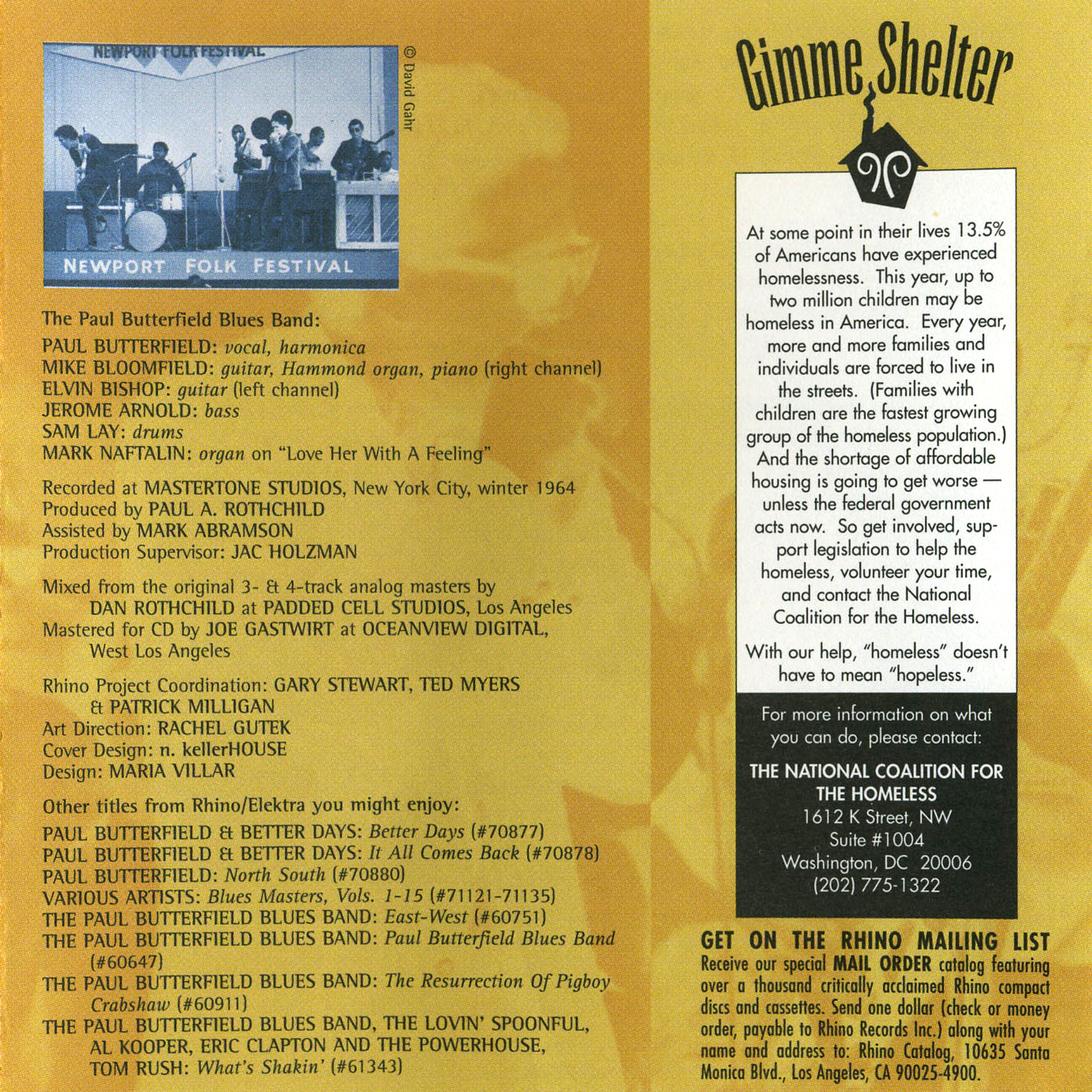
The Paul Butterfield Blues Band - Selftitled (1st Album US 1965) + Bonus


Size: 97.9 MB
Bitrate: 320
mp3
Ripped by: ChrisGoesRock
Artwork Included
Source: Japan 2018 SHM-CD Remaster

The Paul Butterfield Blues Band is the debut album by Paul Butterfield, released in 1965 on Elektra Records, EKS 7294 in stereo, EKL 294 in mono. It peaked at #123 on the Billboard pop albums chart. In 2003, the album was ranked number 476 on Rolling Stone magazine's list of the 500 greatest albums of all time, moving up to number 468 in the revised 2012 list, and also is ranked at #11 on Down Beat magazine's list of the top 50 blues albums.


In late 1964, a friend of Elektra house producer Paul Rothchild told him that the "best band in the world was on stage at a blues bar in Chicago." Rothchild took a plane to Chicago to see the Butterfield quartet, and later the same night went to a different club and saw guitarist Mike Bloomfield with a different band.

According to Rothchild, it was at his impetus that Paul Butterfield hired Bloomfield as his second guitar alongside Elvin Bishop. The Butterfield rhythm section of Jerome Arnold and Sam Lay had been hired away from Howlin' Wolf.

Sessions were arranged for December, 1964, but these were abandoned for live recordings from the Cafe Au Go Go in New York City after the band's appearance at the Newport Folk Festival. The earlier studio recordings were eventually released on The Original Lost Elektra Sessions in 1995. Upon hearing the live tapes, Rothchild still remained dissatisfied, and the band went into the studio in September 1965 in an attempt to record the album for the third time. The guitar solos were all played by Bloomfield, Bishop relegated to rhythm guitar. Keyboardist Mark Naftalin was drafted in at the September sessions and asked to join the band by Butterfield, expanding it to a sextet.

The album presents band originals and songs in the style of electric Chicago blues. It is one of the first blues albums recorded in America featuring a white singer, trailing a few years behind the British blues movement where white singers and musicians had been performing and recording blues since the late 1950s.

Even after his death, Paul Butterfield's music didn't receive the accolades that were so deserved. Outputting styles adopted from Howlin' Wolf and Muddy Waters among other blues greats, Butterfield became one of the first white singers to rekindle blues music through the course of the mid-'60s. 

His debut album, The Paul Butterfield Blues Band, saw him teaming up with guitarists Elvin Bishop and Mike Bloomfield, with Jerome Arnold on bass, Sam Lay on drums, and Mark Naftalin playing organ. The result was a wonderfully messy and boisterous display of American-styled blues, with intensity and pure passion derived from every bent note. 

In front of all these instruments is Butterfield's harmonica, beautifully dictating a mood and a genuine feel that is no longer existent, even in today's blues music. Each song captures the essence of Chicago blues in a different way, from the back-alley feel of "Born in Chicago" to the melting ease of Willie Dixon's "Mellow Down Easy" to the authentic devotion that emanates from Bishop and Butterfield's "Our Love Is Drifting." 

"Shake Your Money Maker," "Blues With a Feeling," and "I Got My Mojo Working" (with Lay on vocals) are all equally moving pieces performed with a raw adoration for blues music. Best of all, the music that pours from this album is unfiltered...blared, clamored, and let loose, like blues music is supposed to be released. A year later, 1966's East West carried on with the same type of brash blues sound partnered with a jazzier feel, giving greater to attention to Bishop's and Bloomfield's instrumental talents.

Personnel:
♦ Paul Butterfield – lead vocals (all but 4, 5, 7), harmonica
♦ Mike Bloomfield – guitars
♦ Elvin Bishop – guitars
♦ Mark Naftalin – organ (3, 4, 7-10)
♦ Jerome Arnold – bass
♦ Sam Lay – drums, lead vocals (5)

01. "Born in Chicago"  Nick Gravenites  02:55
02. "Shake Your Money-Maker"  Elmore James  02:27
03. "Blues with a Feeling"  Walter Jacobs  04:20
04. "Thank You Mr. Poobah" (instrumental)  Mike Bloomfield, Paul Butterfield, Mark Naftalin  04:05
05. "I Got My Mojo Working"  Muddy Waters  03:30
06. "Mellow Down Easy"  Willie Dixon  02:48
07. "Screamin'" (instrumental)  Mike Bloomfield  04:30
08. "Our Love Is Drifting"  Paul Butterfield, Elvin Bishop  03:25
09. "Mystery Train"  Junior Parker, Sam Phillips  02:45
10. "Last Night"  Walter Jacobs  04:15
11. "Look Over Yonders Wall"  James Clark  02:23 

-----------------------------------------------------------------------------------------------------------

The Original Lost Elektra Sessions (US 1964)


Size: 150 MB 
Bitrate: 320
mp3
Ripped by: ChrisGoesRock
Some Artwork Included


All but one of these 19 tracks were recorded in December, 1964, as Paul Butterfield Blues Band's projected first LP; the results were scrapped and replaced by their official self-titled debut, cut a few months later. With both Michael Bloomfield and Elvin Bishop already in tow, these sessions rank among the earliest blues-rock ever laid down. 

Extremely similar in feel to the first album, it's perhaps a bit rawer in production and performance, but not appreciably worse or different than what ended up on the actual debut LP. Dedicated primarily to electric Chicago blues standards, Butterfield fans will find this well worth acquiring, as most of the selections were never officially recorded by the first lineup (although different renditions of five tracks showed up on the first album and the What's Shakin' compilation). 

It's hard to believe that this album was scrapped. A lot of bands put out albums that were much worse than this. One has to wonder if Paul Rothschild should have just taken a few valiums and put this out at the time it was recorded, because this is very, very good.

This is a terrific document of a band of seriously dedicated guys playing the music they love, as authentically as they can. These guys weren't kidding; they paid their dues on the South Side of Chicago and were accepted as peers by none other than Muddy Waters. The performances here are raw but not sloppy, and the band is as tight as a tick. 


Most of the songs on here are played at a quick clip, but there's a lot of bite and venom in these performances, an air of urgency not dissimilar to something you hear on Buddy Guy's early recordings.

It's sad to think that the Yardbirds got so much praise (and still do) as being white interpreters of the blues, when this collection shows clearly that the Butterfield Blues Band was much, much better than anything the British blues movement would offer for several years. Why the Yardbirds got the press and historical props and the Butterfield Blues Band doesn't is a total mystery. 


Maybe they didn't wear enough paisley. There is no paisley or patchouli on this one. It's just hard, tough blues, nasty, with teeth in it. Forget that half the band was white guys and dump every preconception you have about hippies, white blues, etc., and listen to this for what it is; a seriously cool recording of a very hot band hitting their stride.

Finally, I want to add that the recording quality of this album is not "execrable." It sounds every bit as good as any other album recorded in 1964 
(! ) and a whole lot better than most. As a matter of fact, I think this is a much better produced record than anything the Yardbirds ever did. It's certainly much more authentic blues. A great document of an unjustly forgotten group. 

19 previously unreleased sides from the legendary blues-rock outfit! Features 1964 material recorded in New York (much of it originally intended for inclusion on his band’s first album), plus songs from the 1965 sessions that resulted in Butterfield’s first official release. Includes liner notes by Paul Rothchild.

Personnel:
♦ Paul Butterfield (vocals, harmonica)
♦ Elvin Bishop (guitar)
♦ Mike Bloomfield, Mark Naftalin (keyboards)
♦ Jerome Arnold (bass)
♦ Sam Lay (drums)

01. Good Morning Little School Girl  02:23
02. Just To Be with You  03:23
03. Help Me  02:16
04. Hate To See You Go  04:34
05. Poor Boy  03:27
06. Nut Popper #1  02:25
07. Everything's Gonna Be All Right  02:58
08. Lovin' Cup  02:54
09. Rock Me  02:52
10. It Hurts Me Too  02:46
11. Our Love Is Driftin'  02:29
12. Take Me Back Baby  02:49
13. Mellow Down Easy  03:05
14. Ain't No Need To Go No Further  02:45
15. Love Her with a Feeling  02:59
16. Piney Brown Blues  02:14
17. Spoonful  03:20
18. That's All Right  03:14
19. Goin' Down Slow  06:02

Part 1: Butterfield 1965
Part 2: Butterfield 1965
or
Part 1: Butterfield 1965
Part 2: Butterfield 1965
or
Part 1: Butterfield 1965
Part 2: Butterfield 1965


Wednesday, June 13, 2018

Johnny Cash - With His Hot And Blue Guitar (1st Album US 1957)


Size: 115 MB
Bitrate: 320
mp3
Ripped by: ChrisGoesRock
Artwork Included
Source: Japan SHM-CD Remaster

Johnny Cash with His Hot and Blue Guitar is the debut album by American country star Johnny Cash, released on October 11, 1957. The album contained four of his hit singles: "I Walk the Line," "Cry! Cry! Cry!," "So Doggone Lonesome," and "Folsom Prison Blues." It was re-issued on July 23, 2002 as an expanded edition, under the label Varese Vintage, containing five bonus tracks, three being alternate versions of tracks already present on the original LP. In 2012, Columbia Records reissued the album with 16 additional non-album Sun tracks as part of its 63-disc Johnny Cash: The Complete Columbia Album Collection box set.


This was one of the first albums ever issued on Sam Phillips' Sun Records label.

Background:
Cash auditioned for a place on the music label Sun Records in 1955, but failed to impress its founder Sam Philips after presenting himself as a gospel singer. Cash was told to come back with a more commercial sound, as gospel wouldn't sell. He returned with the songs "Hey Porter!" and "Cry! Cry! Cry!" and subsequently released them as his debut single on Sun Records in July 1955. On the recording, he was backed by Luther Perkins on guitar and Marshall Grant on bass, dubbed "The Tennessee Two" by Philips. ("Hey Porter" was not included on the original Sun album, but was included in later reissues by other labels.)

"Cry! Cry! Cry!" became a commercial success, entering the country charts at number fourteen.

His second single, "Folsom Prison Blues", was released in December 1955 and reached the country Top Five in early 1956.

His final single on With His Hot and Blue Guitar, "I Walk the Line", continued his success, reaching number one on the country charts and staying there for six weeks, eventually crossing over into the pop Top 20.

Folsom Prison Blues:
"Folsom Prison Blues" is a song written in 1953[4] and first recorded in 1955 by American singer-songwriter Johnny Cash. The song combines elements from two popular folk styles, the train song and the prison song, both of which Cash continued to use for the rest of his career. It was one of Cash's signature songs. It was the eleventh track on his debut album With His Hot and Blue Guitar and it was also included (same version) on All Aboard the Blue Train. A live version, recorded among inmates at Folsom State Prison itself, became a #1 hit on the country music charts in 1968. In June 2014, Rolling Stone ranked it No. 51 on its list of the 100 greatest country songs of all time.

Cash was inspired to write this song after seeing the movie Inside the Walls of Folsom Prison (1951) while serving in West Germany in the United States Air Force at Landsberg, Bavaria (itself the location of a famous prison). Cash recounted how he came up with the line "But I shot a man in Reno, just to watch him die": "I sat with my pen in my hand, trying to think up the worst reason a person could have for killing another person, and that's what came to mind."

Cash took the melody for the song and many of the lyrics from Gordon Jenkins's 1953 Seven Dreams concept album, specifically the song "Crescent City Blues". Jenkins was not credited on the original record, which was issued by Sun Records. In the early 1970s, after the song became popular, Cash paid Jenkins a settlement of approximately US$75,000 following a lawsuit.

The song was recorded at the Sun Studio in Memphis, Tennessee on July 30, 1955. The producer was Sam Phillips, and the musicians were Cash (vocals, guitar), Luther Perkins (guitar), and Marshall Grant (bass). Like other songs recorded during his early Sun Records sessions, Cash had no drummer in the studio, but replicated the snare drum sound by inserting piece of paper (like a dollar bill) under the guitar strings and strumming the snare rhythm on his guitar. The song was released as a single with another song recorded at the same session, "So Doggone Lonesome". Early in 1956, both sides reached #4 on the Billboard C&W Best Sellers chart.

Live recording, 1968:
Cash opened most all of his concerts with "Folsom Prison Blues," after greeting the audience with his trademark introduction, "Hello, I'm Johnny Cash," for decades. Cash performed the song at Folsom Prison itself on January 13, 1968, and this version was eventually released on the At Folsom Prison album the same year. That opening version of the song is more up-tempo than the original Sun recording. According to Michael Streissguth, the cheering from the audience following the line "But I shot a man in Reno / just to watch him die" was added in post-production. A special on the Walk the Line DVD indicates that the prisoners were careful not to cheer at any of Cash's comments about the prison itself, fearing reprisal from guards. The performance again featured Cash, Perkins and Grant, as on the original recording, together with Al Casey (guitar) and W.S. Holland (drums).

Released as a single, the live version reached #1 on the country singles chart, and #32 on the Hot 100, in 1968. Pitchfork Media placed this live version at number 8 on its list of "The 200 Greatest Songs of the 1960s." The live performance of the song won Cash the Grammy Award for Best Country Vocal Performance, Male, the first of four he won in his career, at the 1969 Grammy Awards.

Original recording, 1957:
01. "The Rock Island Line" Unknown  02:11
02. "I Heard That Lonesome Whistle" Jimmie Davis, Hank Williams  02:25
03. "Country Boy"  01:49
04. "If the Good Lord's Willing" Jerry Reed  01:44
05. "Cry! Cry! Cry!"  02:29
06. "Remember Me" Stuart Hamblen  02:01
07. "So Doggone Lonesome"  02:39
08. "I Was There When It Happened" Jimmie Davis, Fern Jones  02:17
09. "I Walk the Line"  02:46
10. "The Wreck of the Old '97" Traditional (probably Charles Noell); arranged Cash  01:48
11. "Folsom Prison Blues"  02:51
12. "Doin' My Time" Jimmie Skinner  02:40

Bonus: Radio Live 1958-59
13. Rock Island Line (Haven't Recorded it Yet) [Radio Live Bonus 1956]  02:31
14. Folsom Prison Blues [Radio Live Bonus 1956]  03:02
15. Reserve For Youth Training Program” spot [Radio Live Bonus 1956]  01:12
16  Don't Take Your Guns To Town [Radio Live Bonus 1956]  03:11
17. Get Rhythm (“Our latest release on Sun”) [Radio Live Bonus 1956]  02:27
18. Swing Low, Sweet Chariot [Radio Live Bonus 1956]  02.22
19. So Doggone Lonesome [Radio Live Bonus 1956] 02:39
20. Cry Cry Cry [Radio Live Bonus 1956]  02:00

These are vintage radio broadcast transcription discs (at times you can “hear” the vinyl which adds flavor). The sound quality is amazing. Country Style USA is from 1958, Guest Star is from 1959. That’s all the info I have. I received these many years ago in a trade and transferred them from cassette. This is as good as it gets.

Country Style USA was a radio program syndicated by the US Army Band and Recruiting Services and broadcast as a recruiting tool for them.          

Produced by the U.S. Treasury Department in the 1940s and 1950s as a public service program, Guest Star features a different often top-name "guest star" (singer, actor, comedian) each week to promote the sales of savings bonds previoulsy circulated with incorrect dates of 1958 & 1959.

1. Johnny Cash US 1957
or
2. Johnny Cash US 1957
or
3. Johnny Cash US 1957