Followers

Sunday, June 25, 2023

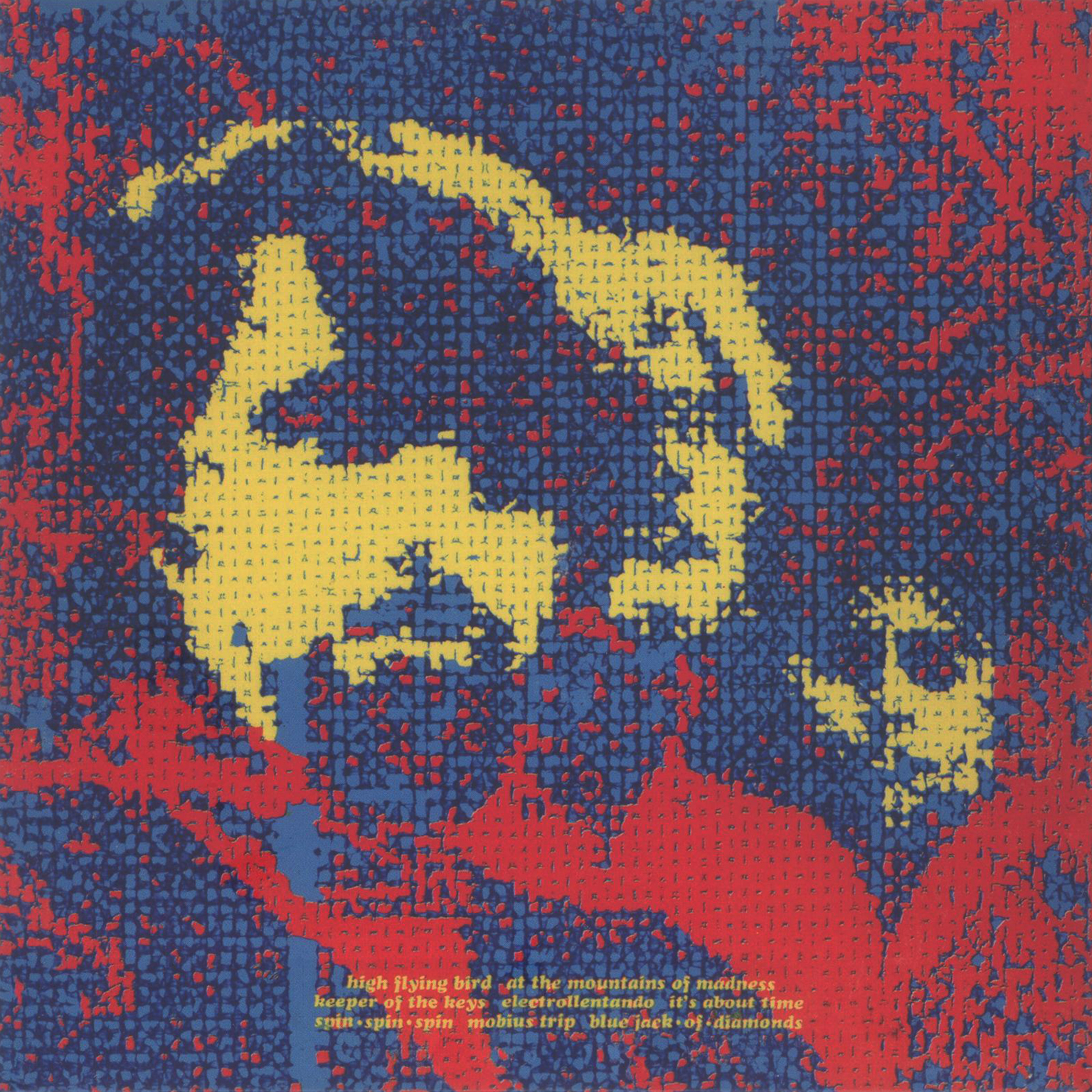
H.P. Lovecraft - II (Psychedelia US 1968)


Size: 117 MB
Bitrate: 320
mp3
Ripped by: ChrisGoesRock
Artwork Included

H. P. Lovecraft II is the second album by the American psychedelic rock band H. P. Lovecraft and was released in September 1968 on Philips Records. As with their debut LP, the album saw the band blending psychedelic and folk rock influences, albeit with a greater emphasis on psychedelia than on their first album. H. P. Lovecraft II failed to sell in sufficient quantities to reach the Billboard Top LPs chart or the UK Albums Chart, despite the band being a popular act on the U.S. psychedelic concert circuit. Legend has it that the album was the first major label release to have been recorded by musicians who were all under the influence of LSD.

Background
Recording sessions for the album began in June 1968 at I.D. Sound Studios in Los Angeles, with the band's manager George Badonsky producing and British-born Chris Huston serving as audio engineer. H. P. Lovecraft had toured intensively during the first half of 1968 and consequently, there was a lack of properly arranged new material for the album. As a result, much of H. P. Lovecraft II was improvised in the studio, with Huston playing a pivotal role in enabling the underprepared band to complete the recording sessions.


Huston was also instrumental in creating the psychedelic sound effects that adorned much of the album's contents. The band's singer and guitarist, George Edwards, recalled the importance of Huston's contributions during an interview with journalist Nick Warburton: "Chris came up with a lot of very innovative techniques that prior to that record had not really been used. He was way ahead of his time. We had no material, the band was totally fried and Chris helped us make a record. That record would never have happened without Chris."

Among the tracks that were recorded for the album were the Edwards-penned compositions "Electrollentando" and "Mobius Trip", the latter of which featured lyrics that music historian Richie Unterberger has described as "disoriented hippie euphoria." In addition, the band elected to cover "Spin, Spin, Spin" and "It's About Time", which had both been performed by Terry Callier, an old friend of Edwards' from his days as a folk singer. Unterberger has remarked that both of these songs made effective use of the oddly striking vocal interplay and close harmony singing of Edwards and the band's keyboardist Dave Michaels.

The band's newest recruit, Jeff Boyan, who had only joined the group in early 1968 as a replacement for bassist Jerry McGeorge, was featured as lead vocalist on his own composition "Blue Jack of Diamonds" and on the band's cover of the folk standard "High Flying Bird". The track "Nothing's Boy" featured a contribution from voice artist Ken Nordine, and the cover version of Brewer & Shipley's "Keeper of the Keys" was issued as a single in late 1968, following its appearance on the album, but it failed to reach the charts.

The self-penned "At the Mountains of Madness" was based on the 1931 novella At the Mountains of Madness by horror writer H. P. Lovecraft, after whom the band had named themselves. Written by Edwards, Michaels and lead guitarist Tony Cavallari, the song featured some chaotically acrobatic vocal interplay and made ample use of swirling, echoed reverse tape effects, which served to highlight the song's sinister subject matter.

Release and legacy
H. P. Lovecraft II was released in September 1968. Critic Richie Unterberger has remarked that, despite being less focused than the band's first album, it nonetheless managed to successfully expand on the musical approach of its predecessor.[1] He also opined that it shared the haunting, eerie ambiance of the band's first album. Writing for the Allmusic website, Unterberger has described the album as, "much more progressive than their first effort", although he also noted that it "showed the band losing touch with some of their most obvious strengths, most notably their disciplined arrangements and incisive songwriting."

Although H. P. Lovecraft II failed to chart at the time of its release and had gone out of print by the early 1970s, a revival of interest in the band's music had begun by the late 1980s. This resulted in the album being reissued by Edsel Records, along with the band's debut album, on the At the Mountains of Madness compilation in 1988.

The album was again reissued in 2000, along with H. P. Lovecraft, on the Collectors' Choice Music CD, Two Classic Albums from H. P. Lovecraft: H. P. Lovecraft/H. P. Lovecraft II. In addition, the nine songs that make up H. P. Lovecraft II were included on the Rev-Ola Records compilation Dreams in the Witch House: The Complete Philips Recordings. (Wikipedia)


Like the stories of the author after whom they were named, H.P. Lovecraft’s music was spooky and mysterious, a vibe well-suited for the psychedelic times when their two albums were released in 1967 and 1968. Their remarkably eclectic balance of folk, jazz, orchestrated pop, and even bits of garage rock and classical music, was too fragile and ethereal to keep afloat for any longer than that, perhaps. It lasted long enough, however, for the group to gift us with two uneven, occasionally brilliant albums that are among the most intriguing obscure relics of the psychedelic age.

The band’s none-too-stable personnel were about as diverse as could be in the milieu of 1967 Chicago, not a city known for hatching top-flight psychedelic outfits. Guitarist George Edwards, the leader of H.P. Lovecraft if anyone was, had been a folkie in the early 1960s, entering the rock scene in the mid-1960s on the Windy City’s Dunwich label. He cut a single of the Beatles’ "Norwegian Wood," as well as a cover (not issued until the early 1970s) of Bob Dylan’s "Quit Your Low Down Ways" with Steve Miller on guitar. He also sang backing vocals on a couple of Shadows of Knight hits, yet by late 1966 was playing in a lounge jazz trio at a local Holiday Inn.

That experience did not go to waste, however, as another member of that trio was classically trained keyboardist and singer Dave Michaels. Michaels would sing backup vocals on the early 1967 single that served as H.P. Lovecraft’s debut release, "Anyway That You Want Me"/"It’s All Over for You" (added to this CD as bonus tracks). Essentially a vehicle for Edwards, the A-side was a fair pop-rock tune by Chip "Wild Thing" Taylor (which was a hit in the UK for the Troggs). The Edwards original on the flip was actually a solo outtake from 1966, sounding like a raw folk-rock derivation of Dylan’s "It’s All Over Now Baby Blue." Edwards and Michaels, however, determined to form a more permanent and ambitious H.P. Lovecraft lineup over the next few months. This eventually settled into the quintet of Edwards, Michaels, guitarist Tony Cavallari, drummer Michael Tegza, and bassist Jerry McGeorge (who had been rhythm guitarist in the Shadows of Knight). In late 1967, this lineup recorded and released their self-titled album, a wide-ranging mixture of covers and originals that unveiled a far more striking vision than had been apparent on the single.

The group’s strongest asset was the superb dual harmony lead vocals of Edwards and Michaels, showcasing Michaels’ operatic four-octave span with a blend reminiscent of the Jefferson Airplane. Michaels’ multi-instrumental virtuosity on organ, harpsichord, piano, clarinet, and recorder-often bolstered by session players on horns, clarinet, piccolo, and vibes-gave the band a much wider range of timbres than much of their competition. Their seeming determination to plough different ground with every cut sometimes misfired, as with the too-cheerful version of Dino Valenti’s "Let’s Get Together" and the hokey old-time music of "The Time Machine." More often, though, H.P. Lovecraft devised a haunting ambience that lived up to their pledge on the back sleeve to make songs inspired by (author) H.P. Lovecraft’s "macabre tales and poems of Earth populated by another race."

Most of the songs on H.P. Lovecraft, however, were not originals, but folk-rock covers. The Edwards-Michaels vocal blend was particularly stirring on their covers of  "The Drifter" (penned by folkie Travis Edmonson, half of the duo Bud & Travis) and the folk standard "Wayfaring Stranger." Their debt to cult folk-rocker Fred Neil was expressed in a gutsy, hard-rocking version of that singer-songwriter’s "The Bag I’m In," as well as "Country Boy & Bleeker Street," which combined two songs from Neil’s mid-1960s solo debut album. "I’ve Been Wrong Before," by a then-little-known Randy Newman, had already been done by Cilla Black (who had a British hit with the tune), Dusty Springfield, and California garage band the New Breed; H.P. Lovecraft gave it a particularly mystical, enchanting reading.

Yet the finest song H.P. Lovecraft ever did was the group composition "The White Ship." The six-and-a-half-minute opus had a wavering, foggy beauty, with some of Michaels’ eeriest keyboards, sad dignified horns, lyrics that fit in well with the album’s constant references to drifting and wandering, and even the ringing of an "1811 Ship’s Bell" (by Bill Traut). In yet another stylistic twist, Edwards and Michaels put their lounge jazz chops to good use on the suave but moody "That’s How Much I Love You, Baby (More or Less)."

By the time H.P.Lovecraft II came out in September 1968, the group had replaced McGeorge with bassist singer Jeff Boyan; moved from Chicago to Marin County; and shared bills with Donovan, the Pink Floyd, Procol Harum, the Jefferson Airplane, the Buffalo Springfield, Big Brother & the Holding Company, and other top psychedelic acts. Their music had become more psychedelic, but also less focused and more self-indulgent, sounding at times like an acid trip starting to go awry. This prevented the album from being the equal of its predecessor, though at its best it still packed quite a punch.

Michaels’ keyboards in particular were moving into gossamer spaciness that undoubtedly made H.P. Lovecraft a good match for sharing the bill with Pink Floyd. (Not released until the 1990s, the Live May 11 1968 album proved that H.P. Lovecraft, unlike many psychedelic bands with mighty ambitions, could execute their complex arrangements well in concert.) "At the Mountains of Madness" was certainly a highlight of the group’s psychedelic free flights, skittering close to, but never falling into, an abyss of menacing distortion-ridden chaos, with especially acrobatic vocal tradeoffs. "Mobius Trip" gave the lounge jazziness of "That’s How Much I Love You, Baby (More or Less)" a far, well, trippier gloss, its vocals evaporating into the mist at the end of the verses, its lyrics soaked in disoriented hippie euphoria.

More disorganized outings like "Electrallentando," however, indicated that the drug experience might be getting the better of them. "Keeper of the Keys" had a pseudo-operatic vocal so stentorian that it was difficult to tell if it was over-reaching earnestness or parody. (The forty-second Zappaesque link "Nothing’s Boy," by the way, was written by radio wordjazzmeister Ken Nordine, who also provided the spoken narration.)

For all its ephemeral weirdness, H.P. Lovecraft II looked back to folk music with its radical psychedelic reinterpretation of Billy Wheeler’s "High Flying Bird," the early folk-rock classic that had been recorded by Judy Henske and the Jefferson Airplane. There were also adept close-harmony covers of "Spin, Spin, Spin" and "It’s About Time," both of which utilized Michaels’ flair for classical-flavored keyboard lines. The latter of these had especially Airplane-ish vocalizations and almost tortuous shifts of musical settings, veering between dissonant psychedelia and strident strings. Both songs were written by Edwards’ friend Terry Callier, the folk-jazz singer whose cult was small enough to make Fred Neil’s following seem huge. (Callier, incidentally, had recorded "The Drifter," as "I’m a Drifter," in the mid-1960s, prior to H.P. Lovecraft; Edwards would co-produce a half-dozen of Callier’s tracks in late 1969.)

Although H.P. Lovecraft were well-received on the psychedelic concert circuit, neither of their two albums sold well enough to make the charts. Edwards has recalled (in Ptolemaic Terrascope magazine) that the second LP was something of a rush job, without as much time for writing or recording as they would have liked. Dissension and the pressures of touring caused the band to split in 1969. Although Edwards and Tegza did re-form the group in 1970, Edwards left before their album came out, by which time the band were simply called Lovecraft, and bore little musical resemblance to the H.P. Lovecraft of the 1960s. A final Lovecraft album came out in 1975. But the true H.P. Lovecraft, of psychedelic sailors on white ships drifting on who knows what uncharted waters, is contained on this CD, which includes all of their 1960s studio recordings. (Richie Unterberger)

Musicians:
♦ George Edwards – vocals, acoustic guitar, electric guitar, bass
♦ Dave Michaels – vocals, keyboards
♦ Tony Cavallari – lead guitar, vocals
♦ Jeff Boyan – bass, vocals
♦ Michael Tegza – drums, percussion, vocals

01. "Spin, Spin, Spin" (Terry Callier) – 03:21
02. "It's About Time" (Terry Callier) – 05:17
03. "Blue Jack of Diamonds" (Jeff Boyan) – 03:08
04."Electrallentando" (George Edwards) – 06:34
05. "At the Mountains of Madness" (George Edwards, Dave Michaels, Tony Cavallari) – 04:57
06. "Mobius Trip" (George Edwards) – 02:44
07. "High Flying Bird" (Billy Ed Wheeler) – 03:21
08. "Nothing's Boy" (Ken Nordine) – 00:39
09. "Keeper of the Keys" (Mike Brewer, Tom Shipley) – 03:05

1. H.P.
or
2. H.P.
or
3. H.P.

Friday, June 23, 2023

Leon Russell - Live in Japan (Live at Budokan -73 + Bonus Concert -71) (@320)


Size: 201 MB
Bitrate: 320
mp3
Ripped by: ChrisGoesRock
Source: Japan SHM-CD Remaster
Artwork Included

Released roughly a year after Leon Russell performed an unlikely mainstream comeback with the assistance of Elton John, the 2011 disc Live in Japan contains a wealth of live performances from Russell at his peak. The first section of the record was indeed recorded at Budokan in Japan while Leon was on tour in 1973, running through hits like “Tight Rope,” folding “A Song for You” into a medley, and generally rocking like a madman. 


The second section is taken from a 1971 show from Houston, recordings that are rowdier and rougher, both in performance and audio. Even if this is a bit of a ragged, woolly comp, it has plenty to offer: despite the presence of 1973’s Leon Live, there aren’t many live records of Russell in full flight, so this taste of him rocking ferociously is indeed welcome.

Live in Japan is an live album by singer and songwriter Leon Russell. The album was recorded two live tour sessions. The first record section is a 1973 tour show at Budokan in Japan on November 8, 1973. The second recorded section is from a 1971 tour show in Sam Houston Coliseum. While the album had some of Leon's new hits, like "Tight Rope" and "A Song for You," the album did not chart in the top 200. His early live album Leon Live peaked at #9 on the U.S. charts. 


The album was first released as a vinyl LP by Shelter Records. Live in Japan was re-released on CD by Omnivore Recordings in 2011 and again in 2013 with bonus tracks. The album was by produced by Leon Russell, Nobuya Itoh, Peter Nicholls and Denny Cordell. The new CD releases were after Leon recordings earned six gold records. He received two Grammy awards from seven nominations. In 2011, he was inducted into both the Rock and Roll Hall of Fame and the Songwriters Hall of Fame. One of his biggest early fans, Elton John, said Russell was a "mentor" and an "inspiration". They recorded their album The Union in 2010, which earned them a Grammy nomination.

Live at Nippon Budokan Hall, November 8 1973 Japan
01. Heaven  04:57
02. Over the Rainbow / God Put a Rainbow  05:39
03. Queen of the Roller Derby  01:49
04. Roll Away the Stone  04:04
05. Tight Rope  02:59
06. Sweet Emily  03:24
07. Alcatraz  04:05
08. You Don't Have to Go  02:35
09. A Song for You, Of Thee I Sing, Roll in My Sweet Baby's Arms  07:10

Bonus Tracks:
Live at San Houston Colisseum April 22 1971
10. Alcatraz  04.49
11. Stranger in A Strange Land  04:51
12. Groupie (Superstar)  03.54
13. Roll Over Beethoven  03.52
14. Medley; Blues Power, Shoot Out on The Plantation, As The Years Go Passing By,
    The Woman I Love  11.08
15. Jumpin' Jack Flash  04.54
16. Of Thee I Sing / Yes I Am  09.35 

1. Leon R
or
2. Leon R
or
3. Leon R


Leon Russell - And The Shelter People (US 1971)


Size: 130 MB
Bitrate: 320
mp3
Ripped By: ChrisGoesRock
Artwork Included

Leon Russell's accolades are monumental in a number of categories, from songwriting (he wrote Joe Cocker's "Delta Lady") to session playing (with the Rolling Stones and Bob Dylan, just to name a few) to his solo work. Unfortunately, it's the last category that never really attracted as much attention as it should have, despite a multitude of blues-based gospel recordings and piano-led, Southern-styled rock albums released throughout the 1970s. 

Leon Russell and the Shelter People is a prime example of Russell's instrumental dexterity and ability to produce some energetic rock & roll. Poignant and expressive tracks such as "Of Thee I Sing," "Home Sweet Oklahoma," and "She Smiles Like a River" all lay claim to Russell's soulful style and are clear-cut examples of the power that he musters through his spirited piano playing and his voice. 


His Dylan covers are just as strong, especially "It's All Over Now, Baby Blue" and "It Takes a Lot to Laugh," while "Love Minus Zero/No Limit" and "It's a Hard Rain Gonna Fall" have him sounding so forceful, they could have been Russell's own. A hearty, full-flavored gospel sound is amassed thanks to both the Shelter People and the Tulsa Tops, who back Russell up on most of the tracks, but it's Russell alone that makes "The Ballad of Mad Dogs and Englishmen" such an expressive piece and the highlight of the album. 

On the whole, Leon Russell and the Shelter People is an entertaining and more importantly, revealing exposition of Russell's music when he was in his prime. The album that followed, 1972's Carney, is an introspective piece which holds up a little better from a songwriting standpoint, but this album does a better job at bearing his proficiency as a well-rounded musician.

01. Stranger in a Strange Land  03:58
02. Of Thee I Sing  04:21
03. It's a Hard Rain Gonna Fall  05:10
04. Crystal Closet Queen  02:57
05. Home Sweet Oklahoma  03:25
06. Alcatraz  03:50
07. The Ballad of Mad Dogs and Englishmen  03:55
08. It Takes a Lot to Laugh, It Takes a Train to Cry  03:47
09. She Smiles Like a River  02:56
10. Sweet Emily  03:19
11. Beware of Darkness  04:34
Bonus Tracks
12. It's All Over Now, Baby Blue
13. Love Minus Zero / No Mimit
14. She Belongs to Me

or
or
 

Leon Russell - Leon Russell (Leons första solo Album US 1970


Leon Russell never quite hit all the right notes the way he did on his eponymous debut. He never again seemed as convincing in his grasp of Americana music and themes, never again seemed as individual, and never again did his limited, slurred bluesy voice seem as ingratiating. 

He never again topped his triptych of "A Song for You," "Hummingbird," and "Delta Lady," nor did his albums contain such fine tracks as "Dixie Lullaby." Throughout it all, what comes across is Russell's idiosyncratic vision, not only in his approach but in his very construction -- none of the songs quite play out as expected, turning country, blues, and rock inside out, not only musically but lyrically. 


Yes, his voice is a bit of an acquired taste, but it's only appropriate for a songwriter with enough chutzpah to write songs of his own called "I Put a Spell on You" and "Give Peace a Chance." And if there ever was a place to acquire a taste for Russell, it's here.

01. A Song for You  04:08
02. Dixie Lullaby  02:30
03. I Put a Spell on You4:10
04. Shoot Out on the Plantation  03:10
05. Hummingbird  03:57
06. Delta Lady  04:00
07. Prince of Peace  03:05
08. Old Masters  01:20
09. Give Peace a Chance  02:15
10. Hurtsome Body  03:35
11. Pisces Apple Lady  02:50
12. Roll Away the Stone  03:06

Bonus:
13. Hummingbird (Original Version)
14. Roll Away The Stone

1. Leon
or
2. Leon
or
3. Leon

Sunday, May 14, 2023

Will Z. feat. Book Of AM - New Start (Psychedelic Album 2013)


Size: 118 MB
Bit Rate: 320
mp3
Ripped by: ChrisGoesRock
Some Artwork Included

New Start takes the listener on a beautiful, cosmic journey of discovery. Its rich textures and haunting melodies are evocative, meditative and timeless. This warm, sensual album will wrap you in its sonic embrace and touch your soul. It's a total trip, a rather floaty, psychedelic mind ride that will expand your mind in mystical, psychedelic ways you're never previously experienced. New Start will be the last time you'll hear this great team of psych and folk musicians working together on new and original music.


Will Z. is a singer, songwriter, multi-instrumentalist and producer, first known for his work with his band Cosmic Trip Machine, then The Book of AM 'cult' project. A solo artist he has explored several genres, from dark occult rock and hard rock to acid-folk and baroque pop, incorporating Indian music and experimental elements. 

New Start began in 2012 when Will Z. helped Juan Arkotxa, Leslie MacKenzie and Carmeta to finish The Book of AM, a unique combination of recordings and artwork which has since gained ‘cult’ status. After the release of The Book of AM, Juan Arkotxa and Leslie MacKenzie asked Will Z. to work on the sequel of their project, called The Book of Intxixu, with Daevid Allen. The leader from Gong organized a reunion in Glasgow during the last Gong tour and started collaborating with the AM team. Working with such talented musicians was a great privilege that inspired Will Z. to compose New Start, an album inspired by Jain philosophy, to celebrate the birth of his son and to pay homage to these great artists with whom he’d collaborated. 


New Start takes the listener on a beautiful, cosmic journey of discovery. Its rich textures and haunting melodies are evocative, meditative and timeless. This warm, sensual album will wrap you in its sonic embrace and touch your soul. It’s a total trip, a rather floaty, psychedelic mind ride that will expand your mind in mystical, psychedelic ways you’re never previously experienced. New Start will be the last time you’ll hear this great team of psych and folk musicians working together on new and original music.

♦ Will Z. - lead vocals, 12 string guitar, acoustic guitar, electric guitar, Wah-Wah Fuzz guitar      (Schaller Electronic Germany), Korg MS20, piano, percussions, sitar, bass, 
mellotron, EMS Synthi AKS, xylophone 
♦ Juan Arkotxa - flutes 
♦ Leslie MacKenzie - percussion on Jain Devotion Part V 
♦ Carmeta Mansilla - vocals on Jain Devotion Part II 
♦ Daevid Allen - glissando guitar on Evil Namo 
♦ oG - glissando guitar on Jain Devotion Parts IV & V 
♦ Alice Artaud - vocals on Greek Loop 
♦ Adam Geoffrey Cole - Oud on Jain Devotion Part IV 
♦ Anne - synth effect on Jain Devotion Part V 
♦ Louis Z. - baby

01. Jain Devotion (Parts I-III) 13:19
02. Namo 05:11
03. Evil Namo 03:32
04. Greek Loop 02:22
05. Nefle 05:40
06. Jain Devotion (Parts IV-V) 11:53

Bonus:
07. Can Am Des Puig - Dawn 03:08
08. Can Am Des Puig - Book of AM 05:59 

1. Will Z
or
2. Will Z
or
3. Will Z


We're Late For Class - The Act You've Known For All These Years (2022)


Size: 160 MB
Bitrate: 320
mp3
Ripped by: ChrisGoesRock

Get it while you can. Destined to be our first deleted release. This is a psychedelic mash-up using ONLY tracks from The Beatles' experimental solo releases. Every sound you'll hear is The Beatles (and their sidemen). NO sounds have been added by us. Since the band never made an experimental album together, a future press release should wildly claim, "The Beatles - As You've Never Heard Them Before!" 


If only they'd all just gotten along. That's the premise, anyway. Originally made for our amusement, we figured, hey... why not share it? Link back to us and we'll whisper your name in bonged reverence & dedicate a bowl to your ongoing existence. When our species comes to rule this planet, your name will be on the protected rolls and you will come to no harm. Hands down, The Act's most avant-garde and psychedelic album. 70 minutes, mashed by We're Late For Class.

Destined to be our first deleted release. This is a psychedelic mash-up using only tracks from The Beatles' experimental solo releases. Every sound you'll hear is The Beatles (or, more accurately, from their solo albums). No sounds have been added by us. Since they never made an experimental album together, a future press release should wildly claim, "The Beatles - As You've Never Heard Them Before!" If only they'd all just gotten along. 


That's the premise, anyway. Originally made for our amusement, we figured, hey... why not share it? Link back to us and we'll whisper your name in bonged reverence & dedicate a bowl to your existence. When our species comes to rule this planet, your name will be on the protected rolls and you will come to no harm. 

01. Space Fantasy Peace (Intro) 01:17
02. Real Made Up 07:05
03. Ski-ing/Au 03:15
04. Mersey Silence Movement 1 (Overture) 05:10
05. Greasy Leaf Changes 09:51
06. You Can't Fight Virgins In A Dream 07:00
07. It's So Hard To Hope For Peace In A Spiral (Requiem) 13:33
08. Goodnight Sad Ramsterdam 03:43
09. John, Yoko Is My Madness (Hidden Track) 19:01

or
or
 

Saturday, May 13, 2023

AcDc - Blues, Booze n' Tattoos 1978-08-08 (Bootleg) + Bonus - AcDc - Nijmegen Netherlands 1978-10-23 FM Broadcast)


AC/DC - Blues, Booze n' Tattoos 1978-08-08 (Bootleg)

Size: 88.3 MB
Bitrate: 320
mp3
Ripped by: ChrisGoesRock
Artwork Included

AC/DC - Blues, Booze n' Tattoos 
'Record Bar', Nashville 
TN August  8, 1978
Radio Broadcast 


AC/DC Live in Nashville on 8th August 1978 at the Atlantic Record Bar Convention With new bassist Cliff Williams on board. By the summer of 1978 AC/DC were starting to achieve worldwide fame. They toured heavily to promote the May release of their classic Powerage LP, criss-crossing the US from June to October. This superb show was performed at the Atlantic Record Bar Convention on 8th August 1978. Broadcast by WKDF-FM, it captures them on fiery form.

Personnel
* Bass – Cliff Williams
* Drums – Phil Rudd
* Guitar – Angus Young, Malcolm Young
* Vocals – Bon Scott

01. Live Wire  06:25
02. Problem Child  04:37
03. Sin City  05:02
04. Gone Shootin'  05:59
05. Whole Lotta Rosie  04:52
06. Rocker  06:56


AC/DC - Nijmegen Netherlands 1978-10-23 FM Broadcast)

AC/DC De Vereeniging Hall 
Nijmegen Netherlands  
October 23rd 1978
FM Broadcast 

THE BAND
♦ Bon Scott vocals
♦ Angus Young lead guitar
♦ Malcolm Young rhythm guitar backing vocals
♦ Phil Rudd drums
♦ Cliff Williams bass backing vocals

01. DJ Intro
02. Live Wire  
03. Problem Child  
04. Sin City  
05. Gone Shooting   
06. High Voltage  
07. The Jack   
08. Whole Lotta Rosie   
09. Rocker  
10. Rock And Roll Damnation 
11. Let There Be Rock   

Part 1: Ac/Dc
Part II: Ac/Dc
or
Part I: Ac/Dc
Part II: Ac/Dc
or
Part I: Ac/Dc
Part II: Ac/Dc


Wednesday, May 10, 2023

John Holland Experience - Selftitled (70s Retro Hardrock Italy 2016)


Size: 127 MB
Bitrate: mp3
Ripped by: ChrisGoesRock
Some Artwork Included

John Holland Experience is a power trio, born in a little cellar near Cuneo, formed by Simone Calvo (Flying Disk), Alex Denina And Francesco Martinat. His sound is a mixture of classic rock n’ roll with shades of rootsy blues that sometimes came out with heavy acid-stoner sounds, all sang in a easy listening Italian.


A really good album for this power trio from the province of Cuneo that settles on psychedelic hard blues coordinates, with the great value and courage of preferring Italian singing in a quite refractory genre such as stoner and derivatives, a choice that also denotes originality. The fundamental matrix of their sound is a hard blues of the Hendrix's school that doesn't disdain stoner turns towards the Monster Magnet style  as in "Elicottero" or as in the heavy r'n'r of "Malvagio". 


Also very valid in terms of writing are "Revival" and "Canzone d'Amore" ,  the first with a nice " Festa Pesta" is a funky blues with Hendrix's breaks while the truly most original moments that brought me back to the pages of funky hard blues of forgotten bands of the post-grunge era such as Mind Funk and Mr. Bungle are  " Tenei Botta " true album masterpiece with acid and psychedelic breaks and "Ti Piace", a funky psych of remarkable workmanship. We carefully follow this band from Cuneo which has significant growth margins, especially in the funk psych territories, and this work proves it.

John Holland Experience:
Francesco Martinat - Guitar & Voice
Simone Calvo - Bass & Backing vocals
Alex Denina - Drums

01. Intro 02:23
02. Malvagio 02:13
03. Elicottero 03:14
04. Revival 03:53
05. Canzone D'amore 03:15
06. Festa Pesta 03:39
07. Tieni Botta 04:43
08. Ti Piace 03:44
Bonus:
09. Blues (Italy 2020)  02.41
10. Dayoff (Live Session 2015)  03.20
11. Lady (Italy 2020)  03.11
12. Raindogs (Live 2017)  03.08
13. Rocky Bilboa (Italy 2020)  03.03
14. Ti Piace (Live in Holland 2017)  04.26

or
or


dBpoweramp Music Converter 2023-05-10 Retail


 dBpoweramp Music Converter 2023-05-10 Retail

Important, Read Spoon's Audio Guide: 

or
or

Saturday, April 08, 2023

Amos Key - First Key (Good German Krautrock 1973)


Size: 93,7 MB
Bitrate: 320
mp3
Ripped by: ChrisGoesRock
Artwork Included

A classically influenced, and keyboard driven band from Germany. The lineup consisted of Thomas Molin (keyboards, vocals), Andreas Gross (bass, guitar, vocals), Lutz Ludwig (drums).

Their only release remains 1973’s ‘First Key.” To show their reverence for the masters, the album was dedicated to Bach, Beethoven, and Schumann. They are mostly compared to Exception and The Nice.


Unlike many of their contemporaries, they favored shorter songs over longer epics. Around 1975 Amos Key again entered the studio to record another album. Unfortunately it was not to be. The album was never finished, but a few demos have come to light. Since that time, little is known about the band members.


“First Key” is another one of those obscure, one-album gems. It is keyboard, bass, and drum, with emphasis on keyboards. There is some sparsely used guitar, but you’ll have to listen closely to find it.

The obvious influences are Deep Purple (they even do a little homage in the middle of “Got the Feeling”), and especially E.L.P. Where E.L.P. would lighten the mood with an occasional novelty song, this band is able to maintain a bit of lightheartedness throughout. This is not to say it isn’t serious music. There are times that even get a bit dark. The overall sense is that these guys refuse to take themselves too seriously. What all this means is that “First Key” is a lot of fun to listen to.

The music is complex, but very accessible. These are three talented musicians. The keyboards are immediately obvious, but the drums and bass almost take you by surprise. The music flows along, and then suddenly I notice how tight the drum part is. In the next moment, a machine gun bass line grabs my attention. 

The vocals could be stronger. Sometimes the accent is a bit heavy, and the mix is too low. However, it doesn’t detract from the enjoyment. But enough of that, it’s not wise to dissect it too much. As I said, this is fun stuff. Best to let the whole experience flow over you.

The basic sound may be derivative, but the attitude is genuine. It’s too bad they only recorded one album. An entire career by Amos Key could have been something special. Try to find it if you can. It may not be essential, but it would definitely enhance any prog collection.

■ Thomas Molin - keyboards, vocals 
■ Andreas Gross - guitar, bass, vocals
■ Lutz Ludwig - drums 

01. Shoebread  04:05
02. Ensterknick Stimmstamm  03:28
03. Knecht Ruprecht  04:50
04. Sometimes...  01:55
05. Got The Feelin  03:10
06. Escape  04:00
07. Important Matter  05:55
08. Dragon's Walk  05:25
09. First Key  02:56

or
or

The Electronic Hole - Selftitled (Outstanding Psychedelia US 1970)


Size:89,2 MB
Bitrate: 320
mp3
Ripped By: ChrisGoesRock
Artwork Included

Last time we discussed Phil Pearlman, I stated he must've been some kind of musical genius, though I knew very little about him apart from the evidence of two highly obscure privately pressed albums. 


This time around I only know a touch more about his back-story, but this record of his from 1970 under the moniker the Electronic Hole proves he was indeed, a musical genius. Recorded in between the Beat of the Earth and the rural rock masterpiece Relatively Clean Rivers, the Electronic Hole bridges the gap between the drone raga rock of the former and the tunefulness of the latter. And it just may be the best of the three. 

Two long suites comprising seven songs of very forward-looking psychedelic rock quite unlike any I've ever heard before, effortlessly prefiguring the likes of Galaxie 500 and Spacemen 3. The Electronic Hole is somewhat more menacing than either of Pearlman's other incarnations, more heroin-y sounding perhaps, but from what I understand he was a teetotaler only prone to getting high on life and the fragrance of incense. 

Heroin seems an appropriate touchstone though as the only other group even coming close to the primal-ness of these songs were the Velvet Underground, and by 1970 even they'd primarily traded those baser emotions in for a sort of melancholic roots rock. On the final track, an early incarnation of one of the Relatively Clean Rivers songs appears, devoid of any ruralness with pure white noise in its stead. And I mean like Les Rallizes Denudes molten white noise. Superb.

Reissue of the extremely obscure 2nd Radish label album, originally issued in 1970. "Raw, noisy, droning and completely mesmerizing album recorded by Phil Pearlman between the first Beat of the Earth album and Relatively Clean Rivers. Pearlman assembled The Electronic Hole in 1969 strictly for personal use -- to audition musicians for his new band. 

To do this, and to add to his own collection of demos, he used local studios in off-hours thanks to his friendship with album engineer Joe Sidore. The result is entirely different from Beat of the Earth, as it abandons a freeform improvisational approach in favor of 'compositions', including a wild cover of Frank Zappa's 'Trouble Every Day'. Pearlman plays sitar to great effect on the album, and another track has the thickest wall of fuzz guitars imaginable -- an effect he achieved by running his Fender amplifier out of a child's chord organ ('sounded great for about two weeks, then it blew up!'). Few albums have such an eclectic yet appealing sound." 


A raw, noisy, droning and completely mesmerizing album recorded by PHIL PEARLMAN between the first Beat of the Earth album and Relatively Clean Rivers. Pearlman assembled the ELECTRONIC HOLE in 1969 strictly for personal use to audition musicians for his new band." Recorded in local studios during off-hours, the album is entirely different from Beat of the Earth, as it abandons a freeform improvisational approach in favor of "compositions," including a wild cover of Frank Zappa's "Trouble Every Day." Pearlman plays sitar to great effect on the album, and another track has the thickest wall of fuzz guitars imaginable. 

01. The Golden Hour Part I
02. The Golden Hour Part II
03. The Golden Hour Part III
04. The Golden Hour Part IV
05. Love Will Find A Way Part I
06. Love Will Find A Way Part II
07. Love Will Find A Way Part III

or
or