Followers

Friday, October 03, 2014

Velvet Opera - Ride a Hustler's Dream (Great Rock UK 1969)


Size: 109 MB
Bitrate: 256
mp3
Ripped by: ChrisGoesRock
Artwork Included
Source: Japan 24-Bit Remaster

Elmer Gantry's Velvet Opera, at various times also known as "Velvet Opera", was a British rock band active in the late 1960s. Members of the band would later become members of The Strawbs, Hudson Ford and Stretch.

The group emerged from a soul/blues band called 'The Five Proud Walkers'. After supporting Pink Floyd on tour, they were inspired to change their approach and become a more psychedelic outfit. The band consolidated as Richard Hudson on drums, John Ford on bass, Colin Forster on lead guitar, Jimmy Horrocks (Horovitz) on organ and flute (who left early in the band's history), and Dave Terry on vocals and harmonica. Initially just calling themselves Velvet Opera, they developed their full name when Terry took to wearing a cape and preacher's hat in the style of the title character in the 1960 film adaptation of Sinclair Lewis' novel, Elmer Gantry.

They started to make club appearances in London, using electronic backing sounds, and secured a record deal with the short lived Direction Records subsidiary of CBS Records in the UK. Their first recording was the single "Flames" (November 1967) which also featured on the CBS sampler record "The Rock Machine Turns You On", and was later covered on stage by Led Zeppelin.[4] Further singles and a self-titled album followed, including the track "Mary Jane" which was taken off the BBC playlist after they realised its drug connotations,[4] although the band continued to make regular live appearances on John Peel's Radio 1 programme 'Top Gear', and other BBC radio shows.

However, the recording success of the band was limited, and Forster left when Hudson and Ford wanted to take the band in a different direction.[citation needed] Forster was replaced by Paul Brett. Elmer Gantry was the next to depart, along with Paul Brett, and the band reverted to the name "Velvet Opera". Gantry and Brett were replaced by John Joyce and a returning Colin Forster respectively, and the band released a second album, Ride a Hustler's Dream. This again failed to achieve success, and in 1970 Ford left (to be replaced by Colin Bass), subsequently followed by Richard Hudson; both of them joining The Strawbs shortly afterwards. At this point the band dissolved.

In 1971, Forster and Bass formed a new version of Velvet Opera with ex-Tintern Abbey vocalist, Dave MacTavish and drummer Mike Fincher. Short-lived, they recorded one single on the Spark Records label.

Elmer Gantry's Velvet Opera - Netherland Single 1969
Meanwhile, Terry formed his own band with ex-members of the Downliners Sect and performed in Hair. In 1974 he went on to tour with the "Fake Mac" version of Fleetwood Mac, when manager Clifford Davis claimed he owned the name "Fleetwood Mac" and promoted a new version without any original members. After the tour collapsed in litigation with the original members of Fleetwood Mac,[6] the band continued as Stretch. Later, Terry recorded with The Alan Parsons Project and sang lead vocals on the tracks "May Be a Price to Pay" on The Turn of a Friendly Card and "Psychobabble" on Eye in the Sky. He also worked with Cozy Powell and Jon Lord.

This popular UK act, which adeptly mixed soul and psychedelic/progressive styles, evolved from Jaymes Fenda And The Vulcans, one of several bands to secure a recording contract following their appearance on the televised contest, Ready Steady Win. Former Vulcans songwriter John Ford (b. 1 July 1948, Fulham, London, England; bass) joined members of R&B band Five Proud Walkers, which included Dave Terry (vocals/guitar), Colin Forster (guitar) and Richard Hudson (b. Richard William Stafford Hudson, 9 May 1948, London, England; drums). 


The new unit was named Elmer Gantry's Velvet Opera, in honour of lead singer Terry's stage garb modelled after the preacher in the 1960 movie Elmer Gantry. Their excellent 1967 debut album included the pulsating "Flames', which, despite regular appearances on BBC Radio 1"s Top Gear, failed to become a hit.

Growing disagreements over musical direction led to the departure of Gantry and Forster. The remaining members truncated their name to Velvet Opera, added Paul Brett (guitar) and John Joyce (b. 1933, England, d. February 2004, England; vocals) to the line-up, and recorded Ride A Hustler's Dream. The album lacked the purpose of its predecessor, save for the excellent "Anna Dance Square". The quartet fell apart when Hudson and Ford joined the Strawbs, with whom they remained until 1973. Having written several of the band's most commercial offerings, the duo then left to pursue their own career as Hudson-Ford. By 1974, Gantry was fronting a band which, until checked by litigation, accepted illicit bookings as "Fleetwood Mac" while the genuine article were off the road. A year later, Gantry emerged once more as singer on Stretch's solitary UK chart entry, "Why Did You Do It?", before going on work with the Alan Parsons Project and Cozy Powell. Former member Colin Forster briefly worked with a new line-up of Velvet Opera in the early 70s.

Line-up - Musicians: (1969 LP CBS 63692)
Paul Brett - Guitar 
 Richard Hudson - Drums 
 John Joyce - Guitar, Vocals 
 John Ford - Bass 

01. Ride a Hustler's Dream (0:56)
02. Statesboro Blues (3:38)
03. Money By (3:55)
04. Black Jack Davy (3:34)
05. Raise the Light (4:09)
06. Raga (5:29)
07. Anna Dance Square (3:00)
08. Depression (4:01)
09. Don't You Realize (3:36)
10. Warm Day in July (5:06)
11. Eleanor Rigby (5:54)
12. Volcano [Bonus] (2.37)
13. A Quick 'B' [Bonus] (3.04)
14. She Keeps Giving Me These Feeling [Bonus] (2.41)
15. There's A Hole In My Pocket [Bonus] (3.47)

1. Link
or
2. Link
.
Family Tree
Open picture in a new window for 100% size

Saturday, September 20, 2014

Luther Allison - Amazingrace Evanston 1978-07-22 (Bootleg)


Size: 134 MB
Bitrate: 320
mp3
Found in Outerspace
Some Artwork

An American-born guitarist, singer, and songwriter who lived in France since 1980, Luther Allison was the man to book at blues festivals in the mid-'90s. Allison's comeback into the mainstream was ushered in by a recording contract with an American record company, Chicago-based Alligator Records. After he signed with Alligator in 1994, Allison's popularity grew exponentially and he worked steadily until his death in 1997.

Luther Allison Fillmore West Concert 1970 Poster
Born August 17, 1939, in Widener, AR, Allison was the 14th of 15 children, the son of cotton farmers. His parents moved to Chicago when he was in his early teens, but he had a solid awareness of blues before he left Arkansas, as he played organ in the church and learned to sing gospel in Widener as well. Allison recalled that his earliest awareness of blues came via the family radio in Arkansas, which his dad would play at night. Allison recalls listening to both the Grand Ole Opry and B.B. King on the King Biscuit Show on Memphis' WDIA. Although he was a talented baseball player and had begun to learn the shoemaking trade in Chicago after high school, it wasn't long before Allison began to focus more of his attention on playing blues guitar. Allison had been hanging out in blues clubs all through high school, and with his brother's encouragement, he honed his string-bending skills and powerful, soul-filled vocal technique.

It was while living with his family on Chicago's West Side that he had his first awareness of wanting to become a full-time bluesman, and he played bass behind guitarist Jimmy Dawkins, who Allison grew up with. Also in Allison's neighborhood were established blues greats like Freddie King, Magic Sam, and Otis Rush. He distinctly remembers everyone talking about Buddy Guy when he came to town from his native Louisiana. 

After the Allison household moved to the South Side, they lived a few blocks away from Muddy Waters, and Allison and Waters' son Charles became friends. When he was 18 years old, his brother showed him basic chords and notes on the guitar, and the super bright Allison made rapid progress after that. Allison went on to "blues college" by sitting in with some of the most legendary names in blues in Chicago's local venues: Muddy Waters, Elmore James, and Howlin' Wolf among them.

His first chance to record came with Bob Koester's then-tiny Delmark Record label, and his first album, Love Me Mama, was released in 1969. But like anyone else with a record out on a small label, it was up to him to go out and promote it, and he did, putting in stellar, show-stopping performances at the Ann Arbor Blues Festivals in 1969, 1970, and 1971. After that, people began to pay attention to Luther Allison, and in 1972 he signed with Motown Records. Meanwhile, a growing group of rock & roll fans began showing up at Allison's shows, because his style seemed so reminiscent of Jimi Hendrix and his live shows clocked in at just under four hours!

Although his Motown albums got him to places he'd never been before, like Japan and new venues in Europe, the recordings didn't sell well. He does have the distinction of being one of a few blues musicians to record for Motown. Allison stayed busy in Europe through the rest of the 1970s and 1980s, and recorded Love Me Papa for the French Black and Blue label in 1977. He followed with a number of live recordings from Paris, and, in 1984, he settled outside of Paris, since France and Germany were such major markets for him. At home in the U.S., Allison continued to perform sporadically, when knowledgeable blues festival organizers or blues societies would book him.


As accomplished a guitarist as he was, Allison wasn't a straight-ahead 
Chicago blues musician. He learned the blues long before he got to Chicago. What he did so successfully is take his base of Chicago blues and add touches of rock, soul, reggae, funk, and jazz. Allison's first two albums for Alligator, Soul Fixin' Man and Blue Streak, are arguably two of his strongest. His talents as a songwriter are fully developed, and he's well-recorded and well-produced, often with horns backing his band. Another one to look for is a 1992 reissue on Evidence, Love Me Papa. In 1996, Motown reissued some of the three albums worth of material he recorded for that label (between 1972 and 1976) on compact disc.

Well into his mid-50s, Allison continued to delight club and festival audiences around the world with his lengthy, sweat-drenched, high-energy shows, complete with dazzling guitar playing and inspired, soulful vocals. He continued to tour and record until July of 1997, when he was diagnosed with inoperable lung cancer. Just over a month later, he died in a hospital in Madison, WI; a tragic end to one of the great blues comeback stories. 1998's posthumous Live in Paradise captured one of his final shows, recorded on La Reunion Island in April 1997. Thomas Ruf, who was inspired by and became a friend of Allison's shortly before the bluesman's death, issued Underground on Ruf Records in 2007.

Luther Allison (August 17, 1939 – August 12, 1997) was an American blues guitarist. He was born in Widener, Arkansas, and moved with his family, at the age of twelve, to Chicago in 1951. He taught himself guitar and began listening to blues extensively. Three years later he began hanging outside blues nightclubs with the hopes of being invited to perform. He played with Howlin' Wolf's band and backed James Cotton.

His big break came in 1957 when Howlin' Wolf invited Allison to the stage. Freddie King took him under his wing and after King got his big record deal, Allison took over King's house-band gig on Chicago's west side. He worked the club circuit throughout the late 1950s and early 1960s and recorded his first single in 1965. He was signed to the Delmark Records label in 1967 and released his debut album, Love Me Mama, the following year. A well-received set at the 1969 Ann Arbor Blues Festival resulted in his being asked to perform there each of the next three years. He also toured nationwide and, in 1972, was signed to Motown Records, one of the few blues artists to do so. By the mid 1970s he began touring Europe and moved to France in 1977. Allison was known for his powerful concert performances, lengthy soulful guitar solos and crowd walking with his Gibson Les Paul. Allison lived briefly during this period in Peoria, Illinois, where he signed briefly with Rumble Records, resulting in two live recordings, "Gonna Be a Live One in Here Tonight", produced by Bill Knight, and "Power Wire Blues", produced by George Faber and Jeffrey P. Hess. Allison played the "bar circuit" in the USA during this period, spending eight months per year in Europe at high-profile venues, including the Montreux Jazz Festival. In 1992, he played as a duo with legendary French rock'n'roll star Johnny Hallyday for 18 shows in Paris, also playing during the intermission.

Allison's manager, and European agent, Thomas Ruf, founded the label Ruf Records in 1994. Signing with Ruf Records, Allison launched a comeback in association with Alligator Records. Alligator founder Bruce Iglauer convinced Allison to return to the United States. The album Soul Fixin' Man was recorded and released in 1994, and Allison toured the U.S. and Canada. He won four W.C. Handy Awards in 1994. With the James Solberg Band backing him, non-stop touring and the release of Blue Streak (featuring song "Cherry Red Wine"), Allison continued to earn more Handys and gain wider recognition. He scored a host of Living Blues Awards and was featured on the cover pages of major blues publications.

In the middle of his summer of 1997 tour, Allison checked into a hospital for dizziness and loss of coordination. It was discovered that he had a tumor on his lung that had metastasized to his brain. In and out of a coma, Allison died on August 12, 1997, five days before his 58th birthday, in Madison, Wisconsin. His album Reckless had just been released. His son Bernard Allison, at one time a member of his band, is now a solo recording artist.

He was posthumously inducted into the Blues Hall of Fame in 1998. In 2000, the Chicago Sun-Times called him "The Bruce Springsteen of the blues". He was a chief influence on many young Blues guitarists such as Chris Beard and Reggie Sears.

Allison is buried at Washington Memory Gardens Cemetery in Homewood, Illinois.

LUTHER ALLISON AMAZINGRACE 
EVANSTON ILLINOIS 1978-07-22 
WRXT FM BROADCAST

01. I Wanna Be Your Lover Man
02. Night Life
03. Messin' with the Kid
04. Ain't Nobody's Business 
05. Look on Yonder's Wall
06. Star Spangled Banner > Auld Lang Syne 
07. Mama's Little Baby
08. Johnny B Goode
09. Rock Me Baby
10. Good Time Charlie

1. Link
or
2. Link
.

Sunday, September 07, 2014

Not to be missed: Plan 9 - New York 1982-12-09 FM Broadcast (Bootleg)

Plan 9 Poster


Size: 105 MB
Birate: 320
mp3
Found in a trash can 
Some Artwork

Plan 9 was one of the first bands in the late 70's to orient by the 60's psych/garage scene.

They had their best time in the early 80's after releasing the Frustration-EP in 1981 and their first album Dealing With The Dead in 1983. The band is still existing but according to WIKI now tending more to Progrock?!? So this show has a lot of great 60's Farfisa & Fuzz if only the radio announcer....

Who knew? Or...Then came Bob Fagan...Or back way up to 1979 and let me tell ya... from the beginning... and I'm gonna try not to leave ANYTHING out, though you'll probably wisht I had.

Enter, John DeVault asleep on the couch, Holly Scanlon if we ever needed a singa, Mike Meehan learning to play guitar but could actually play the drum kit, John Florence with a Tele bass as long as he was tall, Deborah D shy but willing and Eric Stumpo who could sing like Morrison and Arthur Lee and other snotty vocalists of garage psych, while ripping out the meanest guitar solos. Since Tori was still in Junior High and liked to hang around, we were hired for her graduation dance. 

We punked it out to the max, in pink fur pants, hi heels and back-up 8mm films. We played everything we knew, for 4 hours, rousting covers of every cool record from our ever expanding collection of 45's, the grittiest and grungiest garage tunes that were 3 chord wonders and easy to jam on. That was 1979, just prior to beginning an association with BOMP's Greg Shaw, that would eventually lead to the TRANCE-E-DELLIC improv's of Plan 9 2003!

Plan 9 was cool in 1979, enough to attract the attention of guitar punks Tom Champlin, & Eric Vandelin. The deal then was that if they helped us move out to the RED HOUSE they could join the jam. And while getting stupid was the No.1 priority, ultimately they began our wall-of-guitar sound, which had expanded to 3 guitars, all in tune on occasion.

Plan 9 - Frustration Album Promo Shot
Deb found a VOX Super Continental organ at a yard sale. Evan Williams, currently Medicine Ball co-creator and guitar generator, needed a place to live, had a car and a Gibson SG, left handed that he covered with illustrations that were really good, came in one night. We jammed on Dirty Water by the Standells for an hour. He realized the common denominator in our demos, silly love songs as they were, Gotta Move, Frustration, I Can Only Give You Everything, cool music so... we became the "4 guitar 9 member psychedelic experience" started to practice more... oh and I almost forgot about Mikey RIPAMAN who got a Burns guitar for the occasion, had played with us in Newport early on and looked like Eddie of Flo &, and was simply a funny funny man. The idea became apparent to us that we should be Plan 9, to honor the absurdity of the then little known sci-fi debacle, to which we felt akin, P-9 from Outer Space, the one they will certainly remember Ed Wood for.

Enter the texas punk 45 auctions and monumental trades for really great records. We were finding a lot of local stuff too, like the OTHERS Can't stand This Love Goodbye, Buzzards, NightRockers, and East Coast Surf stuff, along with the Trod Nossel records from Connecticut... and Greg Shaw wanted to get some of them, and oh btw Greg, are you looking for bands?

Plan 9 - Dealing with The Dead Album
Midnight Records became a real drag... and we had to get out of our contract, because Enigma was looking for us for soundtrack music, and Midnight refused to cooperate. So Mikey titled up I'VE JUST KILLED A MAN, I DON'T WANT TO SEE ANY MEAT which is borrowed from a certain lousy Italian western movie, dubbed. It gains something in the translation. We recorded live @ Brothers III in New Haven, and the Rat in Boston, and somewhere else, who knows... the sides were pretty cool, the cover art awesome and we could say "See ya" to Midnight. Although, in fairness, they did release the Midnight Christmas Mess where all Midnight Artists at the time were asked to produce a Christmas Song, the 45 with picture cover resulted, which remains a favorite one that took Eric all of an afternoon to write - MERRY CHRISTMAS/WHITE CHRISTMAS, that's an old pose of Santa gesturing with his nose, no longer used to promote the holiday. The B-side is all Mikey, whistling like Bing , and Deb fumbling through the chord changes, produced at Trod Nossel.

At about this time, also, Brian T was trying to put a band together. He had written a few songs, but his band fell apart, so we worked up a side project with Brian and Jane, a 3 song EP titled BRIAN T & PLAN 9. Colin Cheer did the cover for this one as well, a drawing of John Florence in another state of mind in New York City at Dino's Mad Violet house.

The band hosted a 2 day Love Party in Shannock at the Village Café, a dozen cool bands came in on the 14th of February and stayed a while. We recorded the entire event, but alas the tapes are still missing, perhaps stored safely in a dishwasher somewhere in Maine...

PLAN 9WERS - FM, NY
12 SEPTEMBER 1982

♣ Eric Stumpo - Lead Vocals, Guitar
♣ Deborah DeMarco - Organ
♣ Evan Williams, John DeVault, Tom Champlin - Guitar
♣ John Florence - Bass
♣ Michael Meehan - Drums
♣ Michael Ripa - Vocals, Tambourine

01. Crackin' Up (The Wig) (fading in) 
02. How Many Times (The Rovin' Flames) 
03. Where Is Love (Shyres) 
04. Can't Stand This Love, Goodbye (The Others) 
05. Move (State Of Mind) 
06. Beg For love (Plan 9) 
07. You Don't Want Me (Plan 9) 
08. It's One Thing To Say (The Riddles) 
09. Looking At You (MC5) 
10. Try To Run (Plan 9) 
11. Can't Have You (Plan 9) 
12. Keep On Pushin' (Human Beinz) 
13. Frustration (The Painted Ship)
14. speech 
15. Action Woman (The Litter)

1. Plan 9
or
2. Plan 9
.

Thursday, September 04, 2014

Not to be missed...The Byrds - 1968-11-02 and 1969-05-23 (Bootleg) (Superb Sound Quality)


Size: 339 MB
Bitrate: 320
mp3
Found in OuterSpace
Some Artwork Included


Notes from the sleeve... 
Possibly the earliest recorded show to feature the Clarence White - Gene Parsons - John York lineup, and in fact, York couldn't have been in the Byrds more than a week or so. And, as Roy Josephson comments, there are some real highlights and some disappointments. Clarence is absolutely incredible here, especially in the first part of the tape. His guitar is very out front. There appear to be 2 sets. Old Blue is great; Time Between excellent - McGuinn forgets what album it's on. Clarence adds a whole new dimension to Mr. Spaceman - possibly his best work at this show. Blue Suede Shoes is a real hoot. 


Goin Back, Rock 'n' Roll Star, This Wheel, Back Pages and He Was a Friend are the same versions as on the FM broadcast tape. Drug Store Truck Driving Man is a dasslc with a long Ralph Emery story from Roger, harmony from Clarence, and Clarence doing the steel part on his stringbender. Stanley's Song is incomplete but good, done during the pre-show sound check I'd say, although it's In the middle of the tape. Pretty Boy Floyd is done with all guitars - it appears McGuinn says he left the banjo at the hotel. A strong version indeed. 

The show deteriorates toward the end of the tape in the second set. 

A second R & R Star is not as strong as the first. McGuinn just can't cut Hickory Wind, and York is no better. And King Apathy and Bad Night at the Whiskey are just shadows of what's on the album. There are feedback problems. York gets a little carried away on harmony. Clarence's guitar fades to the back of the mix on some numbers. There's feedback, bad distortlon, poor mix and cutting out. I don't hear Gene Parsons on anything but drums. There's lots of commentary from McGuinn. Some guy In the audience hollers for 100 Years and McGuinn does an impromptu first verse. It really didn't sound like there were many people in the audience. Nashville West is a strong closer though. I think Clarence and Gene could play that in their sleep by then. 


Recorded in late '67 and released early '68 the album "The Notorious Byrd Brothers" became a Byrds masterpiece and one of the greatest rock albums ever. Struggles within the band led to a creative high peak  but also to the firing of David Crosby. Although the album sleeve showed only the remaining members Crosby had contributed his part on almost half of the songs on the album. Soon after its release Michael Clarke also left the group.

McGuinn and Hillman who had proved their potential as a songwriting team on "Younger" and "Notorious" were joined by  Hillman's cousin Kevin Kelly on drums and Gram Parsons on guitar and vocals. McGuinn and Hillman at first intended to continue the folk-jazz-country-rock direction of the "Notorious" album but Parsons convinced Hillman to do some more pure country stuff.

After McGuinn had accepted the idea the album "Sweetheart Of The Rodeo" became another innovational work of the band who had always refused to walk the easy road. The Byrds toured Europe in May 68 with Doug Dillard (picture right) on banjo as touring member but, after more hassles within the band Parsons quit not long after, followed by Kevin Kelly. The lineup during the South Africa Tour in July wasHillman, Carlos Bernal, McGuinn, Kelly


McGuinn and Hillman added Clarence White and Gene Parsons to the line up and fulfilled some contractual obligations but it didn't take long and Chris Hillman left the band to form The Flying Burrito Brothers  together with Gram Parsons leaving Roger McGuinn as the only original member. McGuinn decided to go on with White, Gene Parsons and bassist John York. The Burritos'first album "The Gilded Palace Of Sin" was released March '69.

In the summer of 1968 Gene Clark  teamed up with Doug Dillard to form  Dillard And Clark . They recorded "The Fantastic Expedition Of Dillard And Clark"  mostly with Clark originals and cooperations between Clark, Dillard and Bernie Leadon combining bluegrass, folk and rock. Although a minor classic of its era and with good reviews the album sold dissapointingly. 

The Byrds were back in the studio  in 1969 to record the album "Dr.Byrds And Mr.Hyde", released in March with a new Dylan song "This Wheel's On Fire" and some strong McGuinn compositions, one of them a collaboration with Gram Parsons from the "Sweetheart" days, "Drug Store Truck Drivin'Man". The new line up could set stages on fire, especially with White's lead playing but missed the vocal quality of the original band.


The Byrds - Netherland Single 1969
Dillard & Clark recorded their second album "Through The Morning, Through The Night" in the summer of '69 with the help of Hillman, Sneaky Pete amongst others. Bernie Leadon had quit the band before to join the Burritos. The album included some Clark classics like "Kansas City Southern" and "Polly" but missed the freshness of the recordings in '68. Michael Clarke joined the band in summer but became jobless again when Dillard & Clark broke up. Michael found a new engagement in the Flying Burrito Brothers the same year and took part on the recording of the group's second album "Burrito Deluxe", released in May 1970. 

Soon after its release founder member Parsons was fired because of his unreliability towards band's obligations. He was replaced by Rick Roberts with whom the Burritos recorded their third album "The Flying Burrito Brothers" in 1971. Another change within the band happened in 1969 with the quitting of Chris Ethridge who was replaced by Bernie Leadon. The band's last album "The Last Of The Red Hot Burritos" was recorded live in 1971 and released in February 1972. At that time the line up had changed again with Al Perkins replacing Sneaky Pete on pedal steel guitar and Kenny Wertz replacing Bernie Leadon on guitar. Bernie Leadon had left after their third album to form The Eagles.


The Byrds - Netherland Single 1965
After the "Red Hot" release Hillman called it a day and disbanded the group. Relived in 1975 by Pete and Ethridge and performing in different line-ups this kind of Burritos never found the acceptance of Hillman.

After having been fired from the Byrds David Crosby found new partners in Stephen Stills (ex-Buffalo Springfield) and Graham Nash (Hollies) to form American supergroup Crosby, Stills and Nash. Their first album "Crosby, Stills And Nash"  became a huge success with its sparkling harmonies and fantastic guitar work. CSN were accompanied by Dallas Taylor on drums. The Byrds recorded the album "Ballad Of Easy Rider" in the autumn of 1969 bringing the band back to a minor fame. The bad times for McGuinn were over and there was even a new audience especially in Europe that didn't mourn after the loss of the original members but enjoyed the Byrds' full power stage appearances.

The Byrds
Avalon Ballroom, San Francisco 
California November 2 1968
Excellent stereo soundboard

01. Old Blue
02. My Back Pages - Baby What You Want Me To Do
03. Mr Spaceman
04. Time Between
05. Goin' Back
06. Blue Suede Shoes
07. He Was A Friend Of Mine
08. So You Want To Be A Rock N Roll Star
09. Drug Store Truck Driving Man
10. This Wheel's On Fire
11. Stanleys Song
12. Pretty Boy Floyd
13. Eight Miles High
14. You Don't Miss Your Water
15. So You Want To Be A Rock 'N' Roll Star
16. Hickory Wind
17. King Apathy III
18. Bad Night At The Whiskey
19. Nashville West 

Bonus Concert:
The Byrds Ash Grove 
Los Angeles May 23, 1969
Excellent stereo soundboard

01. Lover Of The Bayou
02. You AIn't Going Nowhere
03. Welcome Back Home
04. Old Blue
05. My Back Pages
06. Baby What You Want Me To Do
07. He Was A Friend Of Mine
08. Truck Stop Girl
09. guest intros
10. Break My Mind - with Linda Rondstat
11. I'm Moving On - with John Hammond
12. Take A City Bride
13. Chestnut Mare
14. This Wheel's On Fire
15. It's Alright Ma - Ballad Of Easy Rider
16. Jesus Is Just Alright
17. Turn! Turn! Turn!
18. Mr. Tambourine Man
19. Eight Miles High (incomplete)

Part 1: Link
Part 2: Link
or
Part 1: Link
Part 2: Link
.
Avalon Ballroom, San Francisco today
Avalon Ballroom in the 60's concert picture (Band Unknown)

Sunday, August 31, 2014

Rare 1st Album: Little Walter -The Best of Little Walter (1st Album US 1957)


Size: 87.6 MB
Bitrate: 256
mp3
Ripped by: ChrisGoesRock
Artwork Included
Source: Japan 24-Bit Remaster

Best of Little Walter is the first LP record by American blues performer Little Walter. First released in 1958, the compilation album contains ten Little Walter songs that appeared in the Top 10 of the Billboard R&B chart from 1952 to 1955, plus two B-sides. The album was first released by Checker Records as LP-1428, which was the first LP record released by Checker, and then released on Chess Records with the same catalog number.


The album cover features a black-and-white photo portrait shot by Grammy award winning photographer Don Bronstein of Little Walter holding/playing a Hohner 64 Chromatic harmonica and liner notes by Studs Terkel, who had written Giants of Jazz. The original LP featured a black label.

Little Walter, born Marion Walter Jacobs (May 1, 1930 – February 15, 1968), was an American blues musician and singer, whose revolutionary approach to the harmonica earned him comparisons to Charlie Parker and Jimi Hendrix, for innovation and impact on succeeding generations. His virtuosity and musical innovations fundamentally altered many listeners' expectations of what was possible on blues harmonica. Little Walter was inducted to the The Rock and Roll Hall of Fame in 2008 in the "sideman" category making him the first and only artist ever inducted specifically as a harmonica player.

Jacobs was born in 1930 in Marksville, Louisiana and raised in Rapides Parish, Louisiana, (although recently uncovered census data suggests he may have been born earlier, possibly as early as 1925) where he first learned to play the harmonica. After quitting school by the age of 12, Jacobs left rural Louisiana and travelled around working odd jobs and busking on the streets of New Orleans, Memphis, Helena, Arkansas and St. Louis. He honed his musical skills on harmonica and guitar performing with much older bluesmen such as Sonny Boy Williamson II, Sunnyland Slim, Honeyboy Edwards and others.


Little Walter - Color outtake from first album cover.
Arriving in Chicago in 1945, he occasionally found work as a guitarist but garnered more attention for his already highly developed harmonica work. According to fellow Chicago bluesman Floyd Jones, Little Walter's first recording was an unreleased demo recorded soon after he arrived in Chicago on which Walter played guitar backing Jones. Jacobs reportedly grew frustrated with having his harmonica drowned out by electric guitarists, and adopted a simple, but previously little-used method: He cupped a small microphone in his hands along with his harmonica, and plugged the microphone into a public address system or guitar amplifier. 

He could thus compete with any guitarist's volume. However, unlike other contemporary blues harp players such as Sonny Boy Williamson I and Snooky Pryor, who like many other harmonica players had also begun using the newly available amplifier technology around the same time solely for added volume, Little Walter purposely pushed his amplifiers beyond their intended technical limitations, using the amplification to explore and develop radical new timbres and sonic effects previously unheard from a harmonica, or any other instrument. Madison Deniro wrote a small biographical piece on Little Walter stating that "He was the first musician of any kind to purposely use electronic distortion."


Jacobs made his first released recordings in 1947 for Bernard Abrams' tiny Ora-Nelle label, which operated out of the back room of Abrams' Maxwell Radio and Records store in the heart of the Maxwell Street market area in Chicago. These and several other early Little Walter recordings, like many blues harp recordings of the era, owed a strong stylistic debt to pioneering blues harmonica player Sonny Boy Williamson I (John Lee Williamson). Little Walter joined Muddy Waters' band in 1948, and by 1950, he was playing acoustic (unamplified) harmonica on Muddy's recordings for Chess Records. 

The first appearance on record of amplified harmonica was Little Walter's performance on Muddy's "Country Boy" (Chess 1452), recorded on July 11, 1951. For years after his departure from Muddy's band in 1952, Chess continued to hire Little Walter to play on Waters' recording sessions, and as a result his harmonica is featured on most of Muddy's classic recordings from the 1950s. As a guitarist, Little Walter recorded three songs for the small Parkway label with Muddy Waters and Baby Face Leroy Foster (reissued on CD as "The Blues World of Little Walter" from Delmark Records in 1993), as well as on a session for Chess backing pianist Eddie Ware; his guitar work was also featured occasionally on early Chess sessions with Muddy Waters and Jimmy Rogers.


Jacobs had put his career as a bandleader on hold when he joined Muddy's band, but stepped back out front once and for all when he recorded as a bandleader for Chess's subsidiary label Checker Records on 12 May 1952. The first completed take of the first song attempted at his debut session became his first hit, spending eight weeks in the number-one position on the Billboard R&B chart. The song was Juke, and is still the only harmonica instrumental ever to be a number-one hit on the Billboard R&B chart. (Three other harmonica instrumentals by Little Walter also reached the Billboard R&B top 10: Off the Wall reached number eight, Roller Coaster achieved number six, and Sad Hours reached the number-two position while Juke was still on the charts.) Juke was the biggest hit to date for Chess and its affiliated labels, and one of the biggest national R&B hits of 1952, securing Walter's position on the Chess artist roster for the next decade.

Little Walter scored fourteen top-ten hits on the Billboard R&B charts between 1952 and 1958, including two number-one hits (the second being "My Babe" in 1955), a level of commercial success never achieved by his former boss Waters, nor by his fellow Chess blues artists Howlin' Wolf and Sonny Boy Williamson II. Following the pattern of "Juke", most of Little Walter's single releases in the 1950s featured a vocal performance on one side, and a harmonica instrumental on the other. Many of Walter's vocal numbers were originals that he or Chess A&R man Willie Dixon wrote or adapted and updated from earlier blues themes. In general, his sound was more modern and uptempo than the popular Chicago blues of the day, with a jazzier conception and less rhythmically rigid approach than other contemporary blues harmonica players.


Upon his departure from Muddy Waters' band in 1952, he recruited a young band that was already working steadily in Chicago backing Junior Wells, The Aces, as his new backing band. The Aces consisted of brothers David and Louis Myers on guitars, and drummer Fred Below, and were re-christened "The Jukes" on most of the Little Walter records on which they appeared. By 1955 the members of The Aces/Jukes had each left Little Walter to pursue other opportunities, initially replaced by guitarists Robert "Junior" Lockwood and Luther Tucker, and drummer Odie Payne Others who worked in Little Walter's recording and touring bands in the '50s included guitarists Jimmie Lee Robinson and Freddie Robinson. Little Walter also occasionally included saxophone players in his touring bands during this period, among them a young Albert Ayler, and even Ray Charles on one early tour. By the late 1950s, Little Walter no longer employed a regular full-time band, instead hiring various players as needed from the large pool of local blues musicians in Chicago.

Jacobs was frequently utilized on records as a harmonica accompanist behind others in the Chess stable of artists, including Jimmy Rogers, John Brim, Rocky Fuller, Memphis Minnie, The Coronets, Johnny Shines, Floyd Jones, Bo Diddley, and Shel Silverstein, and on other record labels backing Otis Rush, Johnny Young, and Robert Nighthawk.


Jacobs suffered from alcoholism and had a notoriously short temper, which in late 1950s led to a series of violent altercations, minor scrapes with the law, and increasingly irresponsible behavior. This led to a decline in his fame and fortunes beginning in the late 1950s, although he did tour Europe twice, in 1964 and 1967. (The long-circulated story that he toured the United Kingdom with The Rolling Stones in 1964 has since been refuted by Keith Richards). The 1967 European tour, as part of the American Folk Blues Festival, resulted in the only film/video footage of Little Walter performing that is known to exist. Footage of Little Walter backing Hound Dog Taylor and Koko Taylor on a television program in Copenhagen, Denmark on 11 October 1967 was released on DVD in 2004. Further video of another recently discovered TV appearance in Germany during this same tour, showing Little Walter performing his songs "My Babe", "Mean Old World", and others were released on DVD in Europe in January 2009, and is the only known footage of Little Walter singing. Other TV appearances in the UK (in 1964) and the Netherlands (in 1967) have been documented, but no footage of these has been uncovered. Jacobs recorded and toured only infrequently in the 1960s, playing mainly in and around Chicago.

In 1967 Chess released a studio album featuring Little Walter with Bo Diddley and Muddy Waters titled Super Blues.

A few months after returning from his second European tour, he was involved in a fight while taking a break from a performance at a nightclub on the South Side of Chicago. The relatively minor injuries sustained in this altercation aggravated and compounded damage he had suffered in previous violent encounters, and he died in his sleep at the apartment of a girlfriend at 209 E. 54th St. in Chicago early the following morning. The official cause of death indicated on his death certificate was "coronary thrombosis" (a blood clot in the heart); evidence of external injuries was so insignificant that police reported that his death was of "unknown or natural causes", and there were no external injuries noted on the death certificate. His body was buried at St. Mary's Cemetery in Evergreen Park, IL on February 22, 1968. His grave remained unmarked until 1991, when fans Scott Dirks and Eomot Rasun had a marker designed and installed.


Music journalist Bill Dahl described Little Walter as "king of all post-war blues harpists", who "took the humble mouth organ in dazzling amplified directions that were unimaginable prior to his ascendancy." His legacy has been enormous: he is widely credited by blues historians as the artist primarily responsible for establishing the standard vocabulary for modern blues and blues rock harmonica players. His influence can be heard in varying degrees in virtually every modern blues harp player who came along in his wake, from blues greats such as Junior Wells, James Cotton, George "Harmonica" Smith, Carey Bell, and Big Walter Horton, through modern-day masters Sugar Blue, Billy Branch, Kim Wilson, Rod Piazza, William Clarke, and Charlie Musselwhite, in addition to blues-rock crossover artists such as Paul Butterfield and John Popper of the band Blues Traveler. Little Walter was portrayed in the 2008 film, Cadillac Records, by Columbus Short.

Little Walter's daughter, Marion Diaz Reacco, has established the Little Walter Foundation in Chicago, to preserve the legacy and genius of Little Walter. The foundation aims to create programs for the creative arts, including music, animation and video. Stephen King's novel Under the Dome (2009) features a character named Little Walter Bushey, based on Little Walter.

Personnel: The following people contributed to "the Best of Little Walter album":

Little Walter – lead vocals, harmonica
 Muddy Waters – guitar on "Juke" and "Can't Hold Out Much Longer"
 Jimmy Rogers – guitar on "Juke" and "Can't Hold Out Much Longer"
 David Myers – guitar
 Louis Myers – guitar
 Leonard Caston – guitar on "My Babe"
 Robert Lockwood, Jr. – guitar on "My Babe"
 Willie Dixon – bass, producer
 Elgin Evans – drums on "Juke" and "Can't Hold Out Much Longer"
 Fred Below – drums
 Studs Terkel – sleeve notes

Recorded: May 12, 1952 – January 25, 1955 in Chicago, Illinois, Checker LP 1428

01. "My Babe" (Willie Dixon)  2:44
02. "Sad Hours"  3:15
03. "You're So Fine"  3:07
04. "Last Night"  2:46
05. "Blues with a Feeling (Rabon Tarrant, re-written by Jacobs)"  3:10
06. "Can't Hold Out Much Longer"  3:03
07. "Juke"  2:47
08. "Mean Old World (T-Bone Walker, re-written by Jacobs)"  2:57
09. "Off the Wall"  2:52
10. "You Better Watch Yourself"  3:04
11. "Blue Light"  3:14
12. "Tell Me Mamma" 2:47

Bonus: 
13. "Juke" (Alternate) [1952]  3:06
14. "Off the Wall" (Alternate) [1953]  2:57
15. "Last Night" (First Version) [1954]  2:55

1. Link
or
2. Link
.

Sunday, August 24, 2014

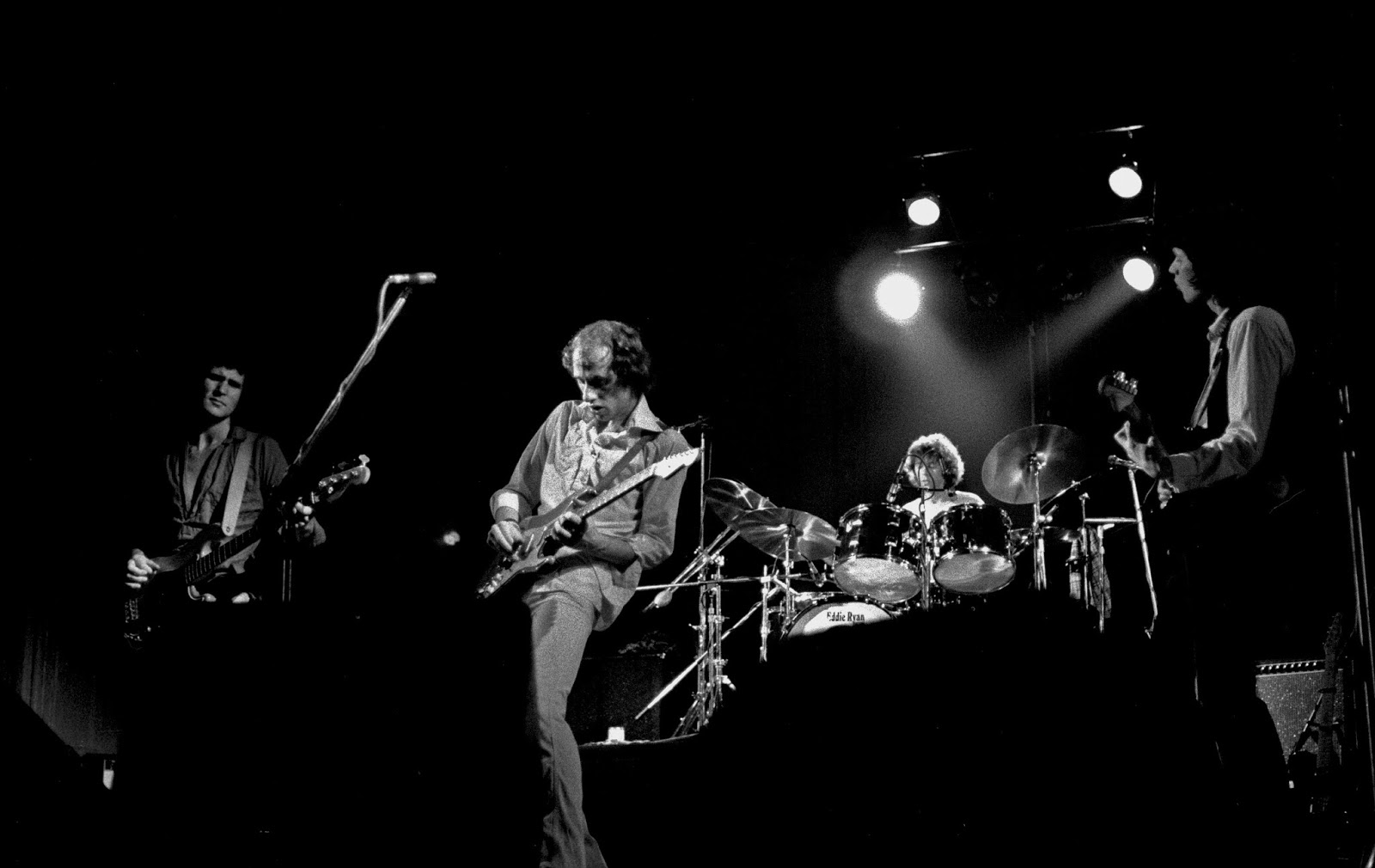
Dire Straits - The New Old Waldorf March 31, 1979 San Francisco, California FM Broadcast (Bootleg)


Size: 163 MB
Bitrate: 320
mp3
Found in OuterSpace
Some Artwork Included

This is a show Dire Straits did in the Old Waldorf, San Francisco. It has been broadcasted on the radio and there are many bootlegs, all with different setlists. This bootleg, created by Button Recordings, has all available songs, with best available sound (soundboard/FM), mixed together from several sources in the right order.

Additional comments: After having the bootlegs Bijou, Old Waldorf 1979 and On the road to Philadelphia, 8 tracks of this concert appeared in perfect sound quality, better than any of these previous bootlegs. All the songs are combined to make one complete bootleg of it which resulted in "The new Old Waldorf". Really a great one with the best available sound on all tracks.

Recorded in early 1979, this concert captures the original four-piece lineup of Dire Straits, before rhythm guitarist David Knopfler departed to pursue a solo career. Shortly thereafter, his brother, Mark, would take control of the band, and eventually parlay his piloting role into a successful solo career of his own.

Since no official live recording of the original band was ever released (though there have been some unofficial bootleg circulations), this five-song show is important as documentation of the beginning of Mark Knopfler's extraordinary musical talent. All the early hits are here, including "Lady Writer," "Down To The Waterline" and ,of course, "Sultans Of Swing," with Mark Knopfler's now distinctive extended guitar solo.

There is a noticeable lack of energy here, possibly because they knew the lineup was changing and simply wanted to finish the tour. It's hard to say. What's clear, however, is the fact that after Mark took over as official band leader, the group would go on to release two of the greatest studio albums of the 1980s: Making Movies and the legendary Brothers in Arms.

Dire Straits - New Old Waldorf 444 Battery Street,  San Francisco, California,  March 31, 1979
FM Broadcast

Mark Knopfler - lead guitar, lead vocals
 David Knopfler - rhythm guitar
 John Illsley - bass
 Pick Withers - drums

01.Down to the waterline
02.Six blade knife
03.Once upon a time in the west
04.Lady writer
05.Water of love
06.In the gallery
07.News
08.What´s the matter baby
09.Lions
10.Sultans of swing
11.Wild west end
12.Where do you think you´re going?
13.Eastbound train
14.Southbound again

Tracks # 1, 2, 5, 6, 8, 10, 11, 13 are taken from the new source
Track # 3 beginning from the bootleg On the road to Philadelphia, rest from Old Waldorf 1979
Track # 4 is taken from the bootleg Old Waldorf 1979
Tracks # 7, 12, 14 are taken from the bootleg Bijou
Track # 9 is taken from the bootleg On the road to Philadelphia

1. Link
or
2. Link
.