Followers

Monday, December 21, 2015

Frank Zappa - The Boy Wonder Session & Fillmore Auditorium June 1966


Size: 75.2MB
Bitrate: @320
mp3
Found in OuterSpace
Some Artwork Included

The Boy Wonder Session Tapes are not raw studio takes and false starts, as has often been assumed by collectors; rather, they are derived from one or more post-production reels of mono mixes and incomplete mixdown takes.


In 1966 there was no sense that rock 'n' roll outtakes would one day have commercial or historical value. Session tapes were commonly wiped and re-used as a cost-cutting measure. This practice was widespread in television also; perhaps the most important reason that Monty Python's Flying Circus seems to come out of nowhere historically is that the BBC systematically wiped tapes of Python's predecessors. Tom Wilson's spoken references to takes 4B, 4C, 11A, 11B, 18 and 29A show that these tapes document only a fraction of the original sessions - but this fraction is probably all that survives.


Early 1966
The mixes of Boy Wonder, I Love You and Orange Colored Sky found here are probably the end mixes used to master Burt Ward's one and only MGM single. As it was the very first song recorded on 9 June, the FZ-penned Boy Wonder, I Love You was likely selected as the A-side of the single before the sessions began. Orange Colored Sky may have been chosen for the B-side at least in part because it was one of the two remaining tracks for which Burt Ward had completed his lead vocals; additional vocals had been planned for other songs, but were canceled when the session budget ran out.

The Boy Wonder Session Tapes circulate among collectors in many different track sequences. They are presented here in the sequence in which they were probably recorded, which is also the sequence in which they were likely archived on T.T.G. post-production reels and, hence, the order in which they were retrieved for mixing.


Two tracks are often omitted from circulating versions of these tapes: an incomplete mixdown of Teenage Bill Of Rights, and what purports to be an alternate take or mix of Variant I. Close listening reveals that the Variant I 'alternate' is in fact the same take and mix as the more common version of the track — a fact disguised by the inclusion, at the take's beginning, of a snippet of the end of I Love. 

This snippet is easily explained: When the MGM 7" single was mastered, the tape segments containing the end mixes of Boy Wonder, I Love You and Orange Colored Sky were undoubtedly physically sliced out of the master reel — a common practice in those pre-digital days — and the remainder was spliced back together for the T.T.G. archives. 


This explains why the end of I Love — the last song from 9 June to be mixed — is found back-to-back with the 'alternate' take of Variant I — the second song to be mixed from 10 June, but the next song in order on the post-production reel after Orange Colored Sky was excised. The so-called 'alternate' version of Variant I is therefore identical to the more common version, and has been omitted from this upload.

Further evidence from the tapes suggests that the recording sequence given in Román Garcia Albertos's wonderful FZ chronology is slightly incorrect, as a snippet of Variant I appears at the end of the incomplete mixdown take of Teenage Bill Of Rights - indicating that Teenage Bill Of Rights was probably recorded first.


Burt Ward claims in Boy Wonder: My Life In Tights that Orange Colored Sky was recorded at his first session with FZ, and that MGM then insisted on vocal lessons prior to his next recording date. Ward goes on to say that MGM's vocal coach dismissed him after two weeks of lessons at $1,000 per week. 


This is sheer fantasy — Orange Colored Sky was recorded on the second day, not the first, and there certainly was no two-week gap between sessions. Burt Ward's book is hugely entertaining — Spy magazine memorably lampooned it under the title I Couldn't Keep It In My Pants And I Can't Stop Talking About It — but clearly, serious researchers must look elsewhere for their facts.

Burt Ward - The Boy Wonder Session Tapes 18.20 
Recorded at T.T.G. Studios, Los Angeles, 9 and 10 June 1966

Sessions Produced by TOM WILSON
Arranged and Conducted by FRANK ZAPPA

Core musicians (9 and 10 June):
♫♪ Burt Ward - lead vocals
♫♪ Dennis Budimir - guitar
♫♪ Elliot Ingber - guitar
♫♪ Eugene DiNovi - piano
♫♪ Plas Johnson - saxophone
♫♪ Benjamin Barrett - cello
(Plus unknown backing vocalists)

Additional musicians (9 June):
♫♪ James Zito - French horn, trumpet
♫♪ George Callender - tuba
♫♪ Justin Gordon - bass clarinet, clarinet
♫♪ Roy Estrada - bass
♫♪ Jimmy Carl Black - drums

Additional musicians (10 June):
♫♪ Lou Morell - guitar
♫♪ William Pitman - guitar
♫♪ Anthony Terran - trumpet
♫♪ John T. Johnson - tuba
♫♪ Jack Nimitz - bass clarinet, clarinet
♫♪ Frederick Dutton - contra bassoon, bassoon
♫♪ Kenneth Watson - tympani, traps, mallets
♫♪ John Guerin - drums

Tracks recorded 9 June:
01. Boy Wonder, I Love You (Zappa) [mono end mix]
02. Gotta Fall In Love (a.k.a. I Love, a.k.a. Autumn Love) [complete mono mix]

Tracks recorded 10 June:
03. Orange Colored Sky (a.k.a. Oranged Colored Sky - DeLugg / Stein) [mono end mix]
04. Teenage Bill Of Rights (John / Regan) [mono mixdown take]
05. Teenage Bill Of Rights (John / Regan) [complete mono mix]
06. Variant I (a.k.a. The Comedian) [mono mixdown take]
07. Tears Come From Loving You [complete mono mix]

+ Bonus

This tape has circulated in many different forms. Sometimes an off-air recording of the show intro and "Plastic People" are included at the start. Sometimes there is a jam from the Detroit 1968 tape at the end. Sometimes there is some stage banter before the music starts, and sometimes it cuts off early. The source for this seed is the tape originally posted by walk, with the last minute patched with the "Time Sandwich" boot. I have also included a remastered version that has been re-equalized, cleaned of dropouts and corrected to true mono. The switch to the fill source is very obvious in the raw version, but virtually undetectable in the remastered version.

FRANK ZAPPA & THE MOTHERS OF INVENTION
June 24-25, 1966
Fillmore Auditorium 
San Francisco, CA

The Mothers Of Invention, June 1966: 
♫♪ Frank Zappa 
♫♪ Ray Collins 
♫♪ Elliot Ingber 
♫♪ Roy Estrada  
♫♪ Jimmy Carl Black

08. Banter, Tuning (00:20)
09. Toads Of The Short Forest (00:47) 
10. I'm Not Satisfied (2:18) 
11. Wedding Dress Song, Handsome Cabin Boy Medley (11:02)

1. Frank Zappa 1966
or
2. Frank Zappa 1966
or
3. Frank Zappa 1966
.

Friday, December 18, 2015

Carl “Sherlock” Holmes - Investigation No.1 (Rare Soul-Funk 1974)


Size: 71.4 MB
Bitrate: 256
mp3
Ripped by: ChrisGoesRock
Artwork Included
Source: Japan 24-Bit Remaster

Carl “Sherlock” Holmes started gigging in the early sixties forming Carl Holmes & the Commanders with whom he recorded a full length album for Atlantic in 1962 entitled Twist Party At The Roundtable. Later on he recorded a couple of 45’s for the Parkway and Verve labels. 

In May of 1966 a pre-Experience Jimi Hendrix gigged with the group but never recorded with them. After a final 45 for the local Philly label Black Jack, the group disbanded and Carl formed the Sherlock Holmes Investigation a solid outfit backed by a strong rhythm section packed with congas, vibes, flute, organ and sax. Philly’s Sigma Sound Studio was the place they recorded their sole album and Curtis R. Staten’s CRS Records was the label that released it. 

This album has it all! Smokin funk breaks in Black Bag, Investigation, Get Down Philly Town, It Ain't Right and some syncopated latin-inspired jams in Modesa. All these coupled nicely by some fine mellow numbers in Close To You, Think It Over and Your Game . And all but one (Bacharach/David's Close To You) written by a guy named Len Woods, a remarkable songwriter, no doubt! 


After Tramp Records has released four songs of this album on two 45RPM singles recently, the entire Investigation No.1 album is now available on CD. It even comes with a bonus track which has been originally released on 45RPM single only.

A funky holy grail, one of the rarest of the rare, and the only album ever cut by funky guitarist Carl “Sherlock” Holmes! Carl’s work on the guitar is incredible fast riffing and jazzy, with a style that’s dirtier and messier than some of his 70s jazz funk contemporaries, but which also lays back on a few tracks so that Carl can deliver a sweetly soulful vocal. The album’s a real blend of styles, all handled pretty darn well  from the hard funk of “Black Bag” and “Investigation“, to the Latin jamming of “Modesa“, the fast grooving of “Get Down Philly Town“, and the mellow soul of “Think It Over” and “Your Game“. Great stuff.

This is a super rare soul/funk record where Carl tries to close “the gap between R&B, jazz and psychedelic rock by the creation of a sound that is funky, mellow, intricately soulful and explosive, yet uniquely disciplined in its complexity!

Well, well, well.. It’s time now for some to the dirtier side of funkiness grooves of the early seventies, painted with some to the mellower side soul touches of the same era. And it’s a fine little record from one of the less familiar names around, Philly guitarist and vocalist Carl “Sherlock” Holmes.

Carl started gigging in the early sixties forming Carl Holmes and The Commanders with whom he recorded a full length album for Atlantic in 1962 entitled «Twist Party At The Roundtable», and a couple of 45’s for Parkway and Verve later on. They even gigged with one Jimi Hendrix in 1966 but alas never recorded. After a final 45 for the local Philly label Black Jack, the group disbanded and Carl formed the Sherlock Holmes Investigation, a solid outfit backed by a strong rhythm section packed with congas, vibes, flute, organ and sax. 

Philly’s Sigma Sound Studio was the place they recorded their sole album and Custis R. Staten’s CRS Records was the label that released it. And here we are.

Smokin funk breaks in «Black Bag», «Investigation», «Get Down Philly Town», «It Ain’t Right» and some syncopated latin-inspired jams in «Modesa» all coming out of the legendary Philly studio?… Yeah, why not? Music is One, or isn’t it? Ouch. 

All these coupled nicely by some fine mellow numbers in «Close To You», «Think It Over» and «Your Game» . ouch again! And all but one (Bacarach/David’s «Close To You») written by a guy named Len Woods. A remarkable blend of styles, no doubt!

This is the first official re-issue of the sought-after "Investigation No.1" album. It comes with a bonus track which has been originally released on 45RPM single only. All songs have been digitally remastered to ensure the highest quality possible.

Personnel:
Backing Vocals – Chubby Brown
 Bass – Chico Green, Jimmy Towns
 Drums – Charles Harris
 Flute – John Daves
 Guitar – Art Grant
 Piano – John Hammond (2)
 Producer – Curtis R. Staten
 Saxophone – Middy Middleton, Ray Wright, Cupit
 Written-By – Len Woods* (tracks: 01, 03 to 07)
 Recorded at Sigma Sound Studio Philadelphia, PA

01. Investigation 04.05
02. Close To You 05.07
03. Black Bag 03.20
04. Think Is Over 03.25
05. Modesa 04.59
06. Your Game 04.16
07. Get Down Philly Town 02.59
08. It Ain’t Wright 03.07

Bonus Track From CBS Single [CRS-000005]
09. The Pot's Hot 02.31

1. Carl Holmes
or
2. Carl Holmes
or
3. Carl Holmes

Saturday, December 12, 2015

Carole King - Writer (Great First Album US 1970)


Size: 93.9 MB
Bitrate: 256
mp3
Ripped by ChrisGoesRock
Artwork Included
Source: Japan 24-Bit Remaster

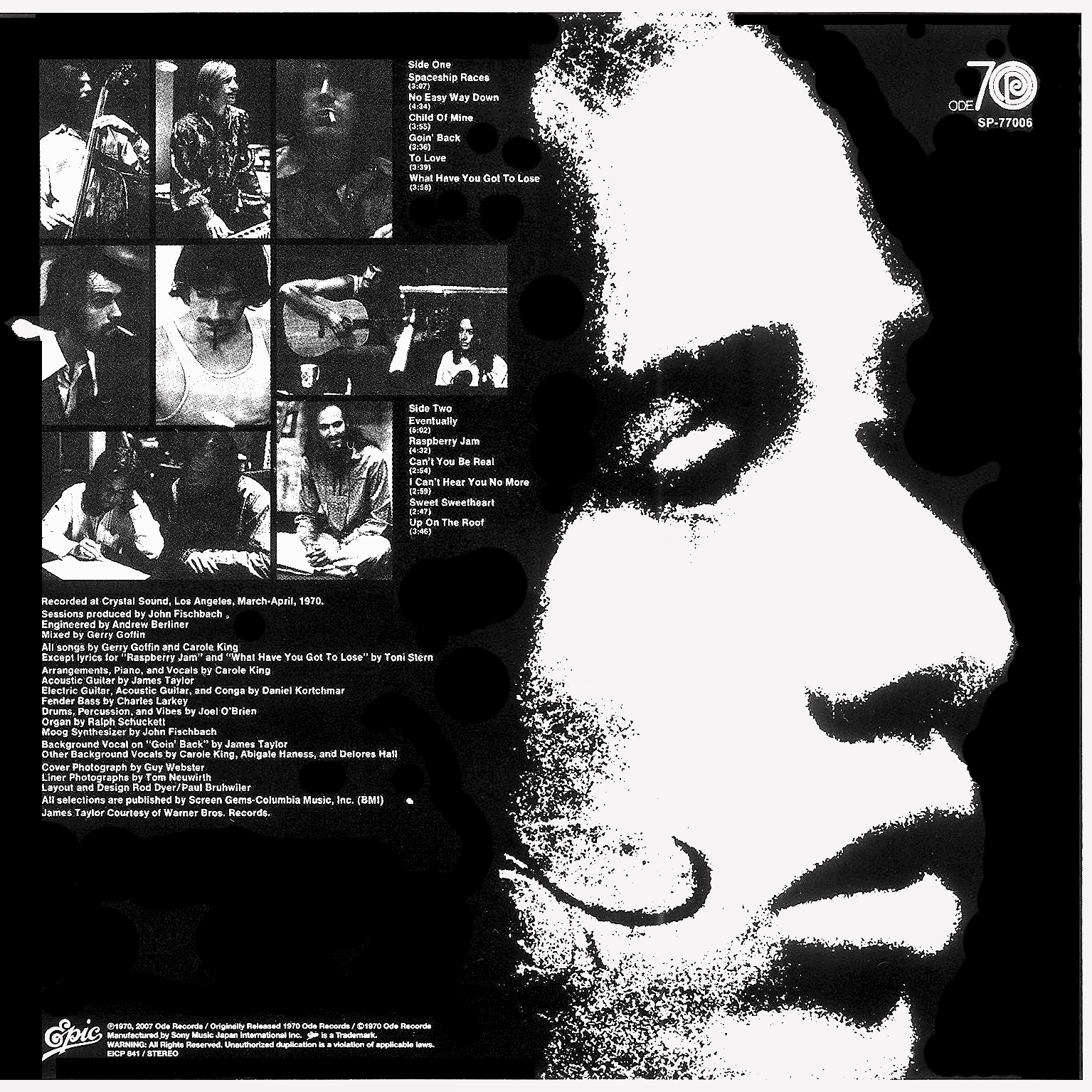
Writer is the debut album by Carole King and was released in 1970. King already had a successful career as a songwriter, and been a part of The City, a short-lived group she formed after moving to Los Angeles in 1968. Tracks on the album include "Up on the Roof" which was a number 4 hit for the Drifters in 1962, and "Child of Mine", which has been recorded by Billy Joe Royal, among others. The album did not receive much attention upon its release, though it entered the chart following the success of King's next album, Tapestry, in 1971.

Reviewers rate it positively if not as highly as Tapestry, one noting that it was the "most underrated of all [her] original albums". And, in a review that also covered Tapestry in Rolling Stone, Jon Landau wrote, "Writer was a blessing despite its faults" and that though the "production was poor", King herself made the album "very worthwhile".

Writer is the most underrated of all of Carole King's original albums, in that it was completely ignored when it came out in 1971 and didn't really start to sell until Tapestry whetted everyone's appetite for her work. It's an album of its time, in both King's life and career, and the music of its era -- singer/songwriters were still something new, and in 1970, it was assumed that anyone in rock had to tend toward the extrovert and flashy to attract attention. Thus, Writer has a somewhat louder sound than the relatively lean, introspective strains of Tapestry which followed. 

"Spaceship Races," which opens the record, features Danny Kootch Kortchmar playing full-out electric guitar, chopping and crunching away with his amp turned way up, and King belting out a number behind his bluesy licks that makes her sound like Grace Slick and the song come off like a pounding (and good) Jefferson Airplane number of the same era, with a great vocal hook at the end of the verses. "No Easy Way Down," with its soulful instrumental and backing arrangement, calls to mind not only her own "Natural Woman" as done by Aretha Franklin, but also (in terms of New York white women belting out soul) Laura Nyro at her best, and it's also a great tune with a killer performance by King, whose wailing voice is extraordinarily powerful here.


"Child of Mine" is the closest that the album gets to the voice that she found on Tapestry, while "Goin' Back" gives a more personal and elegant take to a song that is otherwise thoroughly identified with the Byrds; and "To Love" has King diving into country music, which she pulls off with exceptional grace, the song's title referring to a beguilingly innocent and free-spirited chorus that, once heard, stays with you. Even the least interesting of the songs here, "What Have You Got to Lose," is unusual in the context of King's overall work, with its heavy acoustic rhythm guitar, soaring backing vocals, and King's bold near-falsetto on the choruses. 

And that's just Side One of the original LP -- Side Two opens a little more slackly with the beautiful, reflective, but slightly too languid "Eventually," and the delightful "Raspberry Jam," which offers a soaring guitar showcase for Kortchmar (whose playing intersects the sounds of Roger McGuinn and David Crosby off of the Byrds' "Eight Miles High"), and a head-spinning, swirling organ from Ralph Schuckett weaving below and around King's piano, plus one of King's most playful vocals on record. The album ends on a special high note, King's singer/songwriter-styled reinterpretation of "Up on the Roof," which anticipates the sound she would perfect for Tapestry, emphasizing words and their feeling and meaning as much as music, and expressing herself principally through her voice and piano, moving the band out of the way. 

Ironically enough, if Writer had been released by almost any other artist, it would command a near-top rating and probably be a fondly remembered period cult item today; instead, for all of its merits, it must stand in the shadow of King's more accomplished and distinctive work that followed -- but even slightly "off-brand," under-developed Carole King music from 1970 is still worth hearing today.

Personnel:
Carole King - piano, vocals, backing vocals, and arrangements
 Ralph Schuckett - organ
 John Fischbach - Moog synthesizer
 James Taylor - acoustic guitar and backing vocals
 Daniel Kortchmar - acoustic guitar, electric guitar, conga
 Charles Larkey - Fender bass
 Joel O'Brien - drums, percussion, vibes
 Abigale Haness and Delores Hall - backing vocals

01. "Spaceship Races" – 3:09
02. "No Easy Way Down" – 4:36
03. "Child of Mine" – 4:05
04. "Goin' Back" – 3:20
05. "To Love" – 3:39
06. "What Have You Got to Lose" – 3:33
07. "Eventually" – 5:01
08. "Raspberry Jam" – 4:35
09. "Can't You Be Real" – 3:00
10. "I Can't Hear You No More" – 2:46
11. "Sweet Sweetheart" – 2:46
12. "Up on the Roof" – 3:37

1. Carole King 1970
or
2. Carole King 1970

Thursday, December 10, 2015

Grateful Dead - Soldier's Field 2015-07-04 FM (Bootleg)


Size: 454 MB
Bitrate: 320
mp3
Found on the Radio
Some Artwork Included

Twenty years after the Grateful Dead wrapped up their 1995 summer tour at the same venue, the group took the stage at Soldier Field for the second of three Fare Thee Well shows in Chicago. The band showed they’d come a long way in just one week.


Joined again by guests Bruce Hornsby, Jeff Chimenti, and Phish‘s Trey Anastasio, the Grateful Dead was tighter, brighter and more dynamic last night (July 4) than their tentative start in Santa Clara. Anastasio continued to impress in his role as lead guitarist, but everyone in the Grateful Dead got their chance to shine, especially Bob Weir.

The “core four” of Mickey Hart, Bill Kreutzmann, Phil Lesh and Weir kicked off an energetic first set with the funky groove of “Shakedown Street.” Weir nailed the vocal while Anastasio emulated Jerry Garcia’s old “Mutron” guitar sound. 


“Liberty” was an obvious choice, considering the date. A much later entry in the Robert Hunter and Jerry Garcia songbook, “Liberty” was one of the new batch of songs that the Grateful Dead played in 1993-1994. Weir’s vocal delivery was strong as the band delivered a near-flawless backing.

The Jerry Garcia ballad “Standing on the Moon” was next. Anastasio took the lead vocal, and while very competent, it lacked the emotive weight that one of the elder statesmen could have brought to the delivery. After “Moon,” the Grateful Dead dipped into its road-tested songbook with “Me and My Uncle,” “Tennessee Jed,” “Friend of the Devil” and the first repeat from last weekend’s shows in Santa Clara – “Cumberland Blues.”

Bob Weir led the band through an impressive rendition of Willie Dixon’s “Little Red Rooster,” a staple of the Grateful Dead’s repertoire that did their host city proud with a sleek slide guitar from Weir and bluesy licks from Anastasio. Keyboardist Jeff Chimenti then stole their thunder as he lit up the crowd with a smoky organ solo.

The second set opened with a sublime version of “Bird Song,” a song that Jerry Garcia and Robert Hunter originally wrote upon the death of Janis Joplin. 


Phil Lesh changed the original lyric – “all I know is something like a bird within her sang …” – to the masculine pronoun for the entire song. There was a brief jam in the center of the tune, comprised of rolling guitar notes over Lesh’s bass and Hornsby’s delicate piano.

The band’s 1967 party hit “The Golden Road (To Unlimited Devotion)” followed. The entire band were grinning ear to ear as they harmonized the classic “Hey hey! Come right away!” refrain. Bruce Hornsby and Anastasio took the lead vocals and the band fired on all cylinders until its spacey finale.


Bob Weir’s two-parter “Lost Sailor” / “Saint of Circumstance” followed. Weir quickly swapped guitars for the custom Stratocaster design that he’s been using for the majority of these concerts. The dour “Sailor” had been booted from Grateful Dead setlists in the mid-1980s (others in the band reportedly hated it), but its sister composition – the joyful and upbeat “Saint of Circumstance” – stuck around.

In the hands of Bob Weir’s longtime Ratdog project, “Lost Sailor” would have been just a fan-service curio. On this night, however, “Sailor” became nothing short of mesmerizing. This was the tightest we have heard the band yet. The Grateful Dead dropped into “Saint of Circumstance” without missing a beat. While it wasn’t played with the frenetic pace of shows in the 1980s, it still had plenty of power and drive.


Bruce Hornsby took the reins on a snarling rendition of “West L.A. Fadeaway.” The Grateful Dead had stumbled across the riff the previous night coming out of the “Playing in the Band” jam, but tonight’s payoff was an absolute delight punctuated by Hornsby hammering the piano keys and Chimenti following with that funky Hammond sound.

Before the “Drums” and “Space” improvisations of the night, the band launched into another later-period Garcia song, “Foolish Heart” from 1989’s Built to Last.

Coming out of “Space,” Bob Weir tried several times to get the rest of the band to follow his lead into “Stella Blue,” but it seemed like everyone else was having way too much fun utilizing their guitar-effects boxes. 


Finally, “Stella” began with Weir at the lead. If Trey Anastasio shone the night before, July 4th was Bob Weir’s turn. His voice sounded fairly ragged, but he delivered this beloved Garcia ballad with so much emotion and grace that it was hard to find fault.

The show-closing “One More Saturday Night” and “U.S. Blues” encore weren’t surprises to anyone, but both songs were bursting with energy. 

As “U.S. Blues” reached its climax, fireworks filled the night sky over Soldier Field just as they had done 20 years prior.

The Grateful Dead - Fare Thee Well Show 4
Soldier's Field Chicago, Illinois
July 4, 2015 WXRT FM 

Disc 1 
01. WXRT Intro
02. Shakedown Street
03. Liberty
04. Standing on the Moon
05. Me & My Uncle
06. Tennessee Jed
07. Cumberland Blues
08. Little Red Rooster

Disc 2 
01. Friend of the Devil
02. Deal
03. WXRT Outro
04. WXRT Intro
05. Bird Song
06. The Golden Road
07. Lost Sailor >
08. St. of Circumstance

Disc 3 
01. West L.A. Fadeaway
02. Foolish Heart >
03. Drums >
04. Space >
05. Stella Blue
06. One More Saturday Night

Encore
07. Donor Rap
08. U.S. Blues
09. Fireworks (Stars and Stripes Forever)
10. WXRT Outro

Part 1: Grateful 2015
Part 2: Grateful 2015
Part 3: Grateful 2015 (changed, thank you)
or
Part 1: Grateful 2015
Part 2: Grateful 2015
Part 3: Grateful 2015
.

Sunday, December 06, 2015

Chris Youlden - Nowhere Road (ex. Savoy Brown UK 1973)


Size: 75 MB
Bitrate: 256
mp3
Ripped by ChrisGoesRock
Source: Japan 24-Bit Remaster
Artwork Included

The album featured a number of well-known session musicians. Nowhere Road is the first solo album by ex- Savoy Brown vocalist Chris Youlden.

Nowhere Road is the first solo album by ex-Savoy Brown vocalist Chris Youlden, released in 1973. The album featured a number of well-known session musicians including Chris Spedding, Ray Fenwick, Roy Babbington and ex-Fleetwood Mac guitarist Danny Kirwan.

A single was released in March 1973 to accompany the album: "Nowhere Road" / "Standing on the Corner".

01. "Nowhere Road" – 4:51
02. "One October Day" – 2:25
03. "Chink of Sanity" – 4:01
04. "Crying in the Road" – 3:38
05. "Mamma Don't You Talk So Loud" – 3:13
06. "Standing on the Corner" – 3:29
07. "In the Wood" – 4:14
08. "Wake Up Neighbour" – 2:39
09. "Street Sounds" – 4:31
10. "Time Will Tell" – 2:43
11. "Pick Up My Dogs" – 2:40

1. Chris Youlden
or
2. Chris Youlden


Thursday, November 26, 2015

The Byrds - Washington D.C. 1970-04-18 (Bootleg)


Size: 191 MB
Bitrate: 320
mp3
Founded in my Garage!
Artwork Included
Some Artwork Included

Live at the American University, Washington, DC, April 18, 1970. With their intricate harmonies and chiming guitars, from folk rock to acoustic rock to country rock, The Byrds probably covered them all. While the group formed in the ’60s with Roger McGuinn, Gene Clark, David Crosby, drummer Michael Clark and bassist Chris Hillman, by 1970 when they played this Washington gig, only McGuinn from the original members remained.


With guitarist Clarence White, bassist Skip Battin and drummer Gene Parsons in the lineup, anyone thinking that this is a second-rate band should seriously reconsider. While fans have commented favourably on the nice sound of this show, the highlight is the classic 20-minute jam on Eight Miles High (where the casual listener might even mistake them for Santana doing a spot of jazz improv!). On the other hand, the the band sounded suitably rustic on the instrumental Black Mountain Rag.

While The Byrds have covered Bob Dylan right from the beginning (after all, their debut album was called Mr Tambourine Man), they continued this fine tradition here with what sounds like The Byrds doing the Bob Dylan songbook - You Ain’t Going Nowhere, My Back Pages, This Wheel’s on Fire, It’s Alright Ma and the perennial classic, Mr Tambourine Man.

The original Byrds reunited briefly in 1972 and while McGuinn, Clark and Hillman have worked with each other subsequently, the full-fledged reunion of the three continue to seem as elusive then as it is now. Gene Clark died in 1991 and Michael Clark died of liver disease in 1993.

And while today’s younger music listeners think of R.E.M. when they talk about jangle rock (especially on their Murmur album), not many would remember that musical path was long charted by acts that included The Byrds.

The Byrds - Leonard Gymnasium American University Washington D.C. April 18th 1970

Lineup:
Roger McGuinn - guitar, vocals
 Clarence White - guitar, vocals
 Gene Parsons - drums, vocals
 Skip Battin - bass, vocals

01. You Ain't Going Nowhere
02. Old Blue
03. You All Look a Like
04. My Back Pages > Baby, What You Want Me to Do ?
05. He Was A Friend Of Mine
06. Willin'
07. Black Mountain Rag
08. This Wheel's on Fire
09. It's Alright Ma (I'm Only Bleeding), Ballad Of Easy Rider
10. Jesus is Just Alright
11. Nashville West
12. Turn, Turn, Turn 
13. Mr Tambourine Man 
14. Jam > Eight Miles High **
15. Instrumental Outro
16. Crowd, So You Want to be a Rock and Roll Star 
17. Mr Spaceman
18. Instrumental Outro
19. Crowd, Amazing Grace (acapella version)

** The version of "Jam > Eight Miles High" is something unbelivable, a psychedelic trip
20 minutes long!

1. The Byrds 1970
or
2. The Byrds 1970
or
3. The Byrds 1970
.


Wednesday, November 18, 2015

Zephyr - Zephyr (Blues-Based Hard Rock US 1969 w. Tommy Bolin)


Size: 161 MB
Bitrate: 256
mp3
Ripped by ChrisGoeRock
Artwork Included
Source: Japan 24-Bit Remaster

Zephyr is the debut album by the band Zephyr, released in 1969.

Zephyr was guitarist Tommy Bolin’s first recorded band before he joined the James Gang for two albums and his performance on Billy Cobham’s jazz fusion landmark Spectrum convinced David Coverdale to invite him to replace Ritchie Blackmore in Deep Purple (co-writing and playing on 1975’s Come Taste The Band).


Recording at Wally Heider’s state-of-the-art LA studio but with over-worked engineer Bill Halverson falling asleep at the desk, the band felt their volcanic live power diluted by the mixing. Producer Greg Hampshire has now remixed the original tapes with founding bassist David Givens (whose wife Candy was the band’s Joplin-style vocal powerhouse), finally doing justice to the band’s dynamic blues-rock and Bolin’s stinging pyrotechnics. 

Zephyr was a blues-based hard rock band formed in 1969 in Boulder, Colorado by guitarist Tommy Bolin, keyboardist John Faris, David Givens on bass guitar, Robbie Chamberlin on drums and Candy Givens on vocals. Although the charismatic performances by Candy Givens were originally the focal point for the band, it was the flashy guitar work of Tommy Bolin that the band is best remembered for. 

This late-'60s Denver group is most notable as the starting point for guitarist Tommy Bolin, who was still in his teens when they recorded their first album in 1969. A rather routine slab of bluesy, heavy rock, it made the Top 50. 

Aside from Bolin's extended hard rock riffing, it prominently featured the lead vocals of Candy Givens, who affected a blues-wailing pose along the lines of Janis Joplin. But she didn't have the full throat or guts to back it up, ending up closer to also-ran female psychedelic singers like Lydia Pense (of Cold Blood). Zephyr recorded one more album before Bolin left for stints with James Gang, Deep Purple, and a solo career; the group carried on throughout the 1970s.

After Bolin left, he was replaced by Jock Bartley, and the band recorded the album Sunset Ride, their second for Warner Brothers Records. The album is still in print and is much loved by a small but loyal following. On Sunset Ride, Candy Givens displayed her gifts as a singer, composer, and harmonica player. 

The album was produced by David Givens who also authored the majority of the tunes. As a result of his stint with Zephyr, Bartley went on to a successful career with Gram Parsons and Firefall and drummer, Michael Wooten, went on to play for several years with Carole King. Various versions of Zephyr continued to play in Colorado until Candy's death in 1984. The release of "Heartbeat" in 1982 was promoted by a video that incorporated very early examples of analog computer animation combined with live action.

Other Zephyr members of note include trance blues maven, Otis Taylor, who played bass during the mid-1970s, Kenny Wilkins (Drums) and also later on as (guitarist), guitarist Zack Smith (founder of Columbia Records band Scandal), and blues guitarist, Eddie Turner, who played guitar in the last incarnation during the early 1980s. 

Candie and David, Tommy, and John Faris were all founding members of The Legendary 4Nikators, Boulder's oldest and best loved party band. Taylor and Turner were later additions to The Legendary 4Nikators - Taylor noted for playing motorcycle on stage during "Leader Of The Pack" and performing in a kilt and Turner for his renditions of Jimi Hendrix classics.

Personnel:
♦♫♦ Candy Givens – lead vocals, harmonica
♦♫♦ Robbie Chamberlin – drums, backing vocals
♦♫♦ David Givens – bass, backing vocals
♦♫♦ John Faris – keyboards, flute
♦♫♦ Tommy Bolin – guitar, backing vocals

01. "Sail on" (Tommy Bolin, Candy Givens) – 7:22
02. "Sun's a Risin'" (Bolin, David Givens) – 4:45
03. "Raindrops" (Dee Clark) – 2:40
04. "Boom-Ba-Boom" (D. Givens) – 1.20
05. "Somebody Listen" (D. Givens, C. Givens, Bolin, John Faris) – 6:10
06. "Cross the River" (C. Givens, D. Givens) – 4:43
07. "St. James Infirmary" (Joe Primrose) – 5:15
08. "Huna Buna" (C. Givens, Bolin) – 2:26
09. "Hard Chargin' Woman" (Bolin, Robbie Chamberlin, Faris, C. Givens, D. Givens) – 8:40

1. Zephyr 1969
or
2. Zephyr 1969
or
3. Zephyr 1969


Monday, November 16, 2015

Wednesday, November 11, 2015

Alex Harvey Band - Hot City (Unreleased Album, UK 1974)


Size: 94.3
Bitrate: 256
mp3
Ripped by ChrisGoesRock
Artwork Included
Source: Japan 24-Bit Remaster

Hot City has long been one of the legends of the Alex Harvey collecting world, a full LP recorded at the near peak of the band's creative powers and then abandoned after band and management had second thoughts about the entire thing. 


The tapes were shelved and presumed lost forever -- when they were rediscovered, even the surviving bandmembers had forgotten about one of the songs, "Ace in the Hole," while all professed amazement at just how radically rearranged favorites "Vambo" and "Man in the Jar" were; of course, most of the abandoned album was then re-recorded as the Impossible Dream LP, and it would be foolish to suggest that Hot City comes close to eclipsing that masterpiece. 

But it does afford listeners the opportunity to contemplate an alternate history, as original producer Shel Talmy leads the Sensational Alex Harvey Band through a far harsher musical landscape than they ultimately created, and songs like "Man in the Jar," "Sergeant Fury," and "Anthem" (or "Last Train" as it was then titled) slash out with electrifying freshness. The full album is here, spread across nine tracks; two bonus cuts offer reprises of the anthemic "Tomahawk Kid" and "Anthem" itself.

The production master tapes of a previously unreleased full length studio album by The Sensational Alex Harvey Band, recorded in 1974 and hitherto discarded, have been unearthed, dusted down, fully re-mastered and lined up for release on March 30th on the MLP label, distributed by RSK Entertainment.

‘Hot City – The 1974 Unreleased album’, which has been fully authorised and approved by the band, features 9 great quality tracks, and comes in a deluxe Digi Pack Sleeve which includes a separate inner sleeve and a 20 page high quality booklet with rare photos and extensive liner notes from the band, with track by track comments and opinions, plus an introduction by SAHB author and ex-manager Martin Kielty.

By 1974, the SAHB steamroller was working at full power. Their first album, ‘Framed’, had promised great things, the follow-up, ‘Next’, delivered them, and now the group were planning to record their upcoming third album. The band had been constantly touring and were well rehearsed when in late January, they went into Advision studios in London with legendary US producer Shel Talmy (The Who/The Kinks) to record their biggest album to date. By April, the sessions were finished and the album was mixed.

However, after completion, the band and management had a rethink about the overall sound and amazingly, they decided to scrap the entire album. Shel Talmy then returned to Los Angeles with his tapes. Most of the song titles were later re-recorded and eventually showed up later that year on the official album ‘The Impossible Dream’ with a different producer on board and the songs changed dramatically.


You can now hear how the album sounded with the original versions of these songs. SAHB fans will be totally surprised and amazed at the different styles, delivery and lyric arrangements of well known favourite songs such as ‘Vambo’ and ‘Man In The Jar’. ‘Anthem’ and ‘Tomahawk Kid’ and there is a previously unreleased song ‘Ace In The Hole’ which has not been heard even by the band, since those studio sessions in 1974.

As SAHB became the biggest band of 1975, these recordings were quickly forgotten about. Now after 34 years, MLP have re-discovered the fully mixed unreleased album by a rock group on the verge of stardom. The recordings have been re-assessed by both Shel Talmy and the band members and a decision was made that they would make a great release. Now re-mastered and with the band’s full approval, you can hear how songs like ‘Vambo’, ‘Man In The Jar’, ‘Anthem’ and ‘Sgt Fury’ originally sounded.

Alex Harvey, who tragically died of a massive heart attack in 1982, aged 46, was renowned for his charismatic persona and daredevil stage antics, and, above all, his astonishing, passionate, demonic vocal delivery. Nowhere is this better captured than on ‘Hot City – The 1974 Unreleased album’, a treasure trove of re-discovered musical gems.

01. Vambo  04:45
02. Man In The Jar  05:06
03. Hey You  00:44
04. Long Haired Music  05:05
05. Sergeant Fury  03:39
06. Tomahawk Kid  06:23
07. Ace In The Hole  02:37
08. Weights Made Of Lead  02:36
09. Last Train  09:49

1. Alex Harvey
or
2. Alex Harvey
or
3. Alex Harvey