Followers

Tuesday, April 29, 2014

Jimi Hendrix Experience - Konserthuset 1969-01-09 (Bootleg) (Two Different Sources of Same Concert)


Size: 659 MB
Bitrate: 320
mp3
Found under my Bed
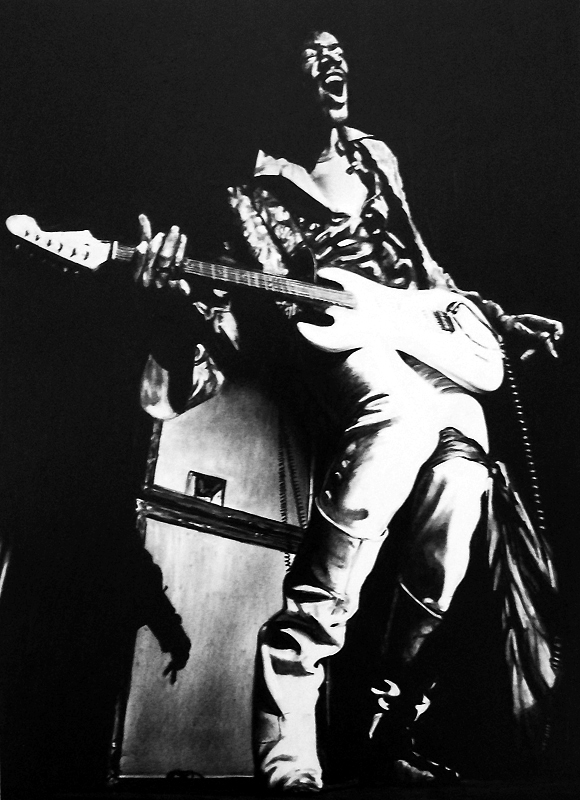
Some Artwork
Swedish FM Broadcast

Jimi Hendrix was amazing, even on a bad night. And January 9, 1969 was clearly not the best night for the Jimi Hendrix Experience. It was the second night of the group’s European tour, and Swedish television was there to capture the first of two shows that evening at the Stockholm Concert Hall, or Konserthuset.

“We’re gonna play nothing but oldies-but-baddies tonight,” Hendrix says at the start. “We haven’t played together in about six weeks, so we’re going to jam tonight and see what happens. Hope you don’t mind.” As he steps away from the microphone he can be heard to mutter, “You wouldn’t know the difference, anyway.”

Hendrix looks irritated throughout the 56-minute set. He and the other two members of the band–particularly bassist Noel Redding–hadn’t been getting along, and there were problems with the equipment. In the book Are You Experienced: The Inside Story of the Jimi Hendrix Experience, Redding describes the scene:


On the whole, I can’t understand how anyone who saw us on this tour could have liked us. There was a lot of filming for Swedish TV and compared to similar films in 1967, we were a different group. Jimi was sullen and removed and actually slagged off the audience during the first set. He rarely bothered to sing. I paced grimly in my corner and turned my back on him. The sparkle was gone, very gone, replaced by exhaustion and boredom which showed in the sloppy repeats of the hits as we stared at the crowd with dead eyes. We hated playing Sweden. Always the same problem–no drugs. We were forced to drink the killer Schnapps, and it brought on Jimi’s mood for the first set.

“Hendrix was listless and tired,” writes critic Ludvig Rasmusson in the next day’s Dagens Nyheter. “He seemed like he had a desire to run away from it all. The joy of playing was gone. He played his guitar carelessly…. All the other things were gone–liveliness, engagement, impudence, and poetry.”

In the filmed set, the band plays four original songs and three covers:

“Killing Floor” by Howlin’ Wolf
“Spanish Castle Magic”
“Fire”
“Hey Joe” by Billy Roberts
“Voodoo Child (Slight Return)”
“Red House”
“Sunshine of Your Love” by Jack Bruce, Pete Brown and Eric Clapton


Perhaps the most satisfying moment comes near then end, when Hendrix trades his Fender Stratocaster for a white Gibson SG guitar and plays a soulful version of his traditional-sounding 12-bar blues, “Red House.” But things go downhill again, and the concert ends in pathos. After a desultory instrumental performance of Cream’s “Sunshine of Your Love,” Hendrix trades back to his main guitar for another song when the master of ceremonies strides out onto the stage. 

“That’s the lot, folks,” the man says, and the audience begins to boo. The musicians look at each other quizzically, shrug their shoulders and walk off the stage without saying a word as the crowd continues to boo. “Well,” says the M.C., “they told me that you should finish at nine o’clock. But I guess everyone wants some more–so here they are!” At which point a bored-looking roadie walks out and unplugs Hendrix’s guitar.

Feeling uncomfortable revealing the details of my penis's two states of fluctuation, I declined to give this woman an answer. Apparently Jimi Hendrix did both. Why the Good Lord felt Hendrix had to have two incredible blessings is beyond me. I've always comforted my delicate ego by believing that a man can only possess one great human characteristic in his lifetime. But the mere assumption that Mr. Hendrix's male anatomy supposedly resembled a baby's arm holding an apple, and the fact that Jimi was one of the most talented rock guitarists of all time, pretty much takes a giant shit on my theory. If this isn't divine injustice, I'm afraid I don't know what is.


Purple Haze Records' third Jimi Hendrix release comes in the form of the now famous '69 Stockholm concert recordings. The double disc is separated into the both sets that the band performed on that day. The early show, on the first disc, begins with Hendrix exercising his frontman rock banter skills. 

"We haven't played together in about six weeks, so we're just gonna jam, see what happens tonight...," Hendrix tells the crowd about his band, the Experience. A strange remark, considering the band had been touring and played two shows the previous evening.

Regardless, the Jimi Hendrix Experience gets off to a rough start with opener "Killing Floor," struggling through a sloppy, bastardized rendition of the studio version. I get lost in a visual image of Hendrix being fucked up beyond belief as the rest of his band tries to keep up with his improvised self indulgence.

But just as I was about to classify this recording as balls, Jimi and the Experience begin to wail with a genuine intensity. The band begins slamming into "Spanish Castle Music." Finally, they're in tune with each other, and it's as if they could do no wrong. Not even halfway through the song, Hendrix's fingers seem to explode with power as he rips into an improvised guitar solo.


I was sucked into a trance, a trance that was broken when the next song, "Fire," came on. The track was rushed and lacked every bit of energy that the song in its original form possesses. Unfortunately the rest of the first CD continues with a "let's get this over with so we can get high" feeling. Powerful rock songs like "Hey Joe," and "Voodoo Child (Slight Return)" are unfortunately performed half assed.

The second disc features the band's later -- and overwhelmingly regarded as better -- performance that evening. Hendrix converses with the crowd enthusiastically and proceeds to lead the Experience through each song with an animalistic force that can only be summed up as "completely natural."

The set list from the second show is a bit different than the first. Hendrix and the band rip through a powerful version of "Purple Haze," do a much better version of "Fire," and Hendrix strings through his famous rendition of the "The Star Spangled Banner." This one is cooler, though, simply since it was recorded before Woodstock.

It's tough for a live recording to translate the same energy that a live show can. But this kind of musical intensity is found only at times on this double-show recording. The majority of the Jimi Hendrix Experiences' magic is captured on the second disc only. 

Now, a confession. I neither show, nor do I grow. Not only does this confession confirm the pathetic size of my own genitalia, it has left me to ponder what my talent/blessing actually is. And I've come to the conclusion that If excessive back hair is considered a blessing, than I guess I'm winning.

Source 1: "On The Killing Floor"

The Jimi Hendrix Experience - "On The Killing Floor"
Konserthuset, Stockholm, Sweden, 09th January 1969

Personal:
Jimi Hendrix: Vocals, Guitar
Neil Redding: Bass
Mitch Mitchell: Drums

Early show
01. Killing Floor  07:36
02. Spanish Castle Magic  08:04
03. Fire  02:52
04. Hey Joe  04:19
05. Voodoo Chile (Slight Return)  14:41
06. Red House  11:04
07. Sunshine Of Your Love  08:06

Late show
01. I Don´t Live Today  11:24
02. Spanish Castle Magic  06:05
03. Hey Joe  06:51
04. Voodoo Chile (Slight Return)  10:36
05. Sunshine Of Your Love  11:31
06. Red House  11:41
07. Fire  03:46
08. Purple Haze  03:50
09. The Star Spangled Banner  03:28

Source 2: Stockholm 1969, "The Electric Church"

The Jimi Hendrix Experience, Konserthuset, 1969-01-09  Stora Salen, Stockholm, Sweden (Complete Show)


First Show Disc 1
01. MC Intro  00:43
02. Jimi Intro  01:35
03. Killing Floor  05:15
04. Spanish Castle MAgic  07:55
05. Fire  02:52
06. Hey Joe  04:12
07. Voodoo Child (Slight Return) 13:56
08. Red House  11:33
09. Sunshine Of Your Love  07:33
10. MC Outro  00:29

Late Show Disc 2
01. Jimi Intro  01:49
02. I Don't Live Today  08:47
03. Spanish Castle Magic  06:19
04. Hey Joe  06:53
05. Voodoo Child (Slight Return)  10:33
06. Sunshine Of Your Love  10:47
07. Red House  12:20
08. Fire  03:46
09. Purple Haze 03:59 
10. Star Spangled Banner  03:16

Part 1: Link
Part 2: Link
Part 3: Link
Part 4: Link
or
Part 1: Link
Part 2: Link
Part 3: Link
Part 4: Link
or
Part 1: Link
Part 2: Link
Part 3: Link
Part 4: Link
.
Friday, April 25, 2014

Nils Lofgren - Back it Up!!, Live (Great Album US 1975)


Size: 84.5 MB
Bitrate: 256
mp3
Ripped by: ChrisGoesRock
Artwork Included
Source: Japan SHM-CD Remaster

Back It Up!! is a promotional "live" album from Nils Lofgren initially released 1975. The title of the original vinyl LP was Back It Up!! – Nils Lofgren Live – An Authorized Bootleg. Although the recording was officially released by A&M Records, the artwork was designed to give the appearance of a live bootleg recording, similar to Decca Records' original vinyl release of the Who's Live at Leeds in 1970, which was a legitimate live album designed to look like a bootleg. Back It Up!! was not officially available to the public until it was issued on CD in 2007, 32 years after its original release.


The songs were recorded at the Record Plant in Sausalito, California, on October 31, 1975, and primarily features material from Lofgren's first solo album which had been released earlier in the year. At the time of the recording, Lofgren had recently signed with A&M and had just begun a solo career following the dissolution of his previous group, Grin. Despite its limited release, songs from Back It Up!! were featured on FM radio broadcasts during the 1970s and had been generally praised by the musical press as worthy of a proper release.

Before backing Bruce Springsteen, Nils Lofgren’s 1975 “authorized” bootleg guaranteed more than a Grin.

Nils Lofgren was already a Rock & Roll Renaissance Man by the time he turned twenty. He worked with Neil Young on After The Gold Rush, with Neil’s band Crazy Horse, appeared on Stephen Stills 2 and even had his own band – the aptly named Grin. And, that was just the beginning. After a few albums with Grin, Nils went solo in 1975 and released a brilliant, self-titled album featuring the soon-to-be-classic track, “Back It Up.” 

Label on side 1
Even though the critics and the audiences for his live shows knew the magic was there, the record-buying public was still largely unaware of Lofgren. The question became how to get everyone else on board. The answer was to take a radio concert, press it up, disguise it as an “authorized bootleg” and do a then unheard of commando run on the masses. 1,000 records with hand-pasted, photocopied cover art found their way to rock radio, and the legend of Nils Lofgren became a reality.

Featuring the iconic Al Kooper on keyboards (who just happened to be producing Nils’ follow-up studio release at the time), former Grin-mate (and brother) Tommy on guitar and the rhythm section of Mike Zack and Scott Ball, Back It Up!! Live…An Authorized Bootleg showcased tracks from Nils’ current release and four Grin classics. This band was truly on top of their game, and while the listener may not have been able to see Nils do his back-flips, they felt them in blistering versions of tracks like “Keith Don’t Go”, “I Don’t Want To Know” and the Goffin/King penned “Goin’ Back.”

Most who’ve heard this record place it near, if not at the top of Nils’ recorded achievements. In fact, were it not for Nils not wanting to potentially divert attention from his upcoming, second solo release, it might have seen the light as an “official” album. 

Personnel:
♦ Nils Lofgren – guitars, piano, vocals
♦ Tom Lofgren – guitar, backing vocals
♦ Scotty Ball – bass
♦ Michael Zak – drums
♦ Al Kooper – electric piano (special guest)

01. "Take You To The Movies Tonight/Back It Up" – 6:59
02. "Keith Don't Go (Ode to the Glimmer Twin)" – 6:26
03. "I Don't Want to Know" – 3:48
04. "The Sun Hasn't Set on This Boy Yet" – 3:41
05. "Goin' Back" (Gerry Goffin, Carole King) – 6:04
06. "Like Rain" – 6:21
07. "Beggar's Day/Soft Fun" – 10:53

1. Link
or
2. Link
or
3. Link
.
Nils Lofgren and GRIN

Tuesday, April 22, 2014

Bram Stoker - Heavy Rock Spectacular (Heavy Progresive UK 1972)


Size: 98.4 MB
Bitrate: 256
mp3
Ripped by: ChrisGoesRock
Artwork Included
Source: Japan SHM-CD Remaster

Bram Stoker is an interesting band from the Early British Progressive Rock Movement (like Julian's Treatment, Gracious, Fantasy, Rare Bird, etc.) featuring great Hammond organ work and fiery electric guitar play. The climates often have dark overtones.

Who were BRAM STOKER and the mysterious T. Brodson who composed all the tracks? This enigmatic 1972 release was recorded for Woolworths generic Windmill label and recorded presumably by session players to cash in on the early seventies success of bands like Black Sabbath, Atomic Rooster and Black Widow

The BRAM STOKER moniker evokes macabre gothic atmospheres, and so does their music with tracks like "Blitz" conjuring up a doom laden sound. The LP "Heavy Rock Spectacular" is a true lost pearl of original prog, dominated by moody Hammond organ that owes much to keith Emerson's influence. There are NICE overtones too with their own "Fingals Cave" whilst the sounds on "Poltergeist" seem to come straight from a gothic 'Hammer Horror'.

Bram Stoker was one of the first prog rock bands on the music scene in the 1970s, often compared to early Genesis and Yes. The band was formed by Keyboard player Tony Bronsdon in 1969; they soon built up a strong and devoted following at live shows. Playing the Marquee in London, they were supported by a little known band called ‘Queen’. They played regularly in London at The Roundhouse, The Marquee, The Heavy Rock Spectacular Greyhound – Croydon and The Speakeasy. Touring clubs, colleges and University in the UK and Holland they were appreciated by many well known artists of the time and their bootlegged releases became collector’s items.

Bram Stoker music is pure, classic, symphonic prog composed and played by some of the first original artists of the time. Two original band members – keyboard player Tony Bronsdon, whose classically influenced Hammond organ led Bram Stoker’s trademark sound, and guitarist / bassist Tony Lowe – recruited talented drummer / vocalist Will Hack to co-write and record ‘Cold Reading’. Original bassist Jon Bavin also collaborated in writing two of the new compositions. 

‘Cold Reading’ was produced by Tony Lowe, who subsequently worked as a musician with the likes of Julian Lennon, Roger Daltrey, Simon Townshend, Visage, Pet Shop Boys and Phil Ramone, plus has produced artists such as Flying Colours, Toyah, John Foxx since the band broke up in 1972. Tony Lowe has also just completed work on an album with David Cross (King Crimson). David’s wonderfully evocative instrumental work is grown from the famous ‘Starless’ theme and is due for release later this year.

He Gothic drone of Bournemouth band Bram Stoker is singularly England’s most ignored Prog entity. The fundamental core of Bram Stoker was organist Tony Bronsdon who started out with Renaissance Fare in 1968 later fusing with ex Feel guitarist Pete Ballam and ex Feel drummer Rob Haines freshly defected from Freedom Village. A remarkable bassist called John Bavin from the floral village of The Incredible String Band joined the combo, replacing Jet Harris and Tony Lowe after a defunct Harris Tweed basically evolved into Bram Stoker. 

Bram Stoker 1972
In 1972 Bram Stoker launched their Heavy Rock Spectacular which holds more emotive stirrings than any ELP refrain, harking to the tremors of Julian’s Treatment or Dr Z. The Bram Stoker live performances were sensational largely due to Ballam’s legendary "Doppler" (spinning speaker cabinet) and Bronsdon’s stirring organ tones and changing tempos. Bram Stoker stand next to Van Der Graaf as one of the first Gothic Prog groups, often supporting The Who and even booked to play the ‘Isle Of Wight Festival’. Who vocalist Roger Daltrey helped the group to record a home demo which got them a contract with the ‘Woolworth’s budget label ‘Windmill Records’. Bavin’s eerie vox is sheer rupture on the fuzz riffing “Extensive Corrosion” while Bavin’s bass rumbles superbly on “Ants” and the Wakeman styled “Fast Decay”. 

Bavin’s production skills later infiltrated Dave Stewart and Kiki Dee. Haines is best heard on the cymbal signatures that embellish “Poltergeist” while Bronsdon’s classical virtues power through Felix Mendelssohn’s “Fingal’s Cave”, severed sensitively by Ballam’s exquisite breaks. Stoker’s post apocalyptic “Blitz” is the epic highlight with Ballam conjuring drone lead that evokes visions of misty bomb shelters and nuclear rain. Bram Stoker re-formed in 2004 with added Pat Flynn (guitar) & Pete Rumble (drums) for Rock Paranoia (includes unreleased material).

Tony Bronsdon (organ) 
 Pete Ballam (guitars) 
 Rob Haines (drums) 
 Jon Bavin (bass) 

Original Album Windmill UK 1972
01. Born to be free (3:43)
02. Ants (3:48)
03. Fast decay (3:49)
04. Blitz (5:33)
05. Idiot (4:28)
06. Fingal's cave (7:42)
07. Extensive corrosion (4:19)
08. Poltergeist (4:35)

Bonus Disc 
01. Collusion Illusion (4:50)
02. Scarborough Fair (3:10)
03. Queen of Sheeba (2:38)
04. Faith Healer (1:47)

1. Link
or
2. Link
or
3. Link
.

Sunday, April 20, 2014

Some Black Sabbath...


Mapledurham Watermill,  Oxfordshire, England
Advertise for Black Sabbath's 1st album NME 1970
(Open pictures in a new window for bigger sizes)

Saturday, April 19, 2014

Terry Reid - Selftitled (Great Rock Album UK 1969)


Size: 141 MB
Bitrate: 256
mp3
Ripped by: ChrisGoesRock
Artwork Included
Source: Japan SHM-CD

Terry Reid (born 13 November 1949, Huntingdon, England) is an English rock vocalist and guitarist. He has performed with high profile musicians, as a supporting act, a session musician, and sideman.

After leaving school at the age of 12, Reid joined Peter Jay's Jaywalkers after being spotted by the band's drummer, Peter Jay. At the time Reid was playing for a local band, The Redbeats. His public profile was enhanced in 1966 when The Jaywalkers were named as a support act for The Rolling Stones for their concert at the Royal Albert Hall. Graham Nash of The Hollies became friends with Reid at that concert and suggested The Jaywalkers sign up with Columbia Records to record with producer John Burgess. Their first single, the Soul-inspired "The Hand Don't Fit the Glove" was a minor hit in 1967, but by then The Jaywalkers had decided to disband.

Reid came to the attention of hits producer Mickie Most, who became his manager. His first single with Most, "Better By Far," became a radio favourite, but the album, Bang Bang, You're Terry Reid, was not a commercial success. With accompanying musicians Peter Solley on organ and Keith Webb on drums, a 1968 tour of the United States with Cream did much to gain Reid a loyal following. His final performance of the tour at the Miami Pop Festival garnered positive reviews from the music press.

The song "Without Expression" by Reid and Graham Nash, from Bang Bang, You're Terry Reid, was recorded by The Hollies in 1968 as "A Man With No Expression" and by Crosby, Stills, Nash and Young in 1969 as "Horses Through a Rainstorm", with Nash singing lead on both. Both versions were not released until years later.

Yardbirds guitarist Jimmy Page became interested in Reid's work, and when The Yardbirds disbanded, Page wanted Reid to fill the vocalist spot for his proposed new group, the New Yardbirds, which was to become Led Zeppelin. Reid had already committed to go on the road with Cream (as an opening act on the 1968 US Tour). So he suggested to Page that he consider a young Birmingham based singer, Robert Plant, instead, having previously seen Plant's Band of Joy as a support act at one of his concerts. Reid later was offered a position as a member of Deep Purple when they decided to replace singer Rod Evans; Ian Gillan was given the position instead.

In 1969, Reid supported British tours, notably Jethro Tull and Fleetwood Mac. Reid, Solley and Webb toured the United States again when he opened for The Rolling Stones on their 1969 American Tour. He did not appear at the infamous Rolling Stones concert at Altamont Music Festival.

In December 1969 Reid had a falling out with producer Mickie Most, who wanted Reid to become a balladeer, and to strictly follow his own formula. Reid left England and settled in California to sit out the remainder of his contract with Most, making only sporadic live performances during that period. In 1970, he returned briefly to England to perform at the Isle of Wight Festival, supported by David Lindley and Tim Davis. During this period he also performed at the Atlanta II Pop Festival.[3] Reid was filmed performing in Glastonbury Fayre, the 1971 film by David Puttnam and Nicolas Roeg. In 1973, Reid returned with a new contract with Atlantic Records and a new album entitled River. Produced by Yes' Eddie Offord, the album received favourable reviews, but failed commercially.

Over the next decade, Reid switched to different labels in search of a winning formula; Seed of Memory released by ABC Records in 1976 (produced by Graham Nash), and Rogue Waves released by Capitol Records in 1979. He retired his solo career in 1981 to concentrate on session work, appearing on albums by Don Henley, Jackson Browne, UFO, High Stakes & Dangerous Men and Bonnie Raitt. In 1991, Reid returned with former Yes producer Trevor Horn, on the album The Driver. The album featured a cover version of the Spencer Davis Group classic written by Steve Winwood: "Gimme Some Lovin'", which had earlier appeared on the Days of Thunder soundtrack. "The Whole of the Moon", written by Mike Scott, was released as a single and received considerable airplay, with backing vocals performed by Enya. Reid has since been playing occasional live gigs with a band which has included Brian Auger. In the 1990s he also toured in the US and Hong Kong with ex-Rolling Stones guitarist Mick Taylor. In 1998, Rich Kid Blues was the eponymous song on an album released by Marianne Faithfull, produced by Mike Leander in 1984 but unreleased for 14 years. Touring in support of her 2002 album Kissin Time, Faithfull included a performance of Rich Kid Blues in her playlist.

In late 2005, Reid returned to the UK for his first tour in years. One venue billed him as 'The Man With A Hell Of A Story To Tell'. That same year, three of his songs, "Seed of Memory", (the title track to Seed of Memory), "To Be Treated Rite", and "Brave Awakening", appeared in the movie The Devil's Rejects (2005), directed by Rob Zombie. Also, his song "Faith To Arise" was in the 2003 film Wonderland. In July/August 2007 Reid returned for another six week UK tour being backed by The Cosmic American Derelicts, a band out of northern New Jersey and Southern New York.

On 26 June 2009, Reid appeared with Cosmic American Derelicts guitarist Eddie to perform at ex-band mate Peter Jay's Great Yarmouth club The Residence. At this gig Terry appeared on stage with the local support band Second Hand Blues to perform a cover of the Donovan song "Season of the Witch", this song has become one of the most watched videos of Terry Reid on YouTube, Terry also performed with Peter Jay for the first time in over 15 years on a cover of The Beach Boys song "Don't Worry Baby". On 28 June 2009, Reid and his band performed on The Park stage at the Glastonbury Festival.

The American rock group Cheap Trick recorded Reid's "Speak Now" for their debut album. Also, in 1973, the American rock group REO Speedwagon recorded Reid's "Without Expressions (Don't Be The Man)" for their Ridin' The Storm Out album. Without Expression (Don't be the man) was also recorded by John Mellencamp on his greatest hits album, The Best That I Could Do: 1978-1988.

The Raconteurs with Jack White recorded a version of Reid's "Rich Kid Blues" for their second album Consolers of the Lonely in 2008.

The pairing of Shine and Reid debuted at the Pigalle Club in London on 26 August 2009. A studio collaboration, Shine featuring Terry Reid, was released as an MP3 EP in November 2009.

01. Superlungs My Supergirl 2:42  
02. Silver White Light 2:54  
03. July 3:32  
04. Marking Time 3:46  
05. Stay With Me Baby 4:11  
06. Highway 61 Revisited/Friends/ 8:00  
07. May Fly 3:41  
08. Speak Now Or Forever Hold Your Peace 4:25
09. Rich Kids Blues 4:15

Bonus Tracks:
10. Zodiac Blues 2:57
11. Penny 6:03
12. Funny How Time Slips Away (First 'Demo' Version) 3:57
13. I'll Take Good Care Of You (First 'Demo' Version) 2:07
14. It's Gonna Be Morning (w. Jaywalkers) 2:58
15. I'll Take Good Care Of You (w. Jaywalkers) 2:07
16. Funny How Time Slips Away (w. Jaywalkers) 3:40
17. Just Walk in My Shoes (w. Jaywalkers) 2:21
18. The Hand Don't Fit the Glowe (w. Jaywalkers) 2:56
19. This Time (w. Jaywalkers) 1:51
20. Highway 61 Revisited [Demo] 4:26

1. Link
or
2. Link
or
3. Link
.

Thursday, April 17, 2014

Barry McGurie - Eve of Destruction (Great Album US 1965)


Size: 76.2 MB
Bitrate: 256
mp3
Ripped y: ChrisGoesRock
Artwork Included
Source: Japan SHM-CD Remaster

"Eve of Destruction" is a protest song written by P. F. Sloan in 1965. Several artists have recorded it, but the best-known recording was by Barry McGuire. This recording was made between July 12 and July 15, 1965 and released by Dunhill Records. The accompanying musicians were top-tier LA session players: P. F. Sloan on guitar, Hal Blaine (of Phil Spector's "Wrecking Crew") on drums, and Larry Knechtel on bass. The vocal track was thrown on as a rough mix and was not intended to be the final version, but a copy of the recording "leaked" out to a DJ, who began playing it. The song was an instant hit and as a result the more polished vocal track that was at first envisioned was never recorded.


The song had initially been presented to The Byrds as a Dylanesque potential single, but they rejected it. The Turtles, another LA group who often recorded The Byrds' discarded or rejected material, recorded a version instead. Their version was issued as a track on their debut album It Ain't Me Babe, shortly before McGuire's version was cut; it was eventually released as a single and hit number 100 on the Billboard Hot 100 in 1970. The song was also recorded by Jan and Dean on their album Folk 'n Roll in 1965, using the same backing track as the McGuire version, and by The Grass Roots on their first album Where Were You When I Needed You in 1966.

McGuire also mentioned that "Eve of Destruction" was recorded in one take on a Thursday morning (from words scrawled on a crumpled piece of paper), and he got a call from the record company at 7:00 the following Monday morning, telling him to turn on the radio—his song was playing.


Barry McGuire became a born-again Christian, and as a result renounced the song for many years, refusing to perform it. Though he is now known primarily as a singer of contemporary Christian songs, McGuire has resumed singing "Eve of Destruction" in recent years, often updating the lyrics to refer to such events as the Columbine High School massacre.


In the first week of its release, the single was at number 103 on the Billboard charts. By August 12, Dunhill released the LP, Nick Featuring Eve of Destruction. The LP reached its peak of number thirty-seven on the Billboard album chart during the week ending September 25. That same day the single went to number one on the chart, and repeated the feat on the Cashbox chart, where it had debuted at number thirty. McGuire would never again break into the top forty of the Billboard Hot 100. It went to number one in Norway for two weeks.

The American media helped popularize the song by using it as an example of everything that was wrong with the youth of that time. The song also drew flak from conservatives. A group called The Spokesmen released an answer record entitled "The Dawn of Correction". A few months later, Green Beret medic Sgt. Barry Sadler released the patriotic "Ballad of the Green Berets". Johnny Sea's spoken word recording, "Day For Decision", was also a response to the song.


The song was banned by some radio stations in the USA ("claiming it was an aid to the enemy in Vietnam") and by Radio Scotland. It was placed on a "restricted list" by the BBC, and could not be played on "general entertainment programmes".

Barry McGuire Early Biography from http://barrymcguire.com/:

After Barry left the Christys, work was hard to find. He spent the Winter and part of Spring, 1965 contacting producers, to no avail. But in April, Barry went to Ciro’s in L. A. to see his old friends Roger McGuinn and Gene Clark, whose band, the Byrds, was celebrating the release of their single, “Mr. Tambourine Man.” 
Bob Dylan was there, and so was producer Lou Adler. During the show, Barry saw a guy on the dance floor just bopping up and down while looking up at the ceiling. So he decided to try it out himself, and was bouncing around on the dance floor. Lou Adler spotted him and said, “Aren’t you McGuire?”
“Yeah.”
“Well, are you doing any singing?”
“Well, not recently.”
“Would you like to?”
“Well, yeah.”
Then Lou said, “Come over to my office next week. I’ve got some tunes I think you might like.”

Lou Adler was a man who knew the music business inside and out. He had written songs for people like Sam Cooke, had been one of Jan and Dean’s managers, had worked in music publishing and for various record companies. By 1965, Adler, along with Jay Lasker and Bobby Roberts, had started a publishing company called Trousdale and a production company called Dunhill. P. F. (Phil) Sloan and Steve Barri, who had written some surf songs that became hits and had a band called the Fantastic Baggys, worked for Adler as songwriters and musicians. 


Lou introduced Barry to Phil Sloan, who was now writing songs that contained serious social messages born from an overwhelming sense of frustration, disgust, and outrage at the system and the way things were going in the world. Barry was ready to start singing songs that reflected these ideas and feelings. “When I left the Christys,” Barry says, “ I left looking for answers. I was in a kind of a spiritual, philosophical search at that time. We were going through the whole social question, turmoil of the day within ourselves. Why not do this? Why shouldn't we do that? How come we have to do this? Who says we gotta do that?

 And then we started to get down to, well, what is the basic ultimate truth, and what is life? What is the universe? Where did it come from? Where is it going? What's on the other side of death? What was on the backside of birth? ‘Eve Of Destruction’ was just a continuation down that road. At least I felt I could compile all the problems, and I thought that's what Phil did in the song. All the problems, but no answers." Unlike the cheery tunes of the Christys, "Eve of Destruction" was a grave, prophetic warning of imminent apocalypse. It was a song that expressed the frustrations and fears of young people in the age of the Cold War, Vietnam, and the arms race.


Barry signed with Dunhill in May, 1965, and started recording with Phil Sloan (guitar, harmonica and co-production with Adler), Larry Knetchel (bass), Tommy Tedesco (guitar). Barry played guitar and percussion. Sometime between July 12th and the 15th, they recorded “Eve of Destruction.” Barry recalls that the song was recorded in one take. There were only thirty minutes left in the recording session. Barry remembers, “I got my lyrics that I’d had in my pocket for about a week. I smoothed all the wrinkles out of them, and we wrote the chords down on a piece of brown paper that somebody got some chicken in or something, and we folded little creases and hung them on the music stands and went through it twice. They were playing and I’m reading the words off this wrinkly paper. I’m singing, ‘Well, my blood’s so mad feels like coagulatin’, that part that goes, ‘Ahhhhhh, you can’t twist the truth,’ and the reason I’m singing ‘Ahhhhhh’ is because I lost my place on the page. People said, ‘Man, you really sounded frustrated when you were singing.’ Well, I was. I couldn't see the words. I wanted to re-record the vocal track, and Lou said, ‘We're out of time. We'll come back next week and do the vocal track.’ Well, by the next weekend, the tune was released. The following Monday, it was being played on the #1 rock music station in Los Angeles, and it was incredible what happened. It all just exploded.”

It turns out that a photographer and record promoter by the name of Ernie Farrell visited Lou Adler’s office on July 16th to see if Lou had any records to promote, and he picked up a couple of 45s off of Adler’s desk without Lou’s knowledge. That afternoon, Farrell was scheduled to take photos at a birthday party at the home of the program director at KFWB. Farrell was taking pictures, went to get some flashbulbs out of the trunk of his car, and he saw the 45s there. He played the 45s for the kids at the party, and they really didn’t respond to any of them until Farrell played “Eve of Destruction.” They demanded that he play it repeatedly. The kids took it into their father and asked him to listen to it. He phoned KFWB and said, “I’ve got next week’s pick to hit.” The folks at Dunhill rushed the one take of “Eve” back into the studio to get it ready for immediate release, but Barry wasn’t around that weekend, so they mixed it, pressed it and shipped it out by that following Monday, July 19th (although the official release date is July 21st). So Barry never got a chance to re-record the vocals.


In the first week of its release, “Eve” was at #30 in the Cash Box charts, and #103 in the Billboard charts. By August 12th, Dunhill released the LP, Barry McGuire Featuring Eve of Destruction. The LP reached it’s high of #37 on Billboard the week ending September 25th, the same day that the single “Eve of Destruction” soared to #1 in both the Cash Box and Billboard charts. One would think that any musician whose single had such quick and huge success would be propelled into ever-increasing stardom and opportunities in the music industry. But “Eve of Destruction” actually had the opposite effect, because its success came in sales before success in airplay. It was a song that captured the ear of the public before it caught the attention of most radio stations. A lot of radio station managers, DJs, and playlist controllers were upset that “Eve” made it big without going through them. Barry says, “I don’t know if it’s true or not, but I heard that the word was that no matter what I came out with next, nobody was gonna play it because I was a loose cannon in the music business. They didn’t have control of the last one, and they weren’t gonna let the next one get away from them.”

Then there was the reaction of the media. Phil Sloan remembers, “The media frenzy over the song tore me up and seemed to tear the country apart. I was an enemy of the people to some and a hero to others, but I was still only 20 years old and nobody really was looking. I have felt it was a love song and written as a prayer because, to cure an ill you need to know what is sick. In my youthful zeal I hadn't realized that this would be taken as an attack on The System!


The media headlined the song as everything that is wrong with the youth culture. First, show the song is just a hack song to make money and therefore no reason to deal with its questions. Prove the 19-year old writer is a communist dupe. The media claimed that the song would frighten little children. The United States felt under threat. So any positive press on me or Barry was considered un-patriotic. A great deal of madness, as I remember it! I told the press it was a love song. A love song to and for humanity, that's all. It ruined Barry's career as an artist and in a year I would be driven out of the music business too.”

On top of all this, there was flack from both conservatives and liberals. On the right wing, a group called The Spokesmen released an “answer” record called “The Dawn of Correction,” and a few months later, Barry Sadler released “Ballad of the Green Berets.” On the left, musicians who had been writing and singing protest songs for years were not happy that a kid who wrote surf songs and a former member of the Christys had found success with a protest song of their own. Phil Ochs, for example, said that the quality of “Eve of Destruction” was terrible, and called its philosophy “juvenile.” He cautioned that protest songs by their very nature could never maintain a popular status, adding, “The Top Forty revenge is one of the fastest revenges in the country. When people get turned off, that’s it: instant death. I think the protest thing will die out pretty fast.”


There were some exceptions to the ill treatment "Eve" received. For example, on September 20th, 1965, Barry sang "Eve of Destruction" on NBC's Hullabaloo. But Barry looks back now and thanks God that the reaction to “Eve of Destruction” kept him from further fame and fortune. He believes it would have killed him. “It’s just as well I didn’t get another hit tune,” he says. “I would have gone the way of Jim Morrison, Hendrix, or Joplin. I say ‘Thank God,’ and I do thank God for that, too, because I wouldn’t have survived. I think God did ‘Eve of Destruction.’ It was supernatural. I was just dumbing my way through the day, and it all happened. I came up with some great tunes after ‘Eve of Destruction,’ and none of them happened, and I couldn’t figure out what was going on. But I’m sure glad nothing did, because I would have been history by now.”


Partial discography:

Barry Here and Now (1962)
 The Barry McGuire Album (1963)
 Eve of Destruction (1965)
 This Precious Time (1965)
 The World's Last Private Citizen (1967)
 McGuire and the Doctor (1971)
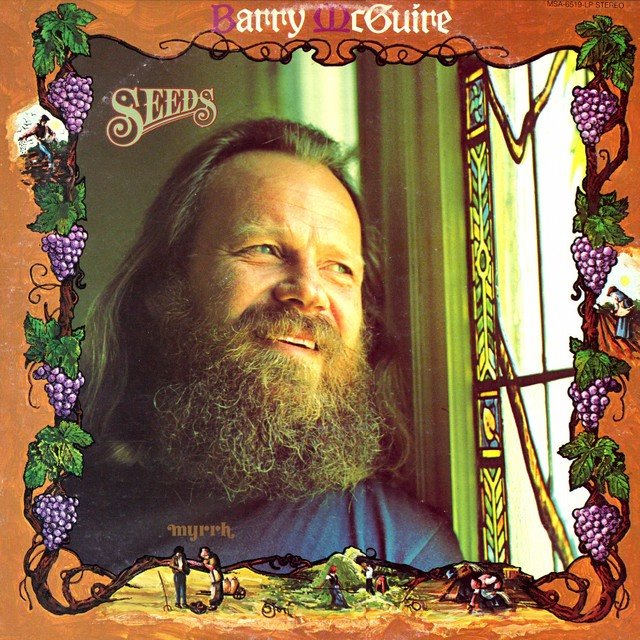
 Seeds (1972)
 Lighten Up (1974)
 Narnia (1974)

01. Eve of Destruction 3:38

02. She Belongs to Me 2:47
03. You Never Had It So Good 3:06
04. Sloop John B. 3:04
05. Baby Blue 3:16
06. The Sins of a Family 3:01
07. Try to Remember 3:23
08. Mr. Man on the Street 6:05
09. You Were on My Mind 2:32
10. Ain't No Way I'm Gonna Change My Mind 2:30
11. What Exactly's the Matter With Me 2:32
12. Why Not Stop and Dig It While You Can 2:15

1. Vietnam
or
2. Vietnam
or
3. Vietnam
.

Sunday, April 13, 2014

Marc Benno & The Nightcrawlers - Crawlin (Great Bluesrock US 1973)


Size: 99.3 MB
Bitrate: 256
mp3
Ripped by: ChrisGoesRock
Artwork Included
Source: Japan 24-Bit Remaster

The album recorded in 1973 @ sunset sound Studio Hollywood for A&M

Marc Benno brought a treasure for his Japanese fans!

The recordings which never released for last 32 years....
Marc Benno recorded 7 songs with his band The Nightcrawlers featuring Stevie Ray Vaughan, Doyal Bramhall etc. at Sunset Sound Studio inHollywood for A&M Records in 1973. But A&M decided not to release the record.

This is the special album with the 7 songs and plus another 5 songs of the studio sessions tracks with SRV (G),RussKrunker(Dr.) Mike Utley(key.) Lee Skiar(B.) etc.

This historic document seems to have escaped the attention of all but the most hardcore and curious Stevie Ray Vaughan fan. The story goes like this...by 1973, Texas singer, songwriter, guitarist, and piano player Marc Benno had spent better than a decade as an all-star studio pro, lending his talents to recordings by folks like Rita Coolidge and the Doors. Benno recorded a pair of albums with friend and fellow session-player Leon Russell as the Asylum Choir, Benno subsequently launching his solo career with a self-titled album in 1970, Russell hooking up with singer Joe Cocker before discovering mid-decade stardom.


Benno had put together a Texas-styled blues-rock band that included bassist Tommy McClure (who had played with Coolidge and Jim Dickinson, among others), drummer Doyle Bramhall, keyboardist Billy Etheridge, and a hot-shot young guitarist by the name of Stevie Vaughan (the "Ray" would be added later). Benno and the Nightcrawlers were managed by rock 'n' roll heavyweight Dee Anthony, and put on tour opening for the J. Geils Band and Humble Pie (which featured its own hot-shot fretburner in Peter Frampton). Benno and the band recorded what was to become their debut album for A&M Records, but when the label soured on blues-rock, Crawlin – which included Vaughan's first recordings – was put on the shelf and remained unreleased until 2009 when Blue Skunk Music resurrected the album.

As shown by the funky album-opening "Last Train," Benno had his finger firmly on the pulse of the soul-and-blues-infused rock sound of the early 1970s, the song's foot-shufflin' beat paired with twangy, chicken-scratched guitar solos and a chaotic mix that works in spite of the mess of instruments. By turns, the New Orleans-flavored "Coffee Cup" sounds like Dr. John, Benno's growling vocals and spry piano-pounding displaying the undeniable musical link between Texas blues and Louisiana's more jazz-influenced style.


The lively "Take Me Down Easy" mines turf similar to what Delaney and Bonnie and Friends were exploring at the time, cleverly mixing blues, rock, gospel and country into an inspired whole, some hot guitar licks sizzling in the background beneath Benno's energetic honky-tonk piano and an overall spirited instrumental jangle. Running in the other direction, "Hot Shoe Blues" blends a 1940s-styled jump-blues aesthetic with rollicking keyboards, red-hot guitar runs, and mile-a-minute echoed vocals to create an exhausting and entertaining musical romp. The title song is virtually an instrumental, barely-audible gang-vocals rising and falling beneath an innovative soundtrack that displays some of Stevie Vaughan's early talents.

Benno considered Stevie Ray Vaughan (or "Little Stevie" as he was often known at the time) to be the Nightcrawlers' secret weapon, a young guitarist of unusual skill and vision that could liven up any performance with his instrument. Crawlin includes four "bonus tracks," songs cut by Benno in anticipation of a solo release that would feature Vaughan's maturing guitarplay at its center. Using a variety of L.A. session pros and friends like bassist Lee Sklar, drummer Russ Kunkel, and keyboardists Gordon DeWitty and Mike Utley, these songs add more of a pop sheen to Benno's writing while not forsaking the artist's blues foundation.

"Friends" is a gospel-tinged soft-rocker that features some beautifully emotional Stevie Ray slide-guitar licks alongside Benno's testifying vocals and gentle piano play. By contrast, "Whole Thang" is a short, sharp shocker with scorching guitar solos riding low in the mix, Benno's bouncy electric piano creating an irresistible melody on top of which Vaughan weaves his magic; given a proper release in the mid-1970s, the song could have been a big hit and brought SRV to stardom that much quicker. "World Keeps Spinnin" is another Dr. John soundalike, with bits of sharp guitar and an underlying funky heartbeat while "Long Ride Home" is a dark, rich instrumental track and the stand-out on Crawlin, Vaughan and Benno swapping guitar licks while the band choogles along in the background with a rock-solid rhythm.


Jim Morrison & Marc Benno
Marc Benno's Crawlin is a mixed bag, derived as it is from disparate sources and circumstances. The four bonus tracks are better-written and better-produced than the seven songs from a previous recording, and they feature Stevie Ray Vaughan in a much more prominent role. What the earlier songs lack in sonic quality and overall construction they more than make up for in energy and enthusiasm, Benno finally afforded the opportunity to chase stardom on his own terms.

While the earlier material on Crawlin, quite honestly, wasn't ready for primetime...I'll blame it on sub-par production that seemingly robs the performances of their edge and vitality...there's no doubt that Benno and the Nightcrawlers were on to something, and listening to these songs today one can't help but wonder what might have been. 


You'll find the material to be representative of the era of its creation, entertaining but not particularly innovative, and of interest mostly to hear Benno's underrated piano playing and Stevie Ray's first tentative steps towards blues-rock stardom.

After suffering the indignities of the record biz – Benno was subsequently dropped by his high-profile manager (who hitched his star exclusively to Frampton's fortunes) – and seeing his recordings buried in a vault somewhere in Hollywood, Marc Benno regrouped and re-dedicated himself to the blues. He spent years touring as second guitarist for the legendary Lightnin' Hopkins, honing his skills and learning the blues from a master. Benno continues to make music, fusing blues, rock, jazz, and pop music into his own original creation in spite of the industry, and Crawlin is a perfect example of his unique vision and talent.

The Nightcrawlers: 
Marc Benno - Guitar and Vocal
 Stevie Ray Vaughan - Lead Guitar
 Doyal Bramhall - Drum and Vocals
 Billy Ethridge- Keyboards
 Tommy McClure - Bass

*Session Recording with:
 Marc Benno - Guitar, Piano and Vocal
 Stevie Ray Vaughan- Lead Guitar / Russ Krunkel- Drums
 Johnny Perez - Drums / Mike Utley-Keyboards
 Gordon Dewitty-Hammond B3 Organ / Lee Skiar- Bass

01. Last Train  02:04
02. Coffee Cup  03:19
03. 8 Ball  06:22
04. Take Me Down Easy  03:23
05. Love is Turnin Green  05:36
06. Hot Shoe Blues  02:09
07. Crawlin  03:22
08. Friends*  04:33
09. Whole Thang*  01:57
10. Slammer Jammer*  04:35
11. World Keep Spinnin*  02:51
12. Long Ride Home*  04:48

*Bonus Tracks Please note and understand there are some noise on Track 10 due to the old recording material.

1. Link
or
2. Link
or
3. Link
.