Followers

Sunday, March 05, 2017

Various Artist - Psychedelic Artist From the US 60's


Size: 415 MB
Bitrate: 320
mp3
Found in DC++ World
Some Artwork Included

A.B. SKHY BIOGRAPHY:
A.B. Skhy was a blues-rock quartet from San Francisco consisting of guitarist Dennis Geyer, keyboard player Howard Wales, bass player Jim Marcotte, and drummer Terry Andersen. This lineup made the group's debut album, A.B. Skhy, in 1969, with a seven-piece horn section. 

The album failed to chart, but the instrumental "Camel Back" hit number 100 on the Hot 100 for one week in December. Andersen and Wales then left and were replaced by guitarist James "Curley" Cooke and drummer Rick Jaeger for the group's second album, Ramblin' On (1970), which was produced by Kim Fowley. They broke up during the recording of their third album.

A little history here. A.B. Skhy were a great psychedelic/blues band originally from milwaukee, wisconsin, and soonrelocated in san francisco. They included in their line-up howard wales, well known for his work with jerry garcia, russell dashell later in the crowfoot, band that was also including don francisco, well known for his work with damon in a band called highway robbery, and terry andersen, later with harvey mandel, plus other musicians that ended to play with fellows like steve miller and elvin bishop. AB Skhy recorded 2 really fine lp's for MGM, the first just called AB SKHY and the second RAMBLIN' ON.


AUM BIOGRAPHY:
Led by singer/multi-instrumentalist Wayne Ceballos, the little know Aum stand as also-rans in the lexicon of sixties San Francisco bands. With drummer Larry Martin and bassist Ken Newell rounding out the trio, the group's initial reputation stemmed from their jam-oriented concerts. 

Initially signed by the London-affiliated Sire label, as one would expect from the title, the group's 1969's Bluesvibes found them working in a distinctively blues-vein. Reflecting the band's live act, the Richard Gotthrer produced debut featured a series of seven extended jams, (the shortest song clocking in at four minutes). With Ceballos writing the majority of the material, in spite of period excesses (e.g. aimless soloing), originals such as Mississippi Mud and Chilli Woman weren't half bad. Moreover, Ceballos proved a decent singer, injecting considerable energy into his performances. Among the few short-comings, the band's ponderous cover of John Loudermilk's Tobacco Road would've been suitable for Vanilla Fudge. 

One of the first acts to be signed to Bill Graham's Fillmore label, 1969's Resurrection teamed the band with producer David Rubinson. As one might have guessed from the album title (let alone the back cover which showed three crosses), their sophomore effort found the band pursuing a pseudo-religious agenda. In spite of occasionally clunky lyrics and an irritating degree of echo, Ceballos-penned material such as God Is Back In Town, the ballad Only I Know and Today And Tomorrow wasn't too bad. Boasting a nifty Ceballos guitar solo, the stately title track is the stand-out cut. Elsewhere, the driving Bye Bye Baby and Little Brown Hen recall Quicksilver Messenger Service. Certainly not likely to get top-40 airplay, but San Francisco certainly turned out worse sounding bands. Commercially the band did nothing; the trio calling it quits shortly thereafter. In 1975, Larry Martin would play with Charlie Musselwhite.


THE BLUES PROJECT:
The Blues Project was a band from the Greenwich Village neighborhood of New York City that was formed in 1965 and originally split up in 1967. While their songs drew from a wide array of musical styles, they are most remembered as one of the earliest practitioners of psychedelic rock, as well as one of the world's first jam bands, along with the Grateful Dead.

In 1964, Elektra Records produced a compilation album of various artists entitled, The Blues Project, which featured several white musicians from the Greenwich Village area who played acoustic blues music in the style of black musicians. One of the featured artists on the album was a young guitarist named Danny Kalb, who was paid $75 for his two songs. Not long after the album's release, however, Kalb gave up his acoustic guitar for an electric one. The Beatles' arrival in the United States earlier in the year signified the end of the folk and acoustic blues movement that had swept the U.S. in the early 1960s. The ensuing British Invasion was the nail in the coffin.

Open in a new window for 100%
Kalb's first rock and roll band was formed in the spring of 1965, playing under various names at first, until finally settling on the Blues Project moniker as an allusion to Kalb's first foray on record. After a brief hiatus in the summer of 1965 during which Kalb was visiting Europe, the band reformed in September 1965 and were almost immediately a top draw in Greenwich Village. By this time, the band included Danny Kalb on guitar, Steve Katz (having recently departed the Even Dozen Jug Band) also on guitar, Andy Kulberg on bass and flute, Roy Blumenfeld on drums and Tommy Flanders on vocals.

The band's first big break came only a few weeks later when they auditioned for Columbia Records, and failed. The audition was a success, nevertheless, as it garnered them an organist in session musician Al Kooper. Kooper had begun his career as a session guitarist, but that summer, he began playing organ when he sneaked into the "Like a Rolling Stone" recording session for Bob Dylan's album, Highway 61 Revisited. In order to improve his musicianship on the new instrument, Kooper joined the Blues Project and began gigging with them almost immediately. Soon thereafter, the Blues Project gained a recording contract from Verve Records, and began recording their first album live at the Cafe Au Go Go in Greenwich Village over the course of a week in November 1965. While the band was known for their lengthy interpretations of blues and traditional rock and roll songs, their first album saw them rein in these tendencies because of record label wariness as well as time restrictions.

Entitled Live at The Cafe Au Go Go the album was finished with another week of recordings in January 1966. By that time, Flanders had left the band and, as a result, he appeared on only a few of the songs on this album.

The album was a moderate success and the band toured the U.S. to promote it. While in San Francisco, California in April 1966, the Blues Project played at the Fillmore Auditorium to rave reviews. Seemingly New York's answer to the Grateful Dead, even members of the Grateful Dead who saw them play were impressed with their improvisational abilities.(Source: Rock Family Trees - television program)

Returning to New York, the band recorded their second album in the fall of 1966, and it was released in November. Projections contained an eclectic set of songs that ran the gamut from blues, R&B, jazz, psychedelia, and folk-rock. The centerpiece of the album was an 11-and-a-half minute version of "Two Trains Running," which, along with other songs on the album, showed off their improvisational tendencies. One such song was the instrumental "Flute Thing", written by Kooper and featuring Kulberg on flute.

Soon after the album was completed, though, the band began to fall apart. Kooper quit the band in the spring of 1967, and the band without him completed a third album, Live At Town Hall. Despite the name, only one song was recorded live at Town Hall, while the rest was made up of live recordings from other venues, or of studio outtakes with overdubbed applause to feign a live sound. One song in the latter category, Kooper's "No Time Like the Right Time," would be the band's only charting single.

The Blues Project's last hurrah was at the Monterey International Pop Festival held in Monterey, California, in June 1967. By this time, however, half the original line-up was gone. Kooper had formed his own band and played at the festival as well. Katz left soon thereafter, followed by Kalb. A fourth album, 1968's Planned Obsolescence, featured only Blumenfeld and Kulberg from the original lineup, but was released under the Blues Project name at Verve's insistence. Future recordings by this lineup would be released under a new band name, Seatrain.

In 1968, Kooper and Katz joined forces to fulfill a desire of Kooper's to form a rock band with a horn section. The result was Blood, Sweat & Tears. While Kooper led the band on its first album, Child Is Father to the Man, he did not take part in any subsequent releases. Katz, on the other hand, remained with the band into the 1970s. Track 11-14: The Blues Project, Matrix, S.F. September 7-15, 1966


IT'S A BEAUTIFUL DAY BIOGRAPHY:
It's a Beautiful Day was a band formed in San Francisco, California in 1967, the brainchild of violinist and vocalist LaFlamme, a former soloist with the Utah Symphony Orchestra, had previously been in the band Orkustra, and unusually, played a five-string violin. The other members were his wife Linda (keyboards), Pattie Santos (vocals), Hal Wagenet (guitar), Mitchell Holman (bass) and Val Fuentes (drums). Although they were one of the earliest and most important San Francisco bands to emerge from the Summer of Love, It’s a Beautiful Day never quite achieved the success of their contemporaries such as The Grateful Dead and Santana, with whom they had connections. It’s A Beautiful Day created a unique blend of rock, jazz, folk, classical and world beat styles during the seven years the band was officially together.

The band's debut album, It's a Beautiful Day, released in 1969, featured the tracks "White Bird", "Hot Summer Day", "Time Is" and "Bombay Calling". The intro of the last was used, at a slower tempo, by Deep Purple as the intro to "Child in Time" on its In Rock album. 

The vocals and violin playing of David LaFlamme plus Pattie Santos' singing attracted attention including FM radio play, and nationally, "White Bird" bubbled under Billboard's Hot 100 chart, peaking at #118.

By 1970 the original lineup of the band had changed somewhat; the LaFlammes had split up and Linda left the band, replaced by Fred Webb. 

The following album, Marrying Maiden, released in 1970, included memorable tracks and was also a chart hit. In that year, the group also performed at the Holland Pop Festival at the Kralingse Bos in Rotterdam, The Netherlands and at the UK Bath Festival.
It's A Beautiful Day, track 15-18: Fillmore West-San Francisco, California, May 23-25 1968


QUICKSILVER MESSENGER SERVICE BIOGRAPHY:
Quicksilver Messenger Service (sometimes credited as simply Quicksilver) is an American psychedelic rock band formed in 1965 in San Francisco. They were most famous for their biggest hit, the single "Fresh Air" (from the album Just for Love), which reached #49 in 1970.

Quicksilver Messenger Service gained wide popularity in the San Francisco Bay Area and through their recordings, with psychedelic rock enthusiasts around the globe, and several of their albums ranked in the Top 30 of the Billboard Pop charts. Though not as commercially successful as contemporaries Jefferson Airplane and The Grateful Dead, Quicksilver was integral to the beginnings of their genre. With their jazz and classical influences and a strong folk background, the band attempted to create an individual, innovative sound.  Member Dino Valenti drew heavily on musical influences he picked up during the folk revival of his formative musical years. The style he developed from these sources is evident in Quicksilver Messenger Service's swung rhythms and twanging guitar sounds.

After many years, the band has attempted to reform despite the deaths of several members. Recently, original members Gary Duncan and David Freiberg have been touring as the Quicksilver Messenger Service, using various backing musicians.

im Murray left the group not long after they performed at the Monterey International Pop Festival in June 1967. The band began a period of heavy touring on the West Coast of the United States where they built up a solid following and featured on many star-studded bills at the Avalon Ballroom and the Fillmore West. Sound engineer (and infamous LSD chemist) Owsley Stanley regularly recorded concerts at major San Francisco venues during this period, and his archive includes many QMS live performances from 1966–67, which were released on his Bear Recordings label in 2008-2009.

QMS initially held back from signing a record deal at the time but eventually signed to Capitol Records in late 1967, becoming the last of the top-ranked San Francisco bands to sign with a major label. Capitol was the only company that had missed out on signing a San Francisco “hippie” band during the first flurry of record company interest and, consequently, Quicksilver Messenger Service was able to negotiate a better deal than many of their peers. At the same time, Capitol signed the Steve Miller Band, with whom Quicksilver Messenger Service had appeared on the movie and soundtrack album Revolution, together with the group Mother Earth.

Quicksilver Messenger Service released their eponymous debut album in 1968. It was followed by Happy Trails, released in early 1969 and largely recorded live at the Fillmore East and the Fillmore West. "Happy Trails" has a few additions to the original live performances: a studio comment at the beginning of side 2 and a completely different version of "Calvary," which was recorded in the studio just before Gary Duncan left the band; otherwise it reflects Quicksilver's live sound faithfully. Happy Trails was awarded a gold album in the United States. 

These albums, which have been hailed as "...two of the best examples of the San Francisco sound at its purest," define the classic period in the group's career and showcase their distinctive sound, emphasizing extended arrangements and fluid twin-guitar improvisation. Cipollina's highly melodic, individualistic lead guitar style, combined with Gary Duncan's driving minor scale, jazzy sound guitar style, feature a clear, notable contrast to the heavily amplified and overdriven sound of contemporaries like Cream and Jimi Hendrix. In 2003 Happy Trails was rated at No. 189 in the Rolling Stone Top 500 albums survey, where it was described as "...the definitive live recording of the mid-Sixties San Francisco psychedelic-ballroom experience..." Archetypal QMS songs include the elongated, continually re-titled suite based on Bo Diddley's Who Do You Love??, featured on Happy Trails.

Duncan left the group not long after the recording of Happy Trails; according to David Freiberg, this was largely because of his escalating problems with opiates and amphetamines.[6] His 'farewell' performances were the studio recordings that ended up on Happy Trails and a final live performance with the band on New Year's Eve 1969. Duncan recalled 18 years later:

"Well, let's put it this way, at the end of 1968, I was pretty burned out. We'd been on the road for, really, the first time in our lives. I just left for a year. I didn't want to have anything to do with music at all. And I left for a year and rode motorcycles and lived in New York and L.A. and just kind of went crazy for about a year."
Freiberg later recalled that Duncan's departure shook the core of the band: "Duncan was the 'engine' man, it just didn’t WORK without him ... for me. I was really ... I was devastated...

For their 1969 album Shady Grove, Duncan did not participate, replaced by renowned English session keyboardist Nicky Hopkins, who had played on scores of hit albums and singles by acts like The Kinks, The Rolling Stones, The Beatles, The Who and Steve Miller, among many others. Hopkins' virtuoso piano boogie dominates the album, giving it a unique sound within the Quicksilver catalog.
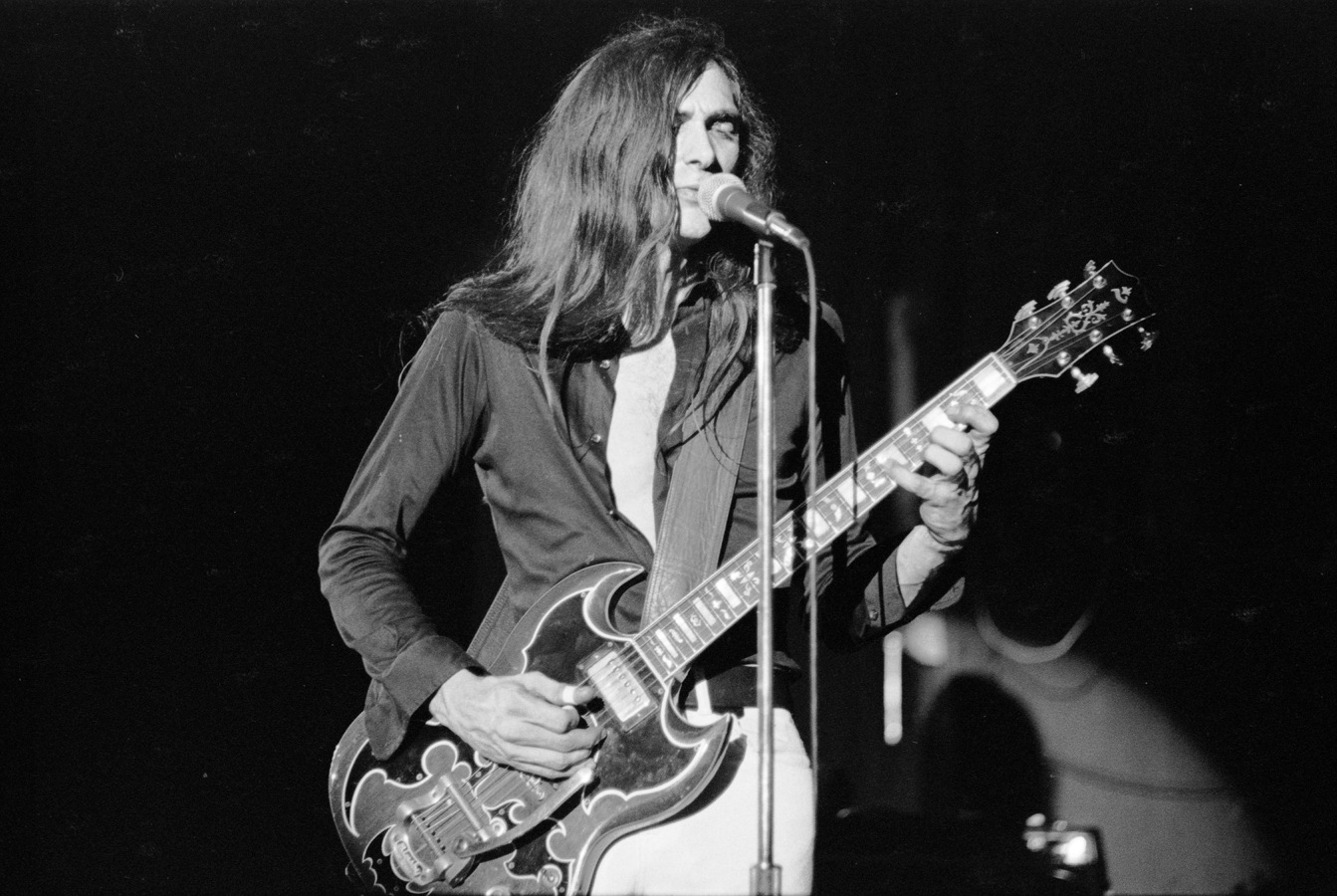

The band that became Quicksilver Messenger Service originally was conceived as a rock vehicle for folk singer/songwriter Dino Valente (b. Nov. 7, 1943, d. Nov 16, 1994), author of "Get Together." Living in San Francisco, Valente had found guitarist John Cipollina (b. Aug. 24, 1943, d. May 29, 1989) and singer Jim Murray. Valente's friend David Freiberg (b. Aug. 24, 1938) joined on bass, and the group was completed by the addition of drummer Greg Elmore (b. Sep. 4, 1946) and guitarist Gary Duncan (b. Sep 4, 1946). As the band was being put together, Valente was imprisoned on a drug charge and he didn't rejoin Quicksilver until later.

Happy Trails They debuted at the end of 1965 and played around the Bay Area and then the West Coast for the next two years, building up a large following but resisting offers to record that had been taken up by such San Francisco acid rock colleagues as Jefferson Airplane and the Grateful Dead. Quicksilver finally signed to Capitol toward the end of 1967 and recorded their self-titled debut album in 1968 (by this time, Murray had left). Happy Trails, the 1969 follow-up, was recorded live. After its release, Duncan left the band and was replaced for Shady Grove (1970) by British session pianist Nicky Hopkins. By the time of its release, however, Duncan had returned, along with Valente, making the group a sextet.

Just for Love This version of Quicksilver, prominently featuring Valente's songs and lead vocals, lasted only a year, during which two albums, Just for Love and What About Me, were recorded. Cipollina, Freiberg, and Hopkins then left, and the remaining trio of Valente, Duncan, and Elmore hired replacements and cut another couple of albums before disbanding. There was a reunion in 1975, resulting in a new album and a tour, and in 1986 Duncan revived the Quicksilver name for an album that also featured Freiberg on background vocals.BILL GRAHAM ARCHIVES 1966-67 FILLMORE AUDITORIUM SAN FRANCISCO,CA.,USA

01. A.B. Skhy - The World Needs Love  11:04
02. A.B. Skhy - Thinking It Over  08:25
03. A.B. Skhy - Sweet Little Angel  08:42
04. A.B. Skhy - Just What I Needed  04:16
05. A.B. Skhy - St. James Infirmary  08:46
06. A.B. Skhy - Everyday I have The Blues  08:48
07. Aum - I Need You  05:30
08. Aum - Little Brown Hen  03:33
09. Aum - A Little Help From You  13:39
10. Aum - Bye-Bye Baby  10:40
11. Blues Project - I Can't Keep From Crying  06:04
12. Blues Project - Caress My Baby  08:08
13. Blues Project - Wake Me Shake Me  08:04
14. Blues Project - You Can't Catch Me  05:22
15. It's A Beautiful Day - Wasted Union Blues  12:19
16. It's A Beautiful Day - White Bird  06:48
17. It's A Beautiful Day - Hot Summer Wind  11:02
18. It's A Beautiful Day - Jam, Bombay Calling  10:08
19. Quicksilver Messenger Service - Hoochie Coochie Man  06:26 (February 4,1967)
20. Quicksilver Messenger Service - Hair Like Sunshine  05:37 (November 5,1966)
21. Quicksilver Messenger Service - Duncan & Brady  03:40 (February 4,1967)
22. Quicksilver Messenger Service - Walkin' Blues  03:37 (February 4,1967)

Part 1: 60's
Part 2: 60's
Part 3: 60's
or
Part 1: 60's
Part 2: 60's
Part 3: 60's
or
Part 1: 60's
Part 2: 60's
Part 3: 60's

Tuesday, February 28, 2017

Pictures of the day....


Muddy Waters 1958 Fender Telecaster Guitar


ChrisGoesRock

Muddy Waters - Muddy Waters Woodstock Album (US 1975)


Size: 84.4 MB
Bitrate: 256
mp3
Ripped by: ChrisGoesRock
Source: Japan 24-Bit Remaster

Recorded in 1975, The Muddy Waters Woodstock Album was the brainchild of the Band's Levon Helm and producer/songwriter Henry Glover. At the time, the duo's production company, RCO, had recently set up shop in a barn-turned- studio in Woodstock, New York, and Muddy Waters was their first client. 


The album, born of a unique merger of top-flight talent (Waters' touring band plus the cream of the musicians then living in and around Woodstock), is one of the loosest, swingingest records that Waters ever cut, and features such musicians as blues-harp great Paul Butterfield, Helm and Garth Hudson (of the Band), guitarist Bob Margolin and keyboardist Willie "Pinetop" Perkins (from Waters' band), and renowned session players Fred Carter and Howard Johnson.


The Muddy Waters Woodstock Album includes five original songs written by Waters ("Going Down to Main Street," "Born With Nothing," "Funny Sounds," "Love, Deep as the Ocean" and the previously unreleased CD-only bonus track, Fox Squirrel) plus covers of Louis Jordan's "Let the Good Times Roll" and Caldonia, Bobby Charles' "Why Are People Like That" and Leiber & Stoller's Kansas City. 

As chronicled in the newly penned liner notes by Billboard's Chris Morris, the disc proved to be the last that Waters would record for Chess. 

It was, however, a memorable farewell - The Muddy Waters Woodstock Album was awarded the 1975 Grammy Award for Best Ethnic or Traditional Recording.

Of all the post-Fathers & Sons attempts at updating Waters' sound in collaboration with younger white musicians, this album worked best because they let Waters be himself, producing music that compared favorably to his concerts of the period, which were wonderful. 


His final album for Chess (recorded at Levon Helm's Woodstock studio, not in Chicago), with Helm and fellow Band-member Garth Hudson teaming up with Waters' touring band, it was a rocking (in the bluesy sense) soulful swansong to the label where he got his start. 

Waters covers some songs he knew back when (including Louis Jordan's "Caldonia" and "Let the Good Times Roll"), plays some slide, and generally has a great time on this Grammy-winning album. 

This record got lost in the shuffle between the collapse of Chess Records and the revival of Waters' career under the auspices of Johnny Winter, and was forgotten until 1995.

Personnel
Muddy Waters - vocal/guitar 
 Paul Butterfield - harmonica
 Henry Glover - producer
 Levon Helm - bass/drums/producer
 Garth Hudson - accordion/keyboards/saxophone
 Howard Johnson - saxophone
 Sammy Lawhorn - guitar
 Bob Margolin - guitar
 "Pinetop" Perkins - piano

01. Why Are People Like That  03:37
02. Going Down To Main Street  04:16
03. Born With Nothing  05:23
04. Caledonia  06:19
05. Funny Sounds  04:34
06. Love, Deep As The Ocean  05:13
07. Let The Good Times Roll  05:15
08. Kansas City  05:12
Bonus Track:
09. Fox Squirrel  03:54

Extra Bonus Concert:  
Tuesday June 15, 1976  
Muddy Waters Paul's Mall,Boston
WBCN-FM Stereo 

Personnel
Muddy Waters - guitar, vocals
 Willie "Big Eyes" Smith - drums
 Luther "Guitar Jr." Johnson - guitar
 Calvin Jones - bass
 Bob Margolin - guitar
 Joe "Pine Top" Perkins - piano
 Jerry Portnoy - harmonica

01. Dj Intro  00:23
02. Instrumental #1 (cut in)  04:55 
03. Instrumental #2  08:12
04. Instrumental #3  03:25

≈≈≈≈ Enter Muddy Waters ≈≈≈≈
05. Muddy Waters Day Proclamation  03:57
06. Caldonia  05:41
07. Kansas City  08:38
08. Hoochie Coochie Man  02:51 
09. I Want You To Love Me  04:21 
10. Baby Please Don't Go  04:05 
11. Long Distance Call  07:29
12. Mannish Boy  05:22
13. Got My Mojo Working  03:05

Encore
14. You Don't Have To Go  03:48 
15. Exit Music  01:43
16. dj outro  01:01

Part 1: Muddy 1
Part 2: Muddy 2
or
Part 1: Muddy 1
Part 2: Muddy 2
or
Part 1: Muddy 1
Part 2: Muddy 2


Monday, February 27, 2017

Yoko Ono - Plastic Ono Band (Canadian Edition 1970) + Live Jam


Size: 148 MB
Bitrate: 256
mp3
Ripped by: ChrisGoesRock
Artwork Included

Yoko Ono/Plastic Ono Band is the avant-garde debut studio album by Yoko Ono. The album came after recording three experimental releases with John Lennon and a live album as a member of The Plastic Ono Band.


With the exception of "AOS", a 1968 live recording, the entire album was recorded in one afternoon in October 1970 during the John Lennon/Plastic Ono Band sessions at Ascot Sound Studios and Abbey Road Studios, using the same musicians and production team. 

Also recorded on this day were "Don't Worry Kyoko (Mummy's Only Looking for Her Hand in the Snow)" which ended up on the next album Fly, and "Between the Takes" which was released on Fly's 1998 CD reissue. 


"Greenfield Morning I Pushed an Empty Baby Carriage All Over the City" was based around a sample from a discarded tape of George Harrison playing a sitar and a Ringo Starr drum break with an added echo effect plus Ono's vocals with a lyric referencing a miscarriage. Ono's vocalisations on tracks such as "Why" and "Why Not" mixed hetai, a Japanese vocal technique from kabuki theatre, with modern rock 'n roll and raw aggression influenced by the then-popular primal therapy that Lennon and Ono had been undertaking. 

According to Ono, the recording engineers were in the habit of turning off the recording equipment when she began to perform-- which is why, at the end of "Why", Lennon can be heard asking "Were you gettin' that?".

Initially on Apple Records, through EMI, Yoko Ono/Plastic Ono Band was released to considerable critical disdain in 1970, at a time when Ono was being widely blamed for disbanding The Beatles. Yoko Ono/Plastic Ono Band failed to chart in the UK but reached number 182 in the US. Notable exceptions were the estimations of Billboard who called it 'visionary' and critic Lester Bangs who supported it in Rolling Stone. More recently, the album has been credited (like those of The Velvet Underground) with having an influence, particularly on musicians, grossly disproportionate to its sales and visibility. Critic David Browne of Entertainment Weekly has credited the album with "launching a hundred or more female alternative rockers, like Kate Pierson & Cindy Wilson of the B-52s to current thrashers like L7 and Courtney Love of Hole".


The covers of Yoko Ono/Plastic Ono Band and John Lennon/Plastic Ono Band albums are nearly identical; Lennon pointed out the difference in their 1980 Playboy interview ("In Yoko's, she's leaning back on me; in mine, I'm leaning on her"). The photos were taken with a cheap Instamatic camera on the grounds of Tittenhurst Park (their home at the time) by actor Daniel Richter (as listed in the album's credits), who was working as their assistant.

01. Why 05:37 [An edited version became the B-side to Lennon's single "Mother"]
02. Why Not 09:55 [Excerpted in a 1980 RKO Radio tribute, featuring Lennon's last recorded interview]
03. Greenfield Morning... 05:38 [The title and lyrics come from Ono's book Grapefruit]
04. AOS 07:06 [Featuring Ornette Coleman, recorded on 29 February 1968, predating the rest of the material]
05. Touch Me 04:37 [Also selected as a B-side, to "Power to the People", replacing Ono's "Open Your Box" for the US market]
06. Paper Shoes 07:26 [Referenced by Lennon during the 1980 RKO interview]

Bonus Tracks
07. Open Your Box 07:35
08. Something More Abstract 00:44
09. Why (Extended Version) 08:40
10. The South Wind 16:41

Extra Bonus Live Material:
11. Cold Turkey 08:35
12. Don't Worry Kyoko 16:00
13. Well (Baby Please Don't Go) 04:40
14. Jamrag 05:36
15. Scumbag 06:07
16. AU 06:23

Part 1: Yoko 1
Part 2: Yoko 2
or
Part 1: Yoko 1
Part 2: Yoko 2
or
Part 1: Yoko 1
Part 2: Yoko 2


Sunday, February 12, 2017

Picture of the day...


Ike & Tina Turner - River Deep ~ Mountain High (Soul US 1966)


Size: 79.6 MB
Bitrate: 256
mp3
Artwork Included
Source: Japan SHM-CD Remaster

River Deep Mountain High is a studio album by the American R&B duo Ike & Tina Turner. The album contains songs from several different sources, 5 songs produced by the legendary producer Phil Spector and 7 songs that are older recordings produced by Ike Turner. It was released in September 1966 (1966-09) on A&M Records.

"River Deep – Mountain High" is a 1966 single by Ike & Tina Turner. Considered by producer Phil Spector to be his best work, the single was successful in Europe, peaking at #3 in the United Kingdom, though it flopped on its original release in the United States. Spector claimed to be pleased with the response from the critics and his peers, but he then withdrew from the music industry for two years, beginning his personal decline.

After Eric Burdon and the Animals covered the song in 1968, it was re-released a year later, and has since become one of Tina Turner's signature songs, though it charted even lower, "Bubbling Under" at #112.

In 1999, "River Deep – Mountain High" was inducted in the Grammy Hall of Fame.


Written by Spector, Jeff Barry, and Ellie Greenwich, "River Deep - Mountain High" was among the first recordings that Ike & Tina Turner did for Phil Spector's Philles Records. Spector was well aware of Ike Turner's controlling attitude in the studio, and resultantly drew up an unusual contract: the River Deep – Mountain High (album) and single would be credited to "Ike & Tina Turner", but Ike was paid $20,000 to stay away from the studio, and only Tina Turner's vocals would be used on record.

The track was recorded using Spector's "Wall of Sound" production technique, cost a then-unheard of $22,000, and required 21 session musicians and 21 background vocalists. Due to Spector's perfectionism in the studio, he made Turner sing the song over and over for several hours until he felt was the perfect vocal take for the song. 

The recording of the song was later dramatized for Tina Turner's biopic, What's Love Got to Do with It. At Ike Turner's 2007 funeral, Phil Spector chastised the film's depiction saying that he had a good relationship with Ike Turner and that the film was "garbage" stating that he insisted for Ike's name to be included on the recording despite the fact that executives of Spector's label Philles had only wanted Tina billed on the recording.

The single entered the lower end of the Billboard 100 and stopped at #88 on the pop charts. Even though it had better fortune in the United Kingdom, peaking at #3 in the singles charts on first release, Spector was so disillusioned that he ceased involvement in the recording industry totally for two years, and only intermittently returned to the studio after that; he effectively became a recluse and began to self-destruct.

Ike Turner remarked that he felt the record didn't do well in America because the sound was "pop or white", while Tina Turner's voice was R&B, so that "America mixes race in it"—though the writer Michael Billig observed that earlier records which had mixed black singers with a white pop sound had sold well, so it was likely to be that in 1966 the black political movement was encouraging African Americans to take a pride in their own culture, and "River Deep – Mountain High" was out of step with that movement.

Later Rolling Stone was to put it at #33 on its list of the 500 Greatest Songs of All Time.

George Harrison praised the record, declaring it "a perfect record from start to finish." "River Deep - Mountain High" compared a woman's love and loyalty, respectively, to that which that a child feels for a doll, and a puppy has for his master.

In 1967, Harry Nilsson (who had worked with Spector as a songwriter early in his career) released a cover version of the song on his first RCA Victor album, Pandemonium Shadow Show. This was followed by an epic ten-minute version recorded by Deep Purple for their 1968 album, The Book of Taliesyn. An edited version was released as a single in the United States and reached #53 in early 1969 and #42 on the Canadian RPM charts.

The original Ike and Tina Turner version of the song was re-released the same year to a more receptive public and since then has gained the recognition Spector wanted from the record. Numerous versions have been recorded since, including two different recordings by Ike and Tina Turner that do not feature Spector's "Wall of Sound" production style, as well as some by Tina Turner herself without Ike Turner.

Eric Burdon & The Animals recorded an extended version of the song, with additional musical sections and a heavily dramatized arrangement, for their 1968 album Love Is. An edited version was released as a single, and the full version also appears on their 1969 compilation The Greatest Hits of Eric Burdon and The Animals. In 1985, Burdon recorded a live version of it and released it in 1992 on "That's Live".

The Australian band, The Easybeats, did a cover version in 1967. Another cover version was by 2 of Clubs, a Cincinnati-based American female pop duo, which failed to chart.

01."River Deep, Mountain High" (Jeff Barry, Ellie Greenwich, Phil Spector) - 3:38
02."I Idolize You" - 3:46
03."A Love Like Yours (Don't Come Knocking Everyday)" (Holland-Dozier-Holland) - 3:05
04."A Fool in Love" - 3:13
05."Make 'Em Wait" - 2:22
06."Hold on Baby" (Jeff Barry, Ellie Greenwich, Phil Spector) - 2:59
07."I'll Never Need More Than This" (Jeff Barry, Ellie Greenwich, Phil Spector) - 3:33
08."Save the Last Dance for Me" (Doc Pomus, Mort Shuman) - 3:02
09."Oh Baby!" (Kent Harris) - 2:46
10."Every Day I Have to Cry" (Arthur Alexander) - 2:40
11."Such a Fool for You" - 2:48
12."It's Gonna Work Out Fine" (J. Michael Lee, Joe Seneca) - 3:14

or
or

Saturday, February 11, 2017

The Ikettes - Soul The Hits (Great Soul US 1964)


Size: 144 MB
Bitrate: 256
mp3
Ripped by: ChrisGoesRock
Artwork Included
Source: Japan 24-Bit Remaster

A great record from the Ikettes! It only takes one listen to this album to realize how much better this trio was than most of the other "girl" groups around at the time -- working with a depth and tightness that's way more than simple girl pop -- and which shows their close ties to the Ike Turner empire! The voices of all three singers are wonderful, and many of the tunes have the same sort of energy as the best grooves of the time from Ike & Tina -- upbeat and snapping, and almost with a trace of Northern Soul at times -- but a grittier undercurrent at others. Tracks include the super "Peaches 'N Cream", "Sally Go Round The Roses", "I'm So Thankful", "Lonely For You", and "Not That I Recall". 


This Japanese CD expands the original album tremendously -- from 12 tracks to 29 with the addition of lots more singles and material issued by some group members as solo artists. Bonus tracks include "How Come", "Your Love Is Mine", "Sha La La", "You're Trying To Make Me Lose My Mind", and "Fine Fine Fine" by The Ikettes -- plus "I'm Leaving You", "You're Still My Baby", "Give Me A Chance", and "Through With You" by Venetta Fields; "Blue With A Broken Heart" by Flora Williams; and "Easy Living" by Dee Dee Johnson.

01.I'M SO THANKFUL [3:10]
02.DA DOO RON RON [2:27]
03.CAMEL WALK [2:39]
04.CAN'T SIT DOWN 'COS I FEEL SO GOOD [2:21]
05.(NEVER MORE) LONELY FOR YOU [2:21]
06.NOT THAT I RECALL [2:05]
07.PEACHES 'N' CREAM [2:31]
08.SALLY GO ROUND THE ROSES [2:38]
09.DON'T FEEL SORRY FOR ME [3:01]
10.FINE,FINE,FINE [2:36]
11.NOBODY LOVES ME [2:45]
12.IT'S BEEN SO LONG [3:12]

13.CAMEL WALK [2:39] (Bonus)
14.THE BIGGEST PLAYERS [1:41] (Bonus)
15.HOW COME [1:57] (Bonus)
16.BLUE WITH A BROKEN HEART (aka BLUE ON BLUE) [2:57) (Bonus)
17.YOU'RE STILL MY BABY [3:36] (Bonus)
18.I'M LEAVING YOU [3:00] (Bonus)
19.THROUGH WITH YOU [3:26] (Bonus)
20.GIVE ME A CHANCE (TRY ME) [2:29] (Bonus)
21.CHEATER [2:22] (Bonus)
22.YOU'RE TRYING TO MAKE ME LOST MY MIND [2:12] (Bonus)
23.YOUR LOVE IS MINE [2:21] (Bonus)
24.YOU CAN'T HAVE YOUR CAKE AND EAT IT TOO [2:53] (Bonus)
25.THE LOCO-MOTION [2:20] (Bonus)
26.SHA LA LA [2:54] (Bonus)
27.CAMEL WALK [2:33] (Bonus)
28.(NEVER MORE) LONELY FOR YOU [2:20] (Bonus)
29.EASY LIVING (aka LIVING FOR YOU) [2:11] (Bonus)

1. The Ikettes
or
2. The Ikettes
or
3. The Ikettes